Neuroarchitecture, an emerging field at the intersection of neuroscience and architecture, is gaining importance due to its potential to revolutionise how we design and experience built environments. This discipline explores how architectural elements impact human brain function, behaviour, and well-being, offering insights that can lead to more effective and human-centric design solutions.
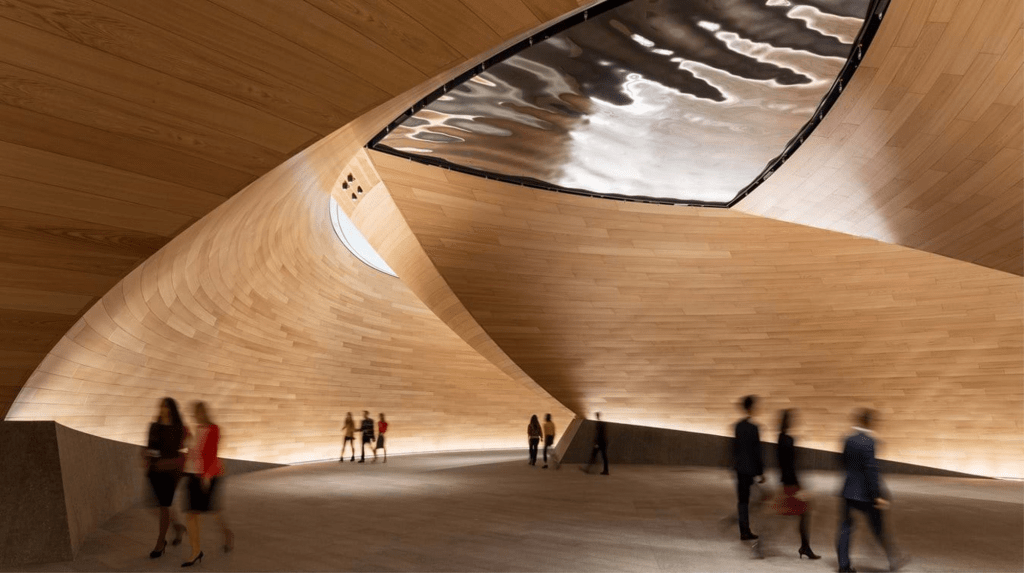
Michael Bloomberg chose Foster + Partners to design due to their shared vision for creating a sustainable, innovative workplace. Foster + Partners incorporate principles of neuroarchitecture into the firm’s design process, ensuring that their projects not only meet functional and aesthetic requirements but also optimise the cognitive and emotional well-being of occupants.
“Our new building aims to empower our employees so that we can better serve our customers, while complementing and adding new life to this historic neighbourhood.”
Michael R. Bloomberg
Architects and designers are increasingly recognising the value of neuroarchitecture, integrating neuroscientific principles into their design processes to create spaces that positively impact human cognition, emotion, and behaviour. Many professionals are specialising in this field by pursuing additional education in neuroscience, collaborating with researchers, and applying evidence-based design strategies.
Why architects should specialise in neuroarchitecture
Architects should specialise in neuroarchitecture due to the increasing demand for evidence-based design and the competitive advantage it offers. This field provides a scientific foundation for creating spaces that optimise human cognitive and emotional well-being, attracting clients who seek measurable outcomes. Expertise in neuroarchitecture allows architects to differentiate themselves in a crowded market and create innovative projects that enhance productivity and overall well-being.
Specialising in neuroarchitecture also enables architects to contribute significantly to public health. By designing spaces that reduce stress, improve cognitive function, and promote well-being, architects can create healthier and more productive communities. This aligns with the growing emphasis on wellness in architecture and positions professionals at the forefront of a rapidly evolving field that bridges science and design.
Case study: Foster + Partners
Foster + Partners, a renowned global architecture and design firm founded by Norman Foster in 1967, has established itself as a leader in innovative and sustainable design. Known for their high-profile projects across various sectors, the firm has gained particular recognition for their approach to workplace design. Foster + Partners‘ philosophy centres on creating environments that meet functional requirements and enhance the overall experience of the people who use them.
“We have a multidisciplinary group of specialists in workplace architecture, environmental psychology, wellness, hospitality, and healthcare design who help align leadership decision-making and business priorities with design.”
Foster + Partners
Foster + Partners focuses on three main aspects of workplace design: employee well-being, technology use, and flexibility. They understand that good workspace design enhances employee satisfaction, productivity, and creativity. Their approach includes adding natural elements, maximising light, and offering various work environments to support health. They also use advanced technology to enhance modern work practices and efficiency. Moreover, their designs are adaptable, enabling spaces to change as needs and work styles evolve, which ensures lasting value for clients.
“By defining spaces and technologies that help people work better and smarter, we create an environment that will see organisations thrive and retain their relevance and vitality.”
Foster + Partners
This approach has established Foster + Partners as a premier firm for companies aiming to create innovative, employee-focused workplaces that embody their corporate ethos and tackle the multifaceted challenges of contemporary work environments. Their expertise is particularly evident in high-profile projects like Bloomberg European Headquarters in London or the Apple Park in Cupertino, where they’ve seamlessly integrated cutting-edge design with principles of employee well-being and sustainability.
Apple Park in Cupertino, California
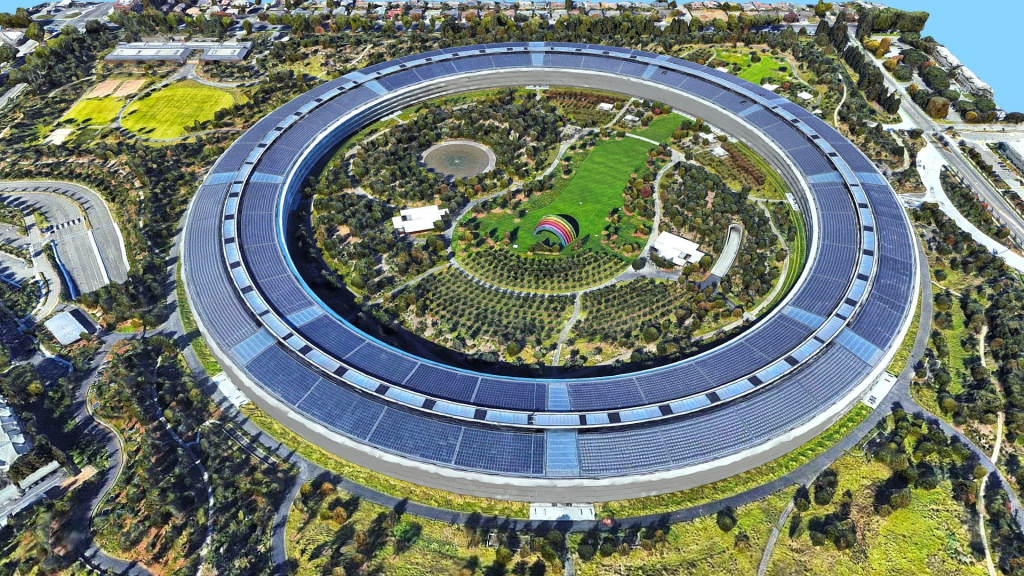
The design prioritizes employee well-being, incorporating walking trails, natural ventilation, and seamless indoor-outdoor connectivity, embodying Apple’s commitment to cutting-edge design and environmental responsibility.
Apple Park in Cupertino is a visionary corporate campus designed to foster innovation and collaboration. The centrepiece is a circular “Ring” building, featuring extensive use of curved glass and natural light. The 175-acre site emphasizes sustainability, with 80% green space, 9,000 trees, and 100% renewable energy usage. Key features include flexible workspaces, a 100,000-square-foot fitness centre, and the Steve Jobs Theatre.
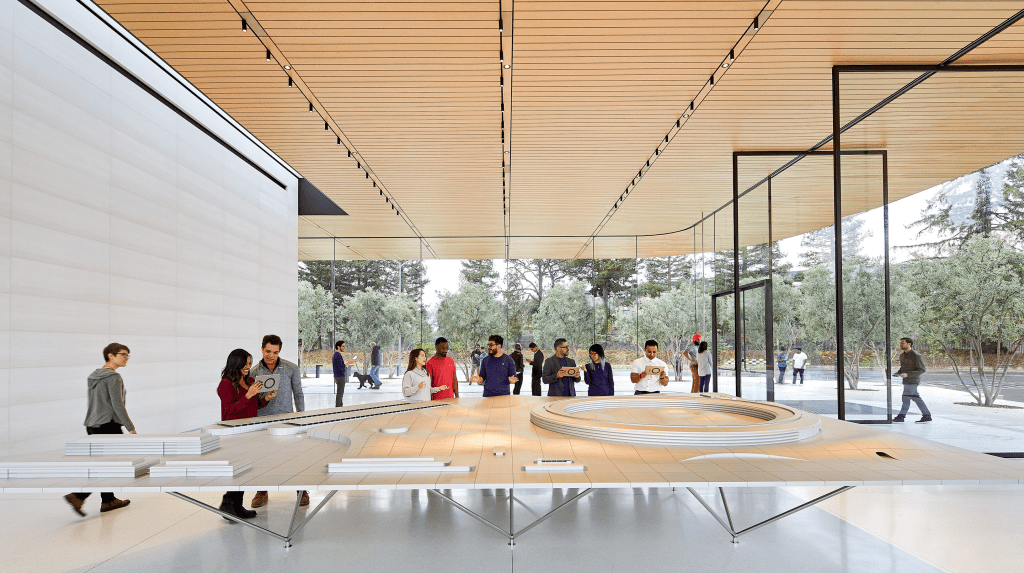
The design seamlessly blends interior and exterior spaces through its extensive use of curved glass walls, allowing for unobstructed views of the surrounding landscape and creating a sense of openness that connects nature and humans.
This project incorporates several neuroarchitecture principles to enhance employee well-being and productivity. The extensive use of natural light through curved glass walls aligns with research showing that daylight exposure improves mood and cognitive function. The integration of green spaces, including the Central Park and surrounding landscape, supports biophilic design principles, which have been linked to reduced stress and improved creativity.

The building’s circular design promotes movement and chance encounters, fostering collaboration and innovation. Flexible workspaces cater to different cognitive needs, allowing employees to choose environments that best suit their tasks. The emphasis on natural ventilation and temperature control contributes to physical comfort, which is crucial for optimal brain function and productivity.
In conclusion
Foster + Partners has established itself as a leader in creating innovative workplaces by blending sustainability, advanced technology, and principles of neuroarchitecture. Their approach considers environmental impact and employee well-being, using insights from neuroscience in their designs to enhance productivity, creativity, and job satisfaction. This strategy has drawn in notable clients like Bloomberg and Apple Inc., who want spaces that align with their corporate values and encourage innovation.
The firm’s expertise is shown in projects like the Bloomberg European Headquarters in London and Apple Park in Cupertino. These designs highlight Foster + Partners’ focus on sustainability with features like natural ventilation and renewable energy, while also improving employee experience through flexible workspaces and nature-inspired elements. By redefining workplace design, Foster + Partners sets new industry standards, creating spaces that meet modern business needs and improve occupants’ quality of life.
References
Brain, Body, Building: Neuroarchitecture and Design. https://www.fosterandpartners.com/insights/plus-journal/brain-body-building-neuroarchitecture-and-design
How creating inclusive products and services can boost your business. https://www.startuploans.co.uk/support-and-guidance/business-guidance/starting-up/how-creating-inclusive-products-and-services-can-boost-your-business
UK capabilities in inclusive design of the built environment. https://www.gov.uk/government/publications/built-environment-uk-capabilities-in-inclusive-design/uk-capabilities-in-inclusive-design-of-the-built-environment-html-version
Bloomberg Unveils New European Headquarters in the City of London. https://www.bloomberg.com/company/press/new-european-hq-unveiled/
An Inside Look at Apple Park. https://candor.co/articles/tech-careers/an-inside-look-at-apple-park.
Analysis of Practice Findings: Specializations. https://www.ncarb.org/blog/analysis-of-practice-findings-specializations
 neurotectura.com