
Neurodivergence refers to differences in neurological functioning that deviate from what is considered typical or “neurotypical.” This term encompasses various conditions such as autism, attention deficit hyperactivity disorder (ADHD), dyslexia, dyscalculia, and Tourette syndrome, among others.
An inclusive environment where cognitive diversity is embraced translates into a productive and dynamic workplace, offering greater competitive advantages and an enhanced ability to innovate and tackle complex challenges.

Although exact figures are unavailable, it is estimated that between 10% and 20% of the global population is neurodivergent.
Benefits of Neurodiversity in the Workplace
Many companies recognize that neurodivergent individuals bring a unique perspective and exceptional skills, such as the ability to detect details, identify innovative solutions, and recognize problems that others may overlook. This not only enriches the work environment, making it more inclusive, but also expands the pool of available talents and capabilities.
These companies have recognised the value of a neurodivergent workforce and have developed initiatives to support their inclusion. Some of the most notable examples are in the financial, telecommunications, and information technology sectors.
This is the case of the initiative by JPMorgan Chase in 2018, to employ individuals with autism. Following the encounter, the organization discovered that its neurodiverse personnel exhibited an average productivity increase of between 90% and 140% in comparison to their more established counterparts.
Microsoft is one of the leading companies employing individuals on the autism spectrum. The programme prioritises exceptional skills in engineering, programming, and mathematics over social or networking abilities.
To support the employment of neurodivergent individuals, many companies have diversified and enhanced their recruitment processes, adapted management styles, and created inclusive workplace conditions. These efforts aim to place each individual in an environment that optimises their strengths, fosters creativity, and maximises productivity.
Neurodivergence and the Built Environment
In 1998, geneticist Fred Gage discovered that the adult brain continues to produce new neurons and can adapt its structure throughout life, reshaping our understanding of brain development. His findings revealed the significant influence of environmental factors on brain function, beyond hereditary components.
Scientific evidence indicates that the built environment affects mood, concentration, stress, cognition, and behaviour, emphasising the critical role architects and urban planners play in designing spaces that support mental and emotional well-being.
This is a vital aspect to consider, as neurodivergent individuals generally perceive, process, and respond to the information they receive from their environment differently than neurotypical individuals. In such way that the environment enjoyed by some people can, on the contrary, increase confusion, stress, anxiety, and even generate aggressive behaviours in others.
A significant number of people find certain aspects of the built environment to be stressful, uncomfortable, or a barrier to their use.
PAS 6463:2022
The recognition of neuronal factors in individuals led to the publication in October 2022 by the British Standards Institution (BSI) of the PAS 6463. This is a document outlining the definition of neurocognitive profiles of the population and a guide for building design to consider accessibility and the needs of neurodiverse individuals. It also considers people with neurodegenerative diseases such as dementia and Parkinson’s, among others.
Work Environments
Often, workspaces are designed with only the needs of neurotypical individuals in mind, which can create barriers for those with different requirements. It is crucial to recognize that failing to consider the demands and comfort of neurodivergent individuals is potentially alienating between 12% and 20% of the global population. This is not only a missed opportunity for companies, but also an obstacle to social and labour progress.
“We no longer design environments for the typical person because there is no longer a typical individual.”
Kay Sargent – Director at global architectural, engineering and planning firm HOK
Many companies now recognize the critical role of the built environment in enhancing employee engagement, retention, and productivity. By investing in research-based designs, they create workspaces that address employees’ cognitive, emotional, and social needs. These thoughtfully designed environments aim to enhance creativity, reduce stress, and foster collaboration, ultimately optimising performance and well-being.
Amazon launched the STAR (Spectrum Talent Acquisition and Representation) Program in June 2022. This program aims to support talent identifying as neurodiverse.
That is the case of companies such as Amazon or Matillion, companies that embrace their neurodiverse workforce, recognising the need for significant adjustments, particularly in the office space. Flexible and adaptable environments are essential to accommodate diverse neurological profiles, fostering not only diversity and inclusion but also enhancing innovation, productivity, and job satisfaction.
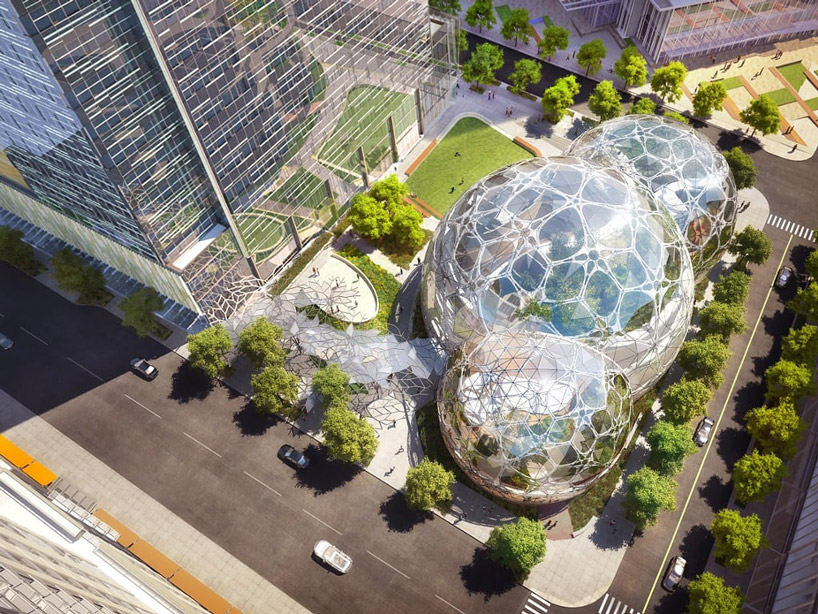
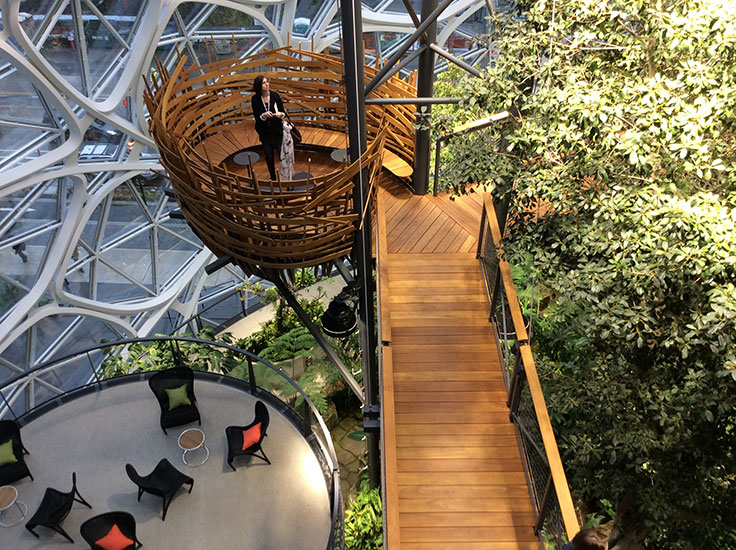
The Spheres offer various flexible workspaces, from open seating to private nooks, catering to different work styles and preferences. Natural elements create a calming atmosphere, enhancing mental health and job satisfaction.

Jolie designed a timeless office space featuring diverse areas for meetings, collaboration, and idea exchange in a tranquil setting. The interior seamlessly incorporates nature, soft colours, and natural materials, elements proven to have a positive impact on the brain.
Considerations for Designing Neurodivergence Friendly Work Environments
The most relevant aspects regarding interaction with the built environment in neurodivergent individuals can be simplified into four aspects: stress reduction, hypo- or hypersensitivity to stimuli such as noise, light, smells, or textures; difficulties in understanding and navigating spaces, reading signs or pictograms; and challenges in communication and socialization.
- Stress reduction: Stress reduction programs benefit all employees by enhancing satisfaction, focus, and overall productivity. For neurodivergent individuals, who may experience higher levels of stress and anxiety, such support is even more crucial. Research indicates that incorporating natural light, biophilic design elements, and curved architectural forms can significantly reduce stress and promote a sense of calm.
- Hypo or hypersensitivity to stimuli: Neurodivergent individuals may experience unusual levels of sensitivity to stimuli such as noise, light, smells, or textures. For example, a noisy environment or fluorescent lighting can be extremely disturbing for someone with auditory or visual hypersensitivity. On the other hand, someone with hyposensitivity might require additional stimuli to effectively perceive their surroundings.
- Difficulties in navigation and spatial understanding: Some neurodivergent individuals may have trouble understanding and navigating physical spaces. This can include difficulty reading signs or pictograms, which can make moving through a large or complex building challenging. Clear signage and well-organized environments are essential to support these individuals.
- Socialization and communication: It is important to educate all staff about neurodiversity and the different ways neurodivergent individuals interact. Spaces should be created that minimize sensory stress and facilitate interaction. This may include quiet areas for focused work and specific areas for socialization.
Finally, understanding and valuing neurodiversity invites us to question established standards and appreciate the uniqueness of each individual. This approach encourages us to build inclusive educational, labour, and social structures that allow every person to contribute meaningfully with their unique strengths.
By considering neurodiversity, we foster the development of communities that embrace diversity and promote equal opportunities for all. Ultimately, this perspective not only enriches organizations and societies but also creates a fairer and more equitable world where every person can reach their full potential.
References
Neuroarchitecture: how the built environment influences the human brain https://www.researchgate.net/publication/373414920_Neuroarchitecture_how_the_built_environment_influences_the_human_brain
Why It’s Important To Embrace Neurodiversity in The Workplace (And How To Do It Effectively) https://www.forbes.com/sites/forbesbusinesscouncil/2023/03/07/why-it’s-important-to-embrace-neurodiversity-in-the-workplace-and-how-to-do-it-effectively/
Neurodiverse applicants are revolutionizing the hiring process. https://qz.com/work/1981466/neurodiverse-applicants-are-revolutionizing-the-hiring-process
Top companies who are engaging their Neurodivergence in 2021 https://www.linkedin.com/pulse/top-companies-who-engaging-neurodivergence-2021-andrew-williams/
Neurodiversity as a Competitive Advantage https://hbr.org/2017/05/neurodiversity-as-a-competitive-advantage
A rising tide lifts all boats: Creating a better work environment for all by embracing neurodiversity https://www2.deloitte.com/us/en/insights/topics/talent/neurodiversity-in-the-workplace.html
Neurodiversity in the Workplace: How To Design Inclusive Offices https://www.loopnet.com/learn/neurodiversity-in-the-workplace-how-to-design-inclusive-offices/471306634/
HOK’s Kay Sargent Authors Guide to Neuroinclusive Workplace https://www.hok.com/news/2024-10/hoks-kay-sargent-authors-guide-on-neuroinclusive-workplace-design/
How Amazon and AWS continue to build equitable opportunities for neurodivergent talent. https://aws.amazon.com/careers/life-at-aws-how-Amazon-and-AWS-continue-to-build-equitable-opportunities-for-neurodivergent-talent/.
 neurotectura.com