
Un puente de vidrio puede ser perfectamente seguro y, aun así, resultar difícil de cruzar. La estructura puede haber sido diseñada para soportar cargas enormes, y el vidrio puede haber sido cuidadosamente probado y estar firmemente sujeto. Desde el punto de vista de la ingeniería, quizá no haya ninguna razón para temerlo. Sin embargo, paraContinueContinue reading “Cómo la percepción determina la verdadera medida del diseño”
Tag Archives: Neurotectura
How Perception Shapes the True Measure of Design
A glass bridge can be perfectly safe and still be difficult to cross. The structure may have been engineered to withstand enormous loads, and the glass may have been carefully tested and securely supported. From an engineering perspective, there may be no reason to fear it. Yet for many people, standing on a transparent floorContinueContinue reading “How Perception Shapes the True Measure of Design”
Cuando el aula compite con el aprendizaje

Un estudiante aparta la mirada mientras el docente habla. Otro golpea repetidamente el lápiz, se balancea en la silla o pide salir del salón. Un tercero realiza muy poco trabajo, aunque parece comprender el tema. Estos comportamientos pueden interpretarse como falta de atención, desmotivación o poca disposición para participar. Sin embargo, es posible que laContinueContinue reading “Cuando el aula compite con el aprendizaje”
When the Classroom Competes With the Lesson
A student looks away while the teacher is speaking. Another repeatedly taps a pencil, rocks in their chair or asks to leave the room. A third completes very little work despite appearing to understand the subject. These behaviours may be interpreted as inattentiveness, lack of motivation or unwillingness to participate. Yet the difficulty may notContinueContinue reading “When the Classroom Competes With the Lesson”
Why We Love High Ceilings: What a 1978 Study Still Tells Us
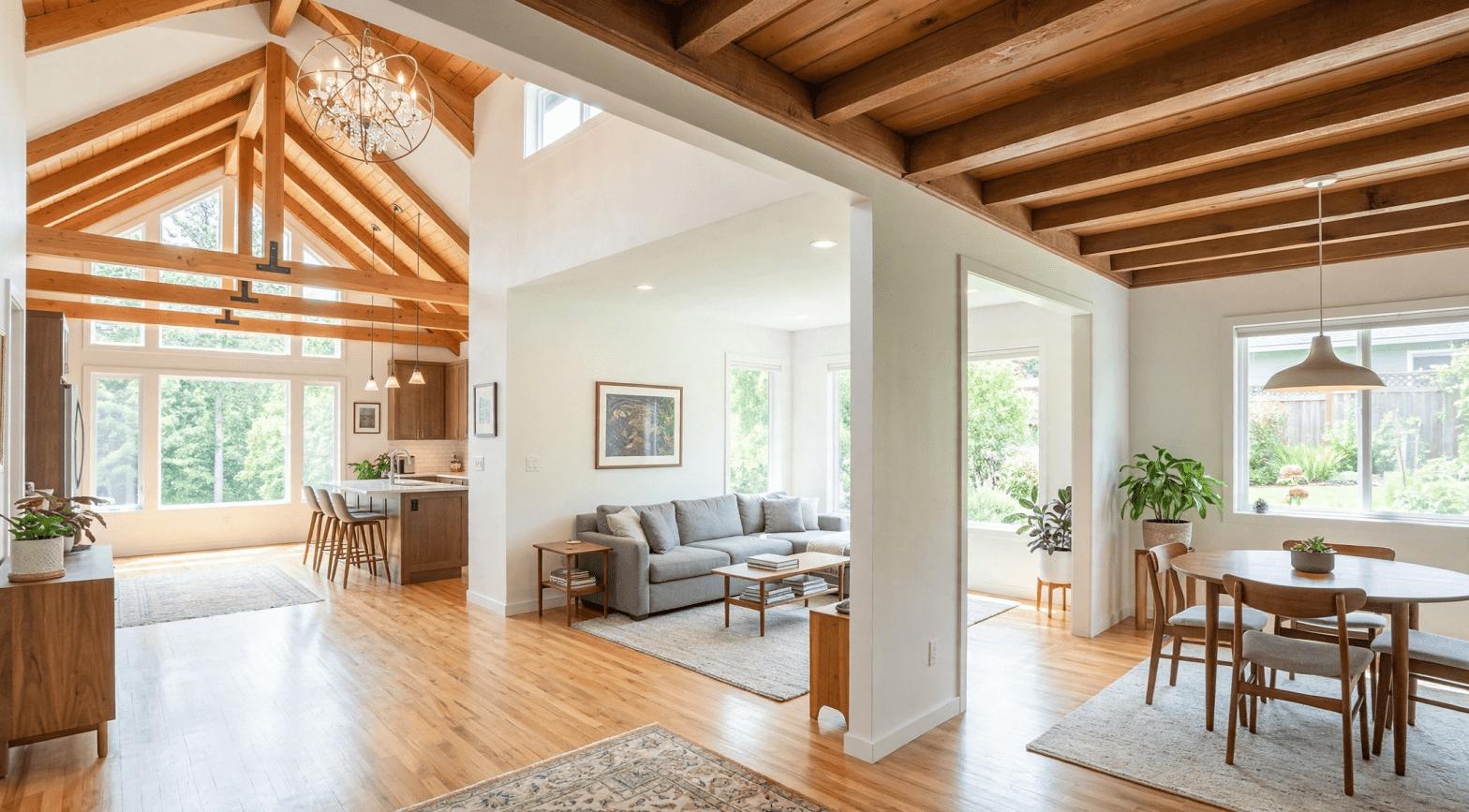
If you were buying a house, would you prefer high or low ceilings? A flat ceiling or a sloping one? Walk into a room with a low ceiling and you instantly feel a little more contained. Walk into one with a high ceiling and you breathe differently. We all know this intuitively. This double-height livingContinueContinue reading “Why We Love High Ceilings: What a 1978 Study Still Tells Us”
Autism in Emergencies: What Yoar’s Story Reveals About Neuroarchitecture and Disaster Relief

A few days ago, we woke to the heartbreaking news of powerful earthquakes that devastated several areas of Venezuela. As always, disasters like these remind us of how fragile our systems can be when confronted with the unpredictable forces of nature. It is in times of crisis that the cracks in our society become mostContinueContinue reading “Autism in Emergencies: What Yoar’s Story Reveals About Neuroarchitecture and Disaster Relief”
Autismo en emergencias: El caso de Yoar tras el terremoto de Venezuela
Hace algunos días nos despertamos con la desgarradora noticia de unos terremotos que devastaron varias zonas de Venezuela. Como siempre, este tipo de eventos es un recordatorio sobre la fragilidad de nuestros sistemas frente a la fuerza inesperada de la naturaleza. Es en momentos de crisis cuando las grietas en nuestra sociedad se hacen másContinueContinue reading “Autismo en emergencias: El caso de Yoar tras el terremoto de Venezuela”
Beyond Buildings: Architecture, Microbiome, and Mental Health

For reference, we spend around 90% of our time indoors and inside vehicles. We inhabit homes, offices, schools, hospitals and cities that, although they may seem separate from us, are in constant interaction with both our bodies and our minds. For a long time, architecture has largely been understood through function or aesthetics, while overlookingContinueContinue reading “Beyond Buildings: Architecture, Microbiome, and Mental Health”
Más allá de los edificios: arquitectura, microbioma y salud mental
Según datos, pasamos el 90 % de nuestro tiempo en espacios interiores y vehículos. Habitamos casas, oficinas, escuelas, hospitales y ciudades que, aunque parecen ajenos a nosotros, están en permanente interacción con nuestro cuerpo y nuestra mente. Durante mucho tiempo, la arquitectura se ha entendido desde lo funcional o lo estético, dejando en segundo planoContinueContinue reading “Más allá de los edificios: arquitectura, microbioma y salud mental”
The Impact of Playground Design on Child Development and Brain Plasticity

Play is an intrinsic biological need of the human being. It is not a luxury or a secondary activity but an adaptive mechanism that allows us to rehearse behaviours, regulate stress, and develop the neural plasticity required for lifelong learning. In childhood, this process becomes especially critical. During periods of rapid brain development, play actsContinueContinue reading “The Impact of Playground Design on Child Development and Brain Plasticity”

