Neuroarchitecture is an interdisciplinary field that combines neuroscience and architecture to study how built environments impact human brain function, behaviour, and well-being. It aims to create spaces that enhance cognitive processes, emotional states, and overall health by applying scientific insights about neural responses to architectural elements like light, colour, spatial layout or the height of the ceilings.

The name “Cathedral Effect” itself alludes to the awe-inspiring feeling often experienced in grand, majestic spaces like cathedrals, which typically feature very high ceilings and open spaces.
Cathedral Effect: The Impact of a High Ceiling
The influence of ceiling height on psychological freedom and creativity is a fascinating area of research that has revealed significant insights into how our built environment affects our cognitive processes and emotional states.
In the 1960s, the American anthropologist Edward T. Hall explained what is known as the Cathedral Effect. The idea that a high ceiling evokes feelings of freedom and openness, fostering abstract thinking, creativity, and holistic problem-solving in individuals. In contrast, low ceilings create a sense of confinement, encouraging focused, detail-oriented, and analytical thinking.
The Cathedral Effect is a psychological phenomenon that explores how ceiling height influences cognition, creativity, and behaviour.
Research has shown that ceiling height impacts how consumers respond. A 2014 marketing study by Joan Meyers-Levy and Rui Juliet Zhu found that high ceilings create a sense of freedom, which leads to broader thinking and overall product assessments. Low ceilings create a feeling of restriction, triggering more detailed evaluations of specific items. This work shows how environmental factors can influence how consumers think and behave.
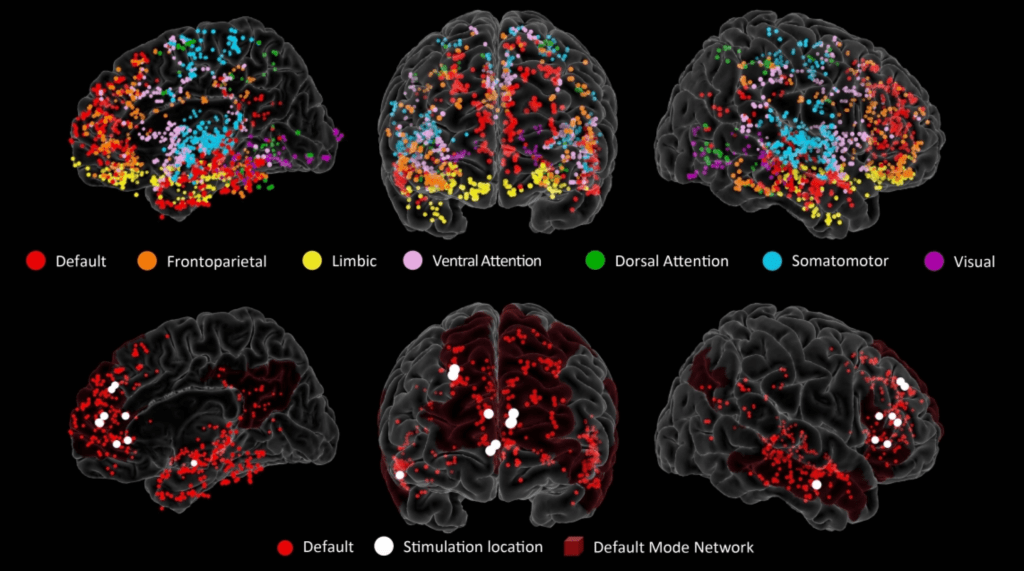
Research from the University of Utah highlights, in red on the lower images, the electrode placement locations. The upper images illustrate how various brain regions are activated during the creative process.
Image https://healthcare.utah.edu/newsroom/news/2024/07/study-pinpoints-origins-of-creativity-brain
fMRI studies have revealed that exposure to high ceilings activates several key brain regions associated with abstract thinking and spatial processing. The precuneus, located in the parietal lobe, shows increased activity, suggesting enhanced visuospatial exploration and mental imagery. The middle frontal gyrus, involved in higher-order cognitive functions, is also activated, indicating more abstract and integrative thinking processes.
Additionally, while not explicitly mentioned in all studies, the medial temporal lobe structures are thought to play a role in processing spatial information related to high-ceiling environments. These neurological findings support behavioural studies showing that high ceilings promote more creative, abstract thinking and a sense of freedom, while low ceilings tend to encourage more focused, detail-oriented cognition.
The Cathedral Effect and Architecture
The implications of the Cathedral Effect are significant for architecture and design. Understanding that high ceilings foster creativity while low ceilings enhance focus and detail-oriented tasks enables architects and designers to shape cognitive and emotional experiences through intentional design. For instance.
- Workspaces. At work, high ceilings can enhance creativity and abstract thinking, making them ideal for brainstorming sessions and innovative tasks. Conversely, lower ceilings may be more suitable for detail-oriented work that requires focused attention. This insight can guide office design to optimise employee performance based on the nature of their work.
- Retail. Ceiling height can impact consumer behaviour and information processing. Higher ceilings may encourage more abstract thinking, potentially leading to broader product categorization and evaluation based on overall impressions. Lower ceilings might prompt more concrete thinking, causing consumers to focus on specific product features. Retailers can leverage this knowledge to design spaces that align with their product offerings and desired consumer responses.
- Educational spaces can benefit from higher ceilings, as they may foster more creative play and learning in children. The increased vertical space can promote a sense of freedom and openness, potentially stimulating imagination and exploration. However, it’s essential to balance this with areas that have lower ceilings for activities requiring concentration and focused learning.

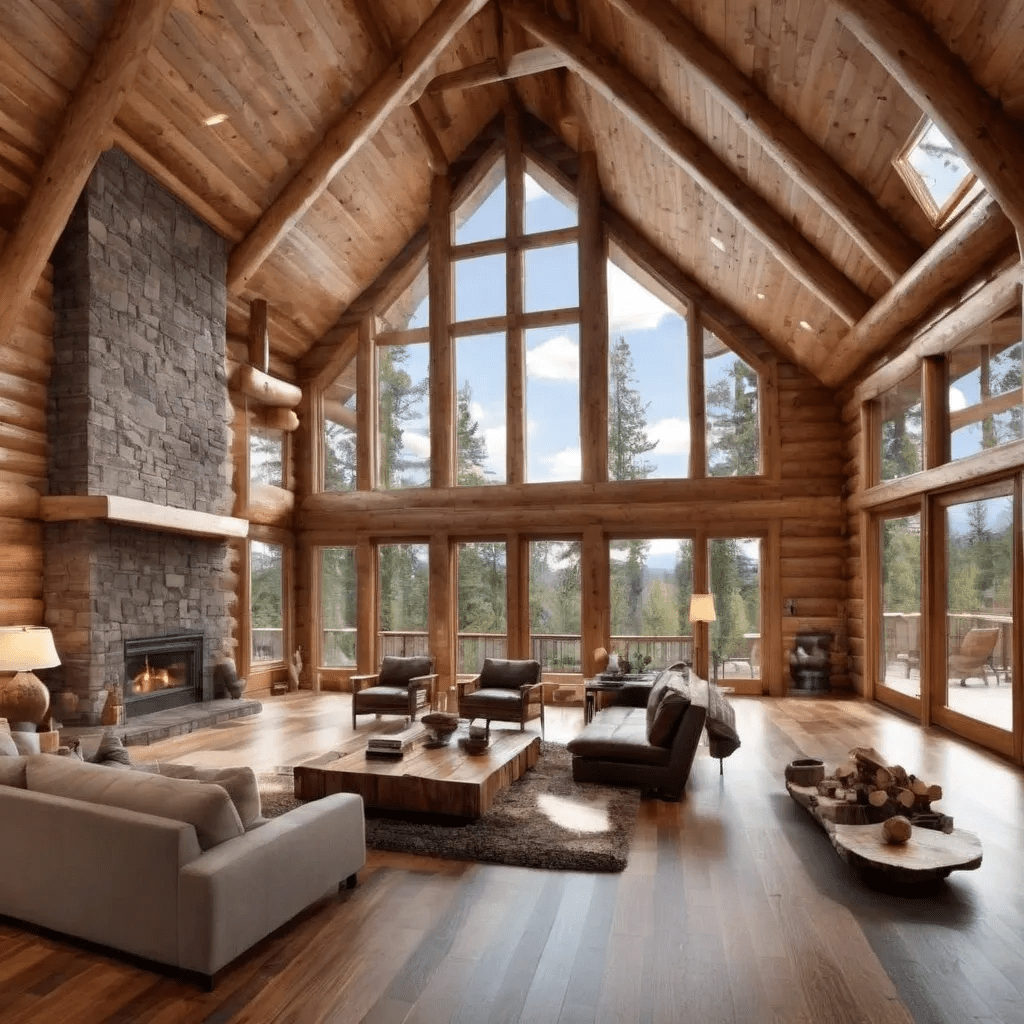
Left: A spacious room with soaring ceilings, creating an airy and expansive atmosphere that invites the eye upward and promotes a sense of openness and freedom.
Right: An intimate space with lower ceilings, fostering a cosy and contained environment that encourages focus and a feeling of security.
Measurements
Ceilings around 3.05 metres (10 feet) high have been found particularly effective for creative tasks. However, excessively high ceilings above 3.05 metres may lead to feelings of being ungrounded or unfocused. On the other hand, ceilings below 2.44 metres (8 feet) may induce feelings of compression and lethargy over time. Designers should aim for a balance that promotes the desired cognitive effects without compromising comfort or functionality.
In conclusion
The relationship between ceiling height and psychological well-being is both significant and profound. High ceilings often evoke a sense of expansiveness and freedom, fostering creativity and innovative thinking, while low ceilings can create feelings of security and intimacy, ideal for relaxation and connection.
By understanding these effects, architects, and designers can craft spaces that align with specific cognitive needs and emotional states, enhancing both functionality and overall well-being. For instance, high ceilings in workspaces can inspire bold, creative thinking, whereas lower ceilings in bedrooms can promote comfort and closeness.
Moreover, the perception of height influences mood and motivation, encouraging us to consider how we interact with spaces in our daily lives. Thoughtful design choices are especially impactful in different contexts: high ceilings in commercial spaces can convey grandeur and openness, while lower ceilings in residential settings foster warmth and a cosy, nurturing atmosphere.
References
Neuroarchitecture: How the Perception of Our Surroundings Impacts the Brain. https://pmc.ncbi.nlm.nih.gov/articles/PMC11048496/
The Influence of Ceiling Height: The Effect of Priming on the Type of Processing
That People Use file:///Users/patricianewton/Downloads/3130%20(1).pdf
Uncovering the connection between ceiling height and emotional reactions in art galleries with editable 360-degree VR panoramic scenes. https://pmc.ncbi.nlm.nih.gov/articles/PMC10771302/
Neuroarchitecture and spaces with a Focus on Creativity. https://www.neuroau.com/post/how-neuroarchitecture-can-help-projects-with-a-focus-on-creativity.
Impact of design performance of employees https://www.researchgate.net/publication/357753070_IMPACT_OF_DESIGN_PERFORMANCE_OF_EMPLOYEES
Study Pinpoints Origins of Creativity in the Brain. https://healthcare.utah.edu/newsroom/news/2024/07/study-pinpoints-origins-of-creativity-brain.
 neurotectura.com
23 thoughts on “How Ceiling Height Influences Creativity and Focus”