
Research consistently shows that curved architectural forms tend to evoke more positive emotional responses compared to angular designs. Curved shapes are associated with feelings of comfort, safety, and pleasantness, while angular shapes may induce a sense of threat or unease.
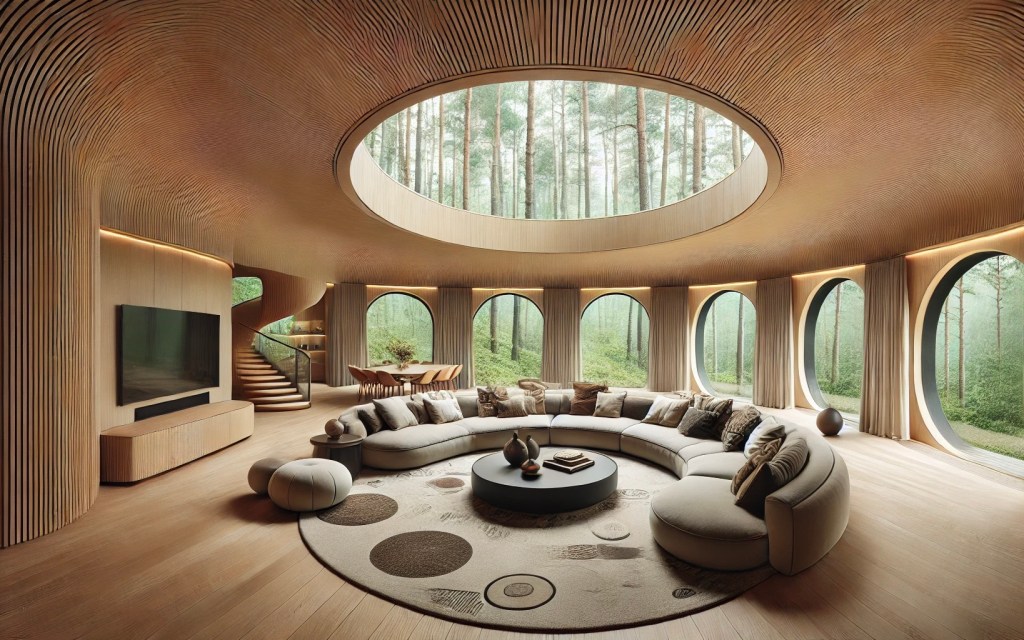
Studies have indicated that participants report greater positive emotions in environments with curved designs, with brain imaging revealing increased activity in emotion-related areas when viewing curved forms. Conversely, angular designs can enhance alertness and concentration in specific contexts. These insights carry significant implications for designing spaces that promote well-being and optimize user experiences.
Emotional Responses to Curved Designs
Consistently, research indicates that humans prefer curved architectural forms over angular designs. Participants report higher positive emotional effects and stress reduction in curved spaces. This preference, seen even in infants, suggests an innate association of curvature with safety and comfort. Curved spaces are often rated as more beautiful and calming, offering psychological benefits that go beyond aesthetics.
Physiological studies reveal lower heart rate arousal in curved environments, indicating greater relaxation. These findings demonstrate the tangible impact of curved designs on stress reduction and well-being, emphasizing their potential to create supportive and health-enhancing spaces.

Angular shapes can boost alertness and focus, supporting cognitive performance in task-oriented environments.
Emotional Responses to Angular Designs
While curved designs generally elicit more positive responses, angular designs can have distinct psychological effects. Angular shapes may enhance alertness and concentration, potentially benefiting cognitive performance in specific tasks. However, sharp contours can activate the amygdala, a brain region associated with processing emotions, particularly fear. This activation may contribute to a perceived sense of threat or unease in some individuals.
Research has shown that angular shapes can trigger faster threat detection and negative emotional responses. This effect may be rooted in evolutionary adaptations, as angular forms in nature often signal danger (e.g., sharp teeth, thorns). However, the impact of angular designs is not universally negative and can vary based on context, individual differences, and cultural factors.


Right: Portrait defined by straight lines and solid, triangular shapes, emphasising structure and precision.
AI-generated images.
Cultural factors
Research shows cultural differences in preferences for curved versus angular designs, although curved shapes are widely appreciated. Collectivistic cultures typically favour rounded shapes, while individualistic ones lean toward angular forms. However, both European and Asian participants commonly associate rounded shapes with beauty, simplicity, and comfort. People with an interdependent self-construal also tend to prefer curves, while those with an independent self-construal are drawn to angular designs.
These findings highlight the interplay of universal aesthetics and cultural influences on design preferences. While biological factors frequently drive a general preference for curved shapes, cultural context, self-perception, and societal values can shape individual preferences. For instance, studies in Turkish culture reveal unique patterns in the perception of curvature, emphasizing the importance of considering diverse cultural contexts in architectural and design aesthetics.
Practical Implications
Understanding the emotional impact of curved versus angular designs has important implications for architectural practice:
- Enhanced User Experience: By incorporating curved elements, architects can create spaces that potentially improve mood, reduce stress, and increase creative thinking.
- Purposeful Design: Depending on the intended function of a space, architects can strategically use curved or angular elements to evoke specific emotional responses or cognitive states.
- Workplace and Educational Spaces: The positive influence of curved room geometry on mood, arousal, and creativity emphasizes the importance of considering room layout in various settings to enhance positive emotional experiences and productivity.
- Therapeutic Environments: In healthcare settings, the use of curved designs could contribute to creating more calming and healing environments.
In conclusion
Neuroarchitecture offers a powerful framework for understanding how the shapes and forms of our surroundings influence emotional well-being and cognitive processes. By thoughtfully applying these insights, architects, and designers can create spaces that are not only visually compelling but also enhance the psychological and emotional experiences of their users, fostering environments that truly support human flourishing.
However, research on the psychological impact of architectural contours reveals nuanced and context-dependent responses to curved versus angular designs. While some studies suggest a general preference for curvature due to its associations with comfort and approachability, other findings highlight conflicting results, indicating that this preference is not universal. Individual differences, cultural backgrounds, and the intended function of a space all play crucial roles in shaping how people perceive and interact with these design elements, underscoring the complexity of human responses to the built environment.
References
Angular Versus Curved Shapes: Correspondences and Emotional Processing. https://www.researchgate.net/publication/319936148_Angular_Versus_Curved_Shapes_Correspondences_and_Emotional_Processing
Oshin Vartanian: The wellbeing of a person is central. https://venetianletter.com/2020/10/19/oshin-vartanian-the-number-one-requirement-should-be-that-the-wellbeing-of-the-person-is-central/
Emotional Architecture: How Curves and Lines Influence Human Experience. https://architizer.com/blog/inspiration/stories/psychology-curves-and-lines-architecture/
Walking through Architectural Spaces: The Impact of Interior Forms on Human Brain Dynamics. https://www.frontiersin.org/journals/human-neuroscience/articles/10.3389/fnhum.2017.00477/full
Do observers like curvature, or do they dislike angularity? https://pmc.ncbi.nlm.nih.gov/articles/PMC4975689/
Contour features predict valence and threat judgements in scenes. https://www.nature.com/articles/s41598-021-99044-y
The Impact of Self-Construal on Aesthetic Preference
for Angular Versus Rounded Shapes. https://citeseerx.ist.psu.edu/document?repid=rep1&type=pdf&doi=17171ec2e1f7b765a2337c5ec9f1442d38c89eec.
Emotional Design: The Impact of Curves and Lines on Human Experience in Architecture. https://www.jasboutique.co.uk/blog/emotional-design-the-impact-of-curves-and-lines-on-human-experience-in-architecture/.
 neurotectura.com
4 thoughts on “The Emotional Impact of Curved vs. Angular Designs”