
For millennia, architects have intuitively designed sacred spaces to evoke profound emotional and spiritual experiences. Now, cutting-edge neuroscience research is shedding light on the biological underpinnings of how these awe-inspiring environments affect our brains and bodies. This emerging field of neuroarchitecture offers exciting insights for designing spaces that encourage contemplation, awe, and transcendence.

This is one of the world’s largest religious monuments in the world. It was constructed in the early 12th century under King Suryavarman II. Originally dedicated to the Hindu god Vishnu, it transitioned to a Buddhist temple in the 13th century. Recognized for its grandeur and intricate design, symbolizing Cambodia’s rich cultural heritage, Angkor Wat was designated a UNESCO World Heritage Site in 1992.
The Neural Basis of Awe
Recent neuroimaging studies have revealed fascinating insights into how our brains process awe-inducing architecture. When viewing images of grand, contemplative buildings like cathedrals, participants showed:
- Increased activation in the parietal lobes, associated with spatial awareness and sensory integration
- Reduced activity in the prefrontal cortex, linked to self-referential thinking and analytical reasoning
- Deactivation of the default mode network, which is active during mind-wandering
These neural patterns are remarkably similar to those observed during meditation, suggesting that certain architectural features can induce contemplative states without conscious effort.

A Gothic masterpiece rising from the sea, its soaring spires and imposing silhouette inspire awe. This medieval marvel captivates visitors with its ethereal beauty, blending architecture and nature in a transcendent spectacle.
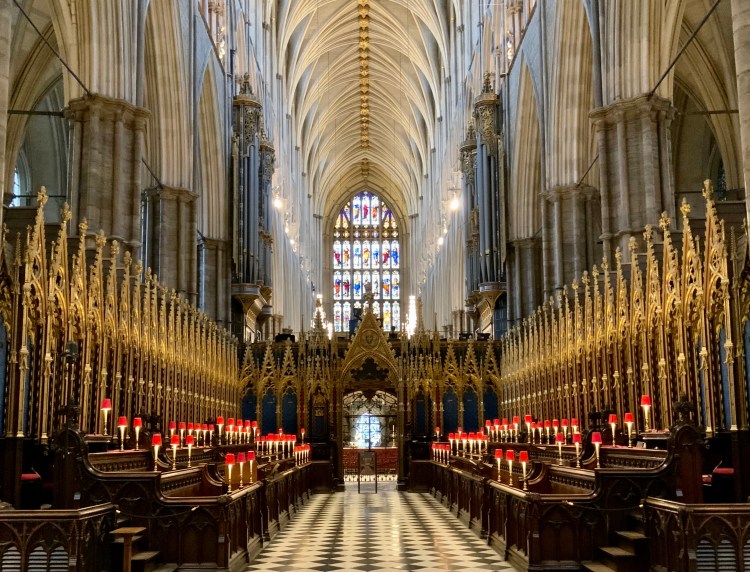
Westminster Abbey’s layout enhances spirituality through its soaring height, light, structure, decoration and acoustic design. The ribbed vaults and pointed arches, produces long reverberation times of 5.5 to 8 seconds. This ethereal soundscape envelops worshippers, blurring individual sounds into a harmonious blend that seems to suspend time.
Key Architectural Elements That Evoke Awe
Research has identified several key features that contribute to feelings of awe in architectural spaces:
- Immense scale and grandeur
- Intricate ornamentation and detail
- Dramatic manipulation of light
- Harmonious proportions and geometry
- Natural materials and biophilic elements
- Acoustic resonance and reverberation
For example, Westminster Abbey, the coronation site for British monarchs since 1066, evokes awe through its soaring Gothic architecture, cruciform layout, and resonant acoustics. The vertical emphasis directs the gaze upward, inspiring reverence, while the cruciform plan facilitates ceremonial processions. The Abbey’s acoustics, characterized by long reverberation times, create an immersive soundscape that enhances the spiritual experience. The spatial progression from nave to altar deepens the contemplative journey, culminating at the sacred heart of the Abbey.
Contemplation involves deep, reflective thought or meditation. Architects intentionally design spaces within religious and spiritual structures to facilitate this practice, creating intimate and sacred environments that encourage profound reflection.

The Mihrab is a niche on the wall that indicates the direction of the Kaaba in Mecca, the holiest place in the Islam. Muslims face the mihrab during prayer, making it both a symbolic and architectural focal point of the mosque. Considered the most honourable location within the mosque, the mihrab invites concentration and deep reflection.

A stark concrete sanctuary where a luminous cross pierces darkness, embodying duality. This minimalist masterpiece invites contemplation, merging spiritual and secular through the interplay of light and void, elevating consciousness in unadorned serenity.
Designing for Contemplation
Beyond awe, sacred architecture can be intentionally designed to facilitate contemplative states. Studies indicate that certain spatial qualities can reduce anxiety, quiet the mind, and induce meditative focus. Key elements include:
- Simplified forms and reduced visual stimuli
- Diffused, indirect lighting
- Natural materials and textures
- Enclosed, protective spaces
- Visual focal points for concentration
Tadao Ando’s Church of Light stands as a masterpiece of contemplative architecture. Its minimalist design, featuring raw concrete and a cruciform opening, creates a serene sanctuary where light becomes a tangible spiritual presence. The interplay of light and shadow, changing throughout the day, invites introspection and meditation. Void of traditional ornamentation, the space focuses attention on the essential, allowing visitors to experience a profound connection between the material and the divine in this austere yet deeply moving environment.
Measurable Effects on Mind and Body
The impact of sacred spaces extends beyond subjective experience. Biometric studies have found that exposure to awe-inspiring architecture can produce measurable physiological changes, including:
- Increased gamma brain wave activity
- Elevated heart rate and skin conductance
- Altered time perception (typically an overestimation of time passed)
These effects appear to be distinct from those induced by impressive but non-sacred spaces, proposing a unique power of spiritually oriented design.

This eye-shaped sanctuary of knowledge captivates with its bold geometry, blending art and architecture to inspire awe and reflection in China’s cultural landscape.
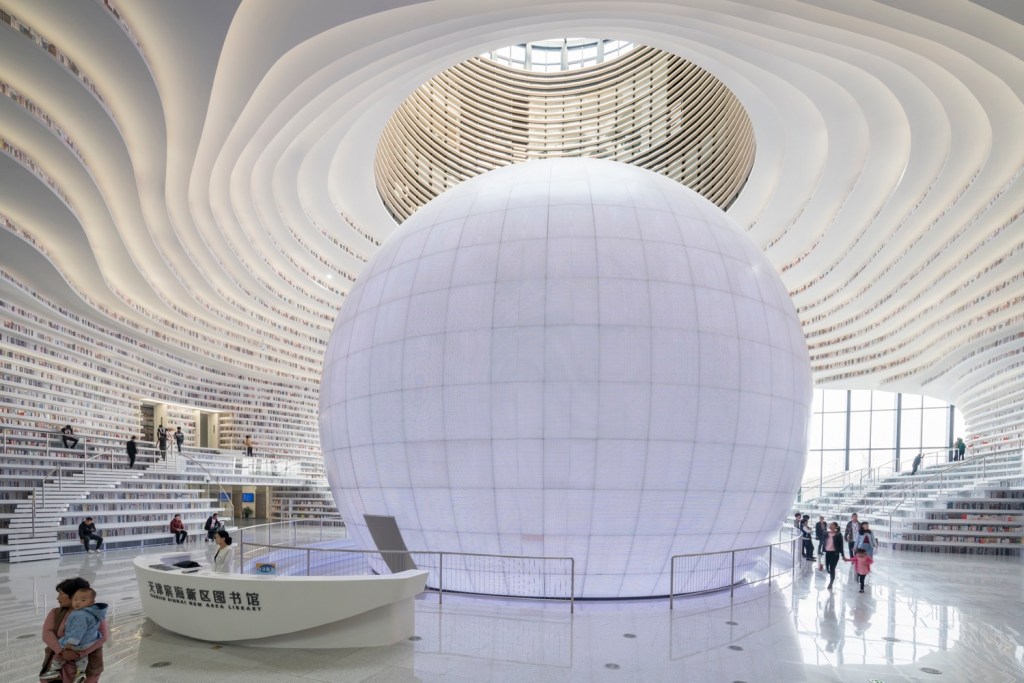
A luminous sea of cascading bookshelves surrounds a gleaming spherical auditorium, creating an awe-inspiring landscape of knowledge. This futuristic sanctuary invites contemplation and wonder, blending form and function in a mesmerizing architectural spectacle.
Applying Neuroarchitectural Insights
As we gain a deeper scientific understanding of how built environments affect our inner states, architects, and designers can apply these insights to create more intentional, transformative spaces. Some key principles emerging from this research include:
- Incorporate elements of vastness and intricate detail to trigger awe responses
- Use harmonious proportions and sacred geometry to convey a sense of cosmic order
- Carefully modulate sensory stimuli to facilitate focus and contemplation
- Create progressive layers of space to guide attention inward
- Integrate natural elements and biophilic design to enhance wellbeing
For example, libraries, as non-sacred spaces, embody contemplation and awe, serving as intellectual sanctuaries that inspire knowledge and deep reflection. Their dual nature, rooted in history, continues to evolve through innovative contemporary designs, blending tradition with modernity to foster learning and introspection.
In Conclusion
While the full complexity of spiritual experience can never be reduced to neurobiology alone, this research offers valuable tools for designing environments that nurture our innate capacity for awe, wonder, and transcendence.
By combining neuroscience with architecture, we gain insights into how spaces impact human consciousness and foster a deeper connection between our inner selves and our environment, potentially leading to personal transformations.
The ancient wisdom of sacred architecture is finding new expression through the lens of modern science, as architects and designers draw inspiration from both nature and human emotion. This points the way toward a more intentional and transformative built environment that harmonises our physical and spiritual existence. Through this synthesis, we can create not only aesthetically pleasing spaces but also environments that resonate on a deeper, emotional level, ultimately enriching the human experience.
Gallery
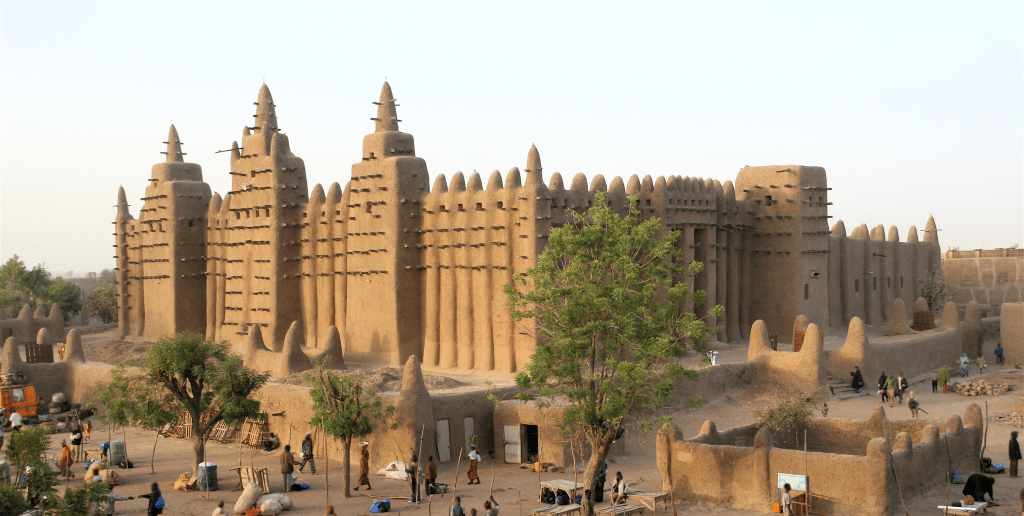
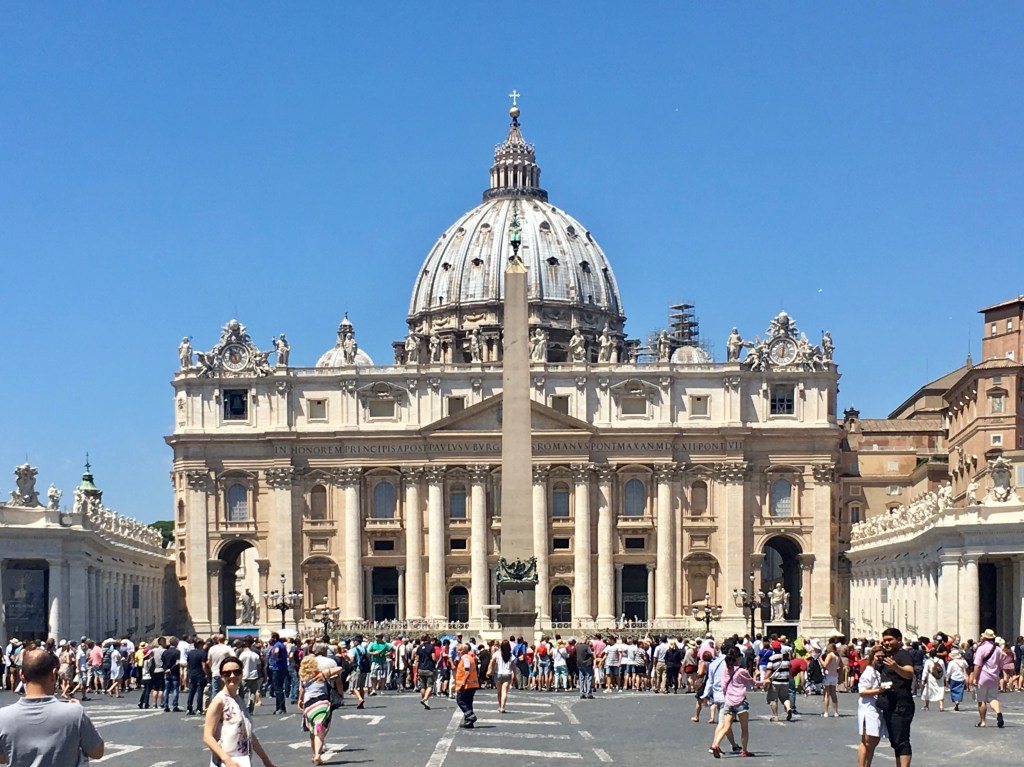
Places of awe and contemplation span cultures, faiths and eras, reflecting humanity’s universal quest for meaning and reflection.




References
Neurobiology of Spirituality. https://pmc.ncbi.nlm.nih.gov/articles/PMC3190564/
Awe. https://magazine.texasarchitects.org/2017/05/16/awe/
Acoustics of sacred spaces. https://www.studysmarter.co.uk/explanations/archaeology/archaeoacoustics/acoustics-of-sacred-spaces/
How Sacred Architecture Conveys Spiritual Understanding: A Biometric-Based Study. https://templetonreligiontrust.org/explore/how-sacred-architecture-conveys-spiritual-understanding-a-biometric-based-study/.
The world’s most wonderful places of worship. https://www.ft.com/content/9ad2783c-06aa-4397-be4c-a050ac7ad148?utm_source=chatgpt.com.
AD Classics: Church of the Light / Tadao Ando Architect & Associates. https://www.archdaily.com/101260/ad-classics-church-of-the-light-tadao-ando
Tianjin Binhai Library / MVRDV + Tianjin Urban Planning and Design Institute https://www.archdaily.com/882819/tianjin-binhai-library-mvrdv-plus-tianjin-urban-planning-and-design-institute
 neurotectura.com