
Imagine a design studio where the architect doesn’t sketch alone—but co-creates with a system that suggests, simulates, and learns. That future is no longer distant. It’s already underway.
A New Era in the Making
From generative floor plans to climate-responsive façades, artificial intelligence (AI) is beginning to reshape how we design, build, and think. But beyond the novelty of machine-led creativity lies a deeper transformation—one that will redefine the architect’s role, the studio workflow, and the very foundation of architectural education.

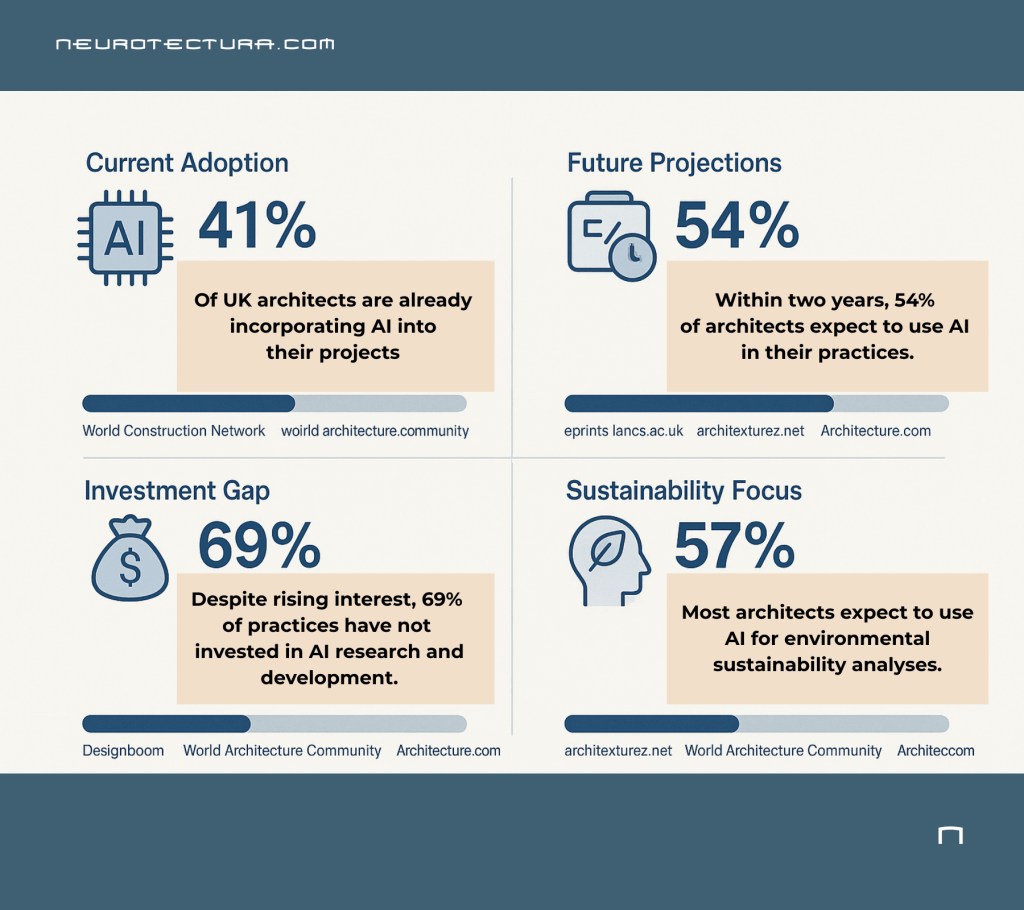
According to the RIBA Artificial Intelligence Report 2024, 41% of UK architects are already using AI in their workflows, particularly for ideation, visualisation, and environmental analysis. Within the next two years, over 54% expect to adopt it more fully. Yet despite this growing enthusiasm, 69% of practices have not invested in AI research or development—exposing a critical gap between ambition and implementation. Notably, 35% of architects believe AI could threaten jobs within five years.
According to the RIBA report, 35% of architects believe AI could threaten jobs within five years.
RIBA Artificial Intelligence Report 2024.


Zaha Hadid has been at the forefront of integrating computer aided design (CAD) and artificial intelligence into architectural design
What AI Can Do (and Is Already Doing)
AI in architecture is no longer speculative—it’s operational. Tools like Spacemaker AI (now part of Autodesk Forma) and TestFit streamline site analysis and layout generation. Platforms like Enscape and Midjourney are revolutionising architectural visualisation, allowing real-time, photorealistic renderings.
Current capabilities include:
Visual storytelling – AI-enhanced imagery and diagrams that support design narratives
Generative design – producing hundreds of variations based on defined constraints
Performance simulation – forecasting light, acoustics, airflow, and energy performance
Automation of documentation – tools like Delve by Sidewalk Labs handle zoning, massing, and compliance
Real life examples
Zaha Hadid Architects (ZHA) began adopting CAD in the late 1980s, becoming one of the earliest studios to integrate digital tools. By the 1990s, digital modelling was central to their process, enabling the iconic, fluid geometries that define their work. In the 2000s, they pioneered parametric design through platforms like Rhino, Grasshopper, and Generative Components—laying the foundation for AI integration.
Since the late 2010s, ZHA has actively explored machine learning. In collaboration with NVIDIA, they developed ZSPACE, a platform for real-time design coordination using AI. These tools are now shaping everything from optimisation workflows to early-stage ideation—training models on ZHA’s design language to generate new forms aligned with their architectural identity.
Zaha Hadid Architects became a pioneer of parametric design, applying rule-based systems and algorithmic logic to architectural form-making—laying the foundation for AI integration.
More recently, ZHA created Parametric London, a speculative city inside Fortnite Creative, as part of the “Redefine the City” initiative. Here, modular architecture, green rooftops, and AI-informed layouts test how virtual worlds might inform real ones—merging architecture with gaming, narrative, and simulation.

Created as part of the “Redefine the City” initiative, this immersive world reimagines London through the lens of AI-enhanced parametric design—complete with modular structures, green rooftops, and responsive urban layers.
The Architect’s Role Is Evolving
As AI handles computation and iteration, the architect becomes a strategist, editor, and ethical guide. This shift brings new priorities:
- Focusing on long-term vision and sustainability goals
- Making ethical decisions—what to prioritise, “who” to include, and what’s left out
- Interpreting space through human experience and sensory awareness
- Framing the “why” behind machine-generated proposals
Architects now leverage AI to process complex datasets and generate insights at speed—freeing them to invest more deeply in innovation, experimentation, and emotional design. The profession is evolving into a discipline that fuses technical acuity with strategic foresight, reshaping the built environment for a more complex world.
“AI will not replace architects, but architects using AI will replace those who don’t”
Dale Sinclair, Director de Innovación en WSP | RIBA AI Report 2024
Opportunities—and Warnings
AI brings enormous potential:
- Faster iteration and precision
- Data-driven decision-making
- Optimised resource use and environmental performance
- Expanded access to design generation
But it also raises critical challenges:
- Bias and exclusion – flawed data can replicate social inequities
- Loss of authorship – Who owns an AI-generated concept?
- Job displacement – 35% of architects fear automation will impact employment
- Over-reliance – risk of prioritising speed over thoughtfulness
These issues demand thoughtful regulation, critical engagement, and ethical leadership. Architects must help shape how AI is used—not simply accept how it arrives.
What Will Change in Architectural Education?
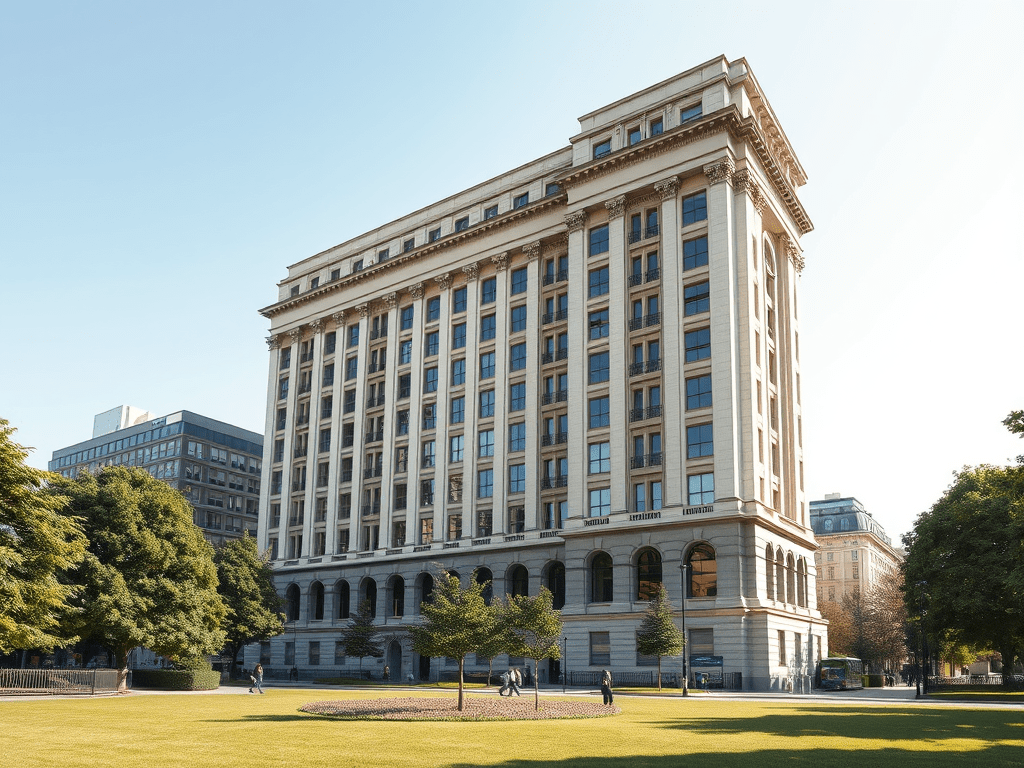
At UCL’s Bartlett School of Architecture, ranked #1 in the world for architecture and the built environment (QS 2024), this future is already taking form. Bartlett leads by combining technological excellence with human-centred inquiry.
Programmes such as:
- Architectural Computation M.Sc.
- Architectural Design M.Arch.
- Architectural Space and Computation MPhil/PhD
Equip students with cutting-edge skills in algorithmic design, machine learning, and spatial analysis—preparing them to lead in an AI-augmented world.
But Bartlett’s commitment goes beyond code. Its Health, Wellbeing and Sustainable Buildings M.Sc. prepares designers to create environments that support mental and physical health. In 2024, the school launched a groundbreaking collaboration with RISE (Research Institutes of Sweden) to explore neuroarchitecture and spatial perception—studying how the brain responds to environmental stimuli.
Together, these initiatives reflect a deeper truth: the future of architectural education isn’t either/or—it’s both/and. Both machine intelligence and emotional resonance. Both computation and compassion.







The Human Advantage: What AI Can’t Replace
Architecture is not only about form or function—it is about meaning.
It’s how it feels to walk into a space.
The memory of a childhood room.
The unease of a dark hallway.
The comfort of soft light through a window.
AI can model geometry, but it cannot feel joy, discomfort, nostalgia, or calm. It cannot understand cultural symbolism, emotional nuance, or the lived realities of neurodivergent users. These are deeply human domains—and where architects remain essential.
Architecture is about connection—to place, to people, to self. And no algorithm, no matter how advanced, can replicate that.
7. A Call to the Profession
We are not being replaced—we are being repositioned. Architects must become stewards of AI’s integration into practice, embracing this evolution as an opportunity to enhance our creative capabilities rather than viewing it as a threat to our profession. As technology advances at a rapid pace, we have the responsibility to harness these tools to create more efficient workflows, develop innovative designs, and ultimately improve the built environment.
By combining our unique human insights with artificial intelligence, we can push the boundaries of architecture, leading to smarter, more sustainable solutions that cater to the needs of society. This transformation calls for a mindset shift, where we adapt to new technologies and actively shape their application in our field, ensuring that our role as architects remains vital and impactful in a changing landscape.
References
RIBA Artificial Intelligence Report 2024. https://www.architecture.com/knowledge-and-resources/resources-landing-page/riba-ai-report-2024?srsltid=AfmBOorzjrckZSKJHpaUCP7nDm6Omye4BXltF4DKdj_1FtLNZWdzdZEV
Navigating the Frontier: The Pros and Cons of AI in Architectural Design https://www.linkedin.com/pulse/navigating-frontier-pros-cons-ai-architectural-design-hamza-syed-lrmsf/
The Future of Architecture: Exploring AI’s Transformative Impact https://betterpros.com/betterinsights/the-future-of-architecture-exploring-ais-transformative-impact/#:~:text=AI%20ushers%20in%20an%20era,building%20purpose%2C%20and%20sustainability%20targets.
Zaha Hadid Architects using AI image generators for design concepts, said Patrik Schumacher https://parametric-architecture.com/zaha-hadid-architects-using-ai-image-generators-for-design-concepts-said-patrik-schumacher/
What is the Future Role of Architects in the Age of AI and Data? https://www.archdaily.com/995781/what-is-the-future-role-of-architects-in-the-age-of-ai-and-data
AI in architecture: Zaha Hadid Architects on its pioneering use and collaborating with NVIDIA. https://www.wallpaper.com/architecture/zaha-hadid-architects-nvidia-ai-in-architecture
Parametric London for Fortnite Games Zaha Hadid Architects creates parametric London for the Fortnite game
 neurotectura.com
One thought on “AI in Architecture: Redefining Design and Collaboration”