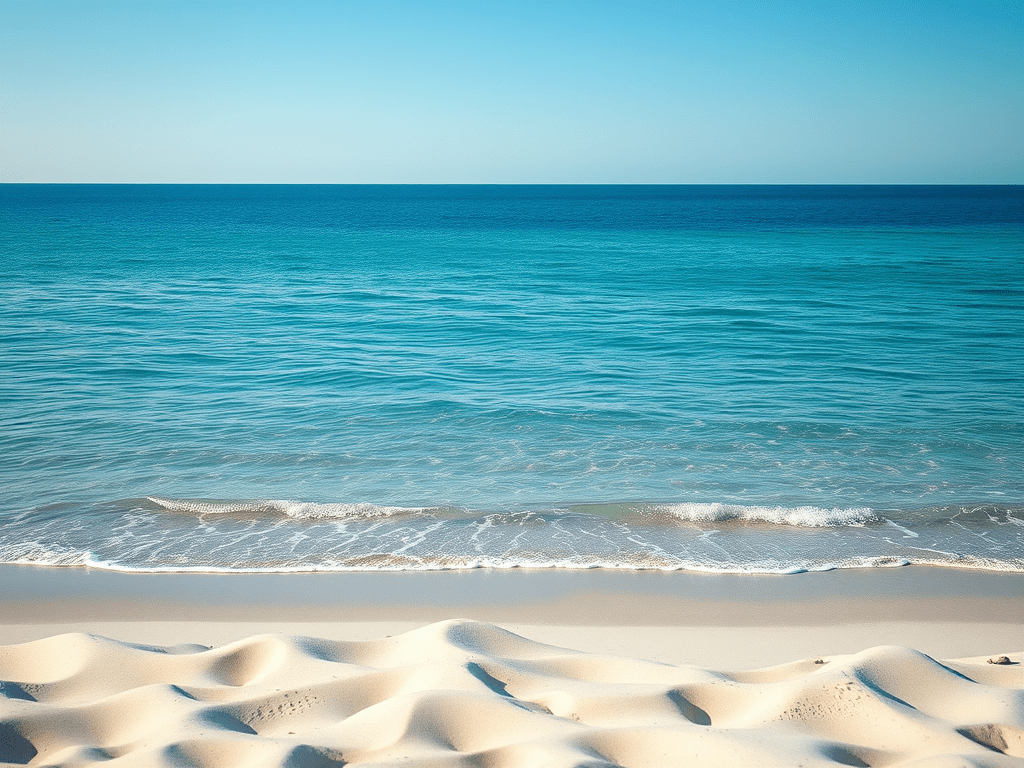
A few days ago, I posted a simple question:
Which water scape would you escape to right now?
Most people responded with what many of us instinctively feel:
The sea – to relax.
But what is it about the sea that draws us in?
And more importantly: how can we recreate those sensations through design, even when the sea is far away?
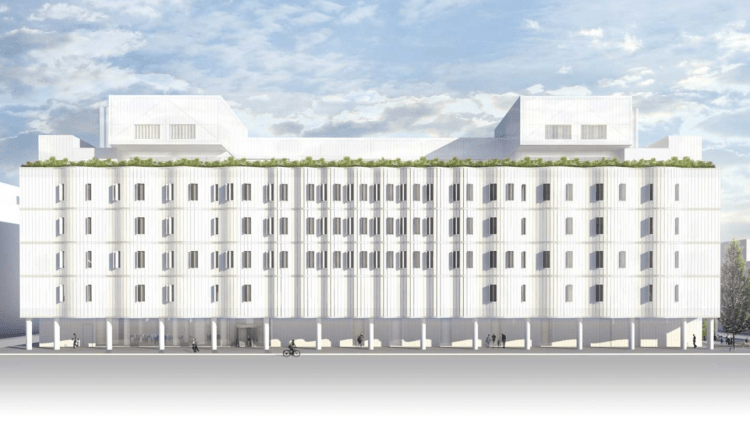
The undulating glass façade of this neuroscience laboratory was inspired by both the motion of sea waves and the flow of brainwaves. Here, science and nature merge in a form that suggests fluidity, depth, and expanded perception.
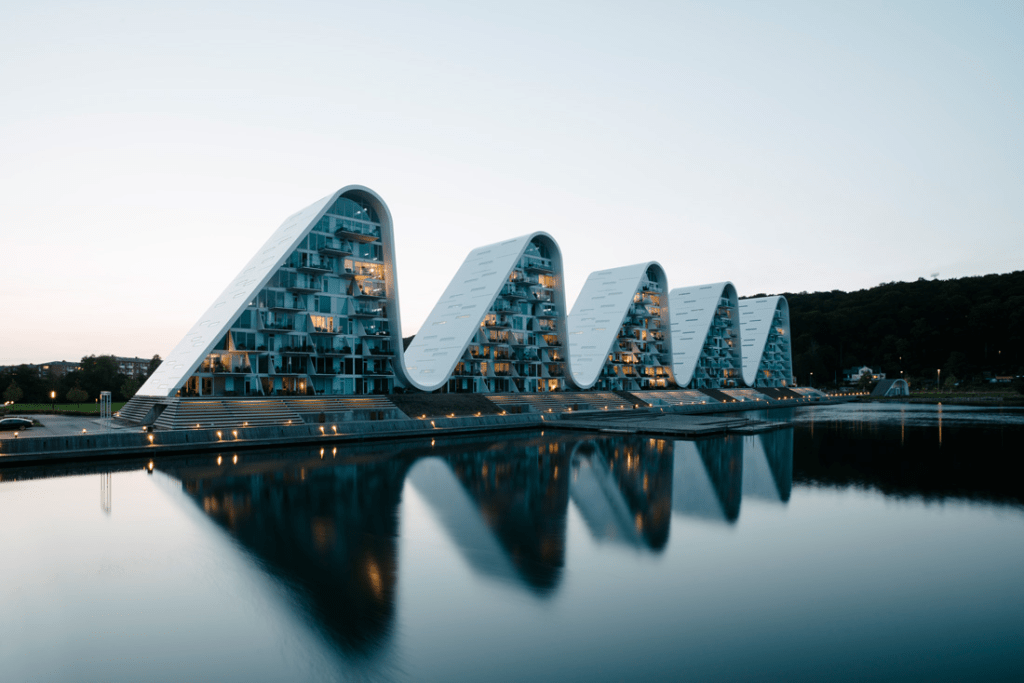
This residential complex, designed by Henning Larsen in Vejle, fuses form and context. Its wave-like silhouettes, reflected in the fjord, echo the rhythm of the sea, creating a continuous sensory dialogue between building and landscape.
The Neuroscience of the Sea: Why It is calming
🔹 Predictable, rhythmic sound
The sound of waves functions as a natural white noise—enveloping, soft, and repetitive. This type of stimulus regulates the parasympathetic nervous system, helping us enter states of deep relaxation.
🔹 Open horizons
Being in front of the sea expands our visual field. There are no walls, no chaos, no obstacles. The gaze softens, the body loosens. Neurologically, this reduces amygdala activity—diminishing our sense of threat.
🔹 Calming colours
Marine tones—blues, turquoises, greys—are strongly linked to serenity. Studies show that cool colours, especially blue, lower heart rate and promote introspection.
🔹 Hypnotic movement
The sea’s gentle, repetitive motion offers visual rhythm. Our brain responds with a kind of visual meditation that enhances focus, creativity, and calm.
🔹 A deep connection to life
Beyond the sensory, the sea activates something ancestral. It represents origin, vastness, the sacred. It touches something in our emotional memory.

How Can We Translate This into Design and Architecture?
Even if the sea isn’t nearby, we can create spaces that evoke its effects or even incorporate water through fountains, water threads, or indoor and outdoor cascades.
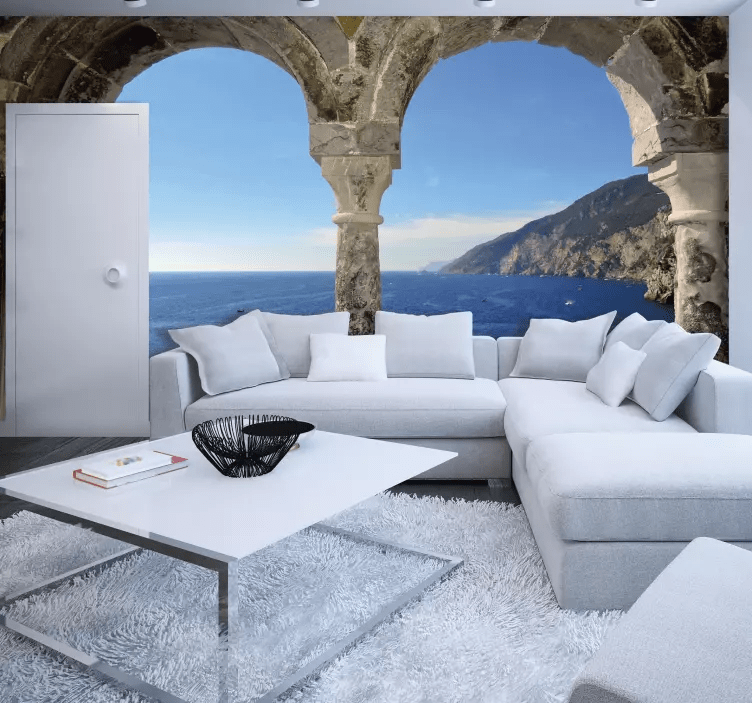
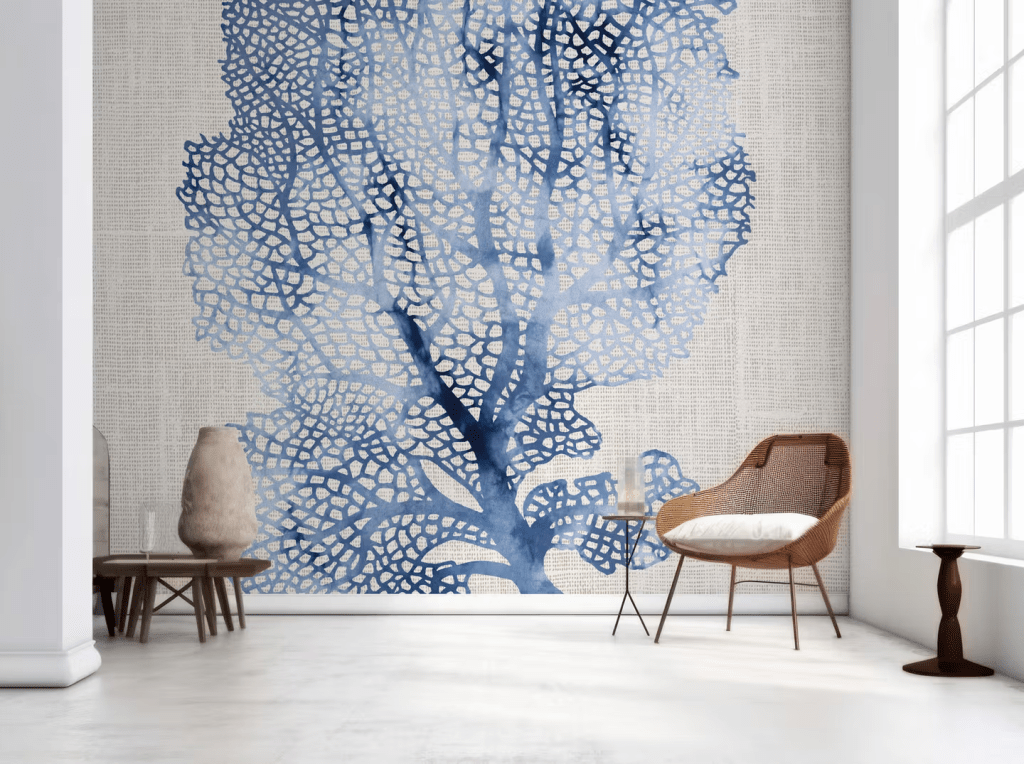
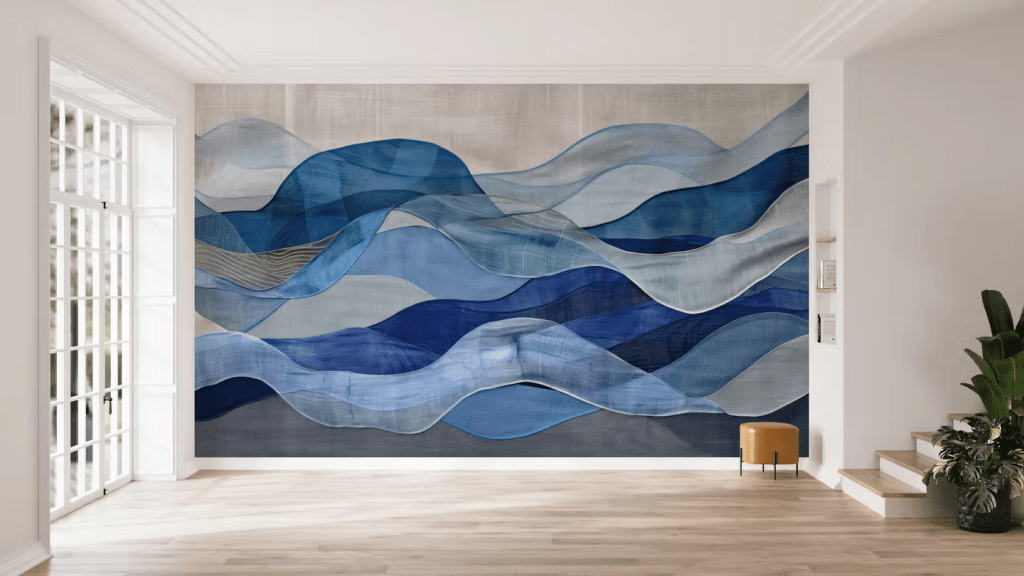
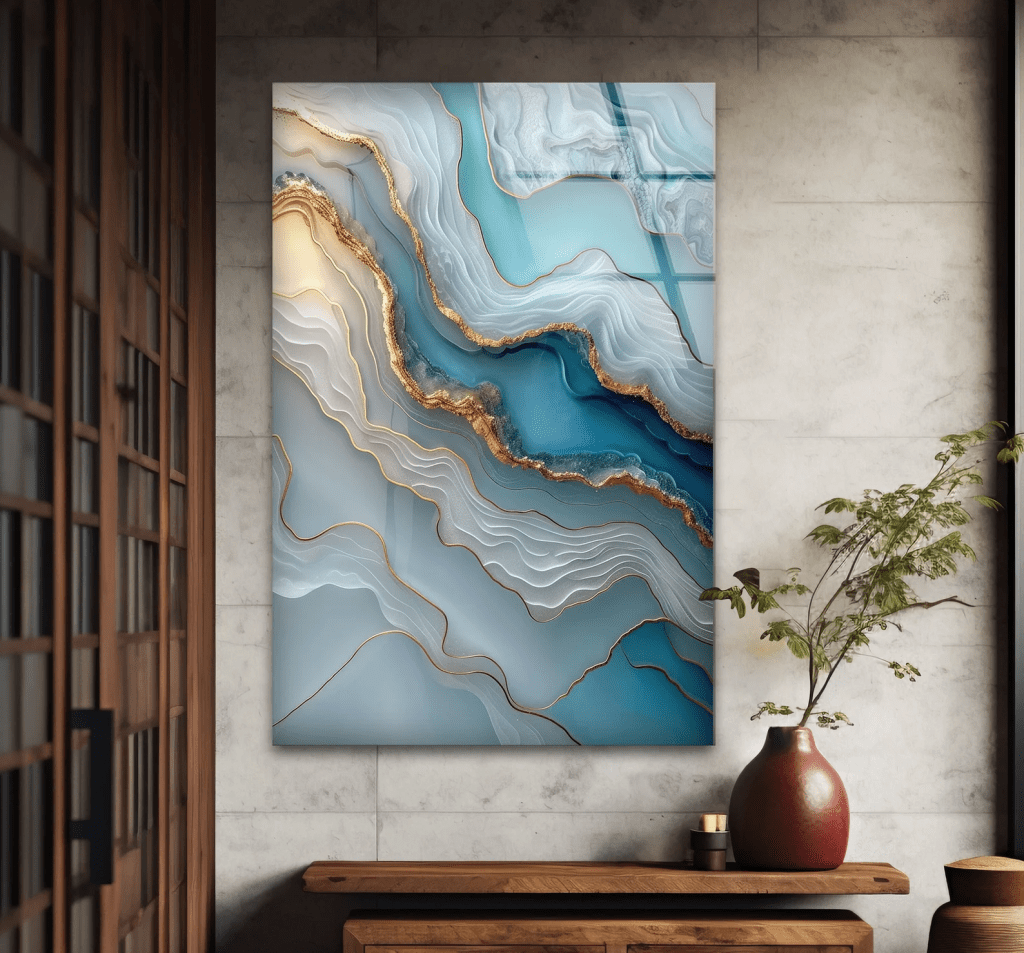
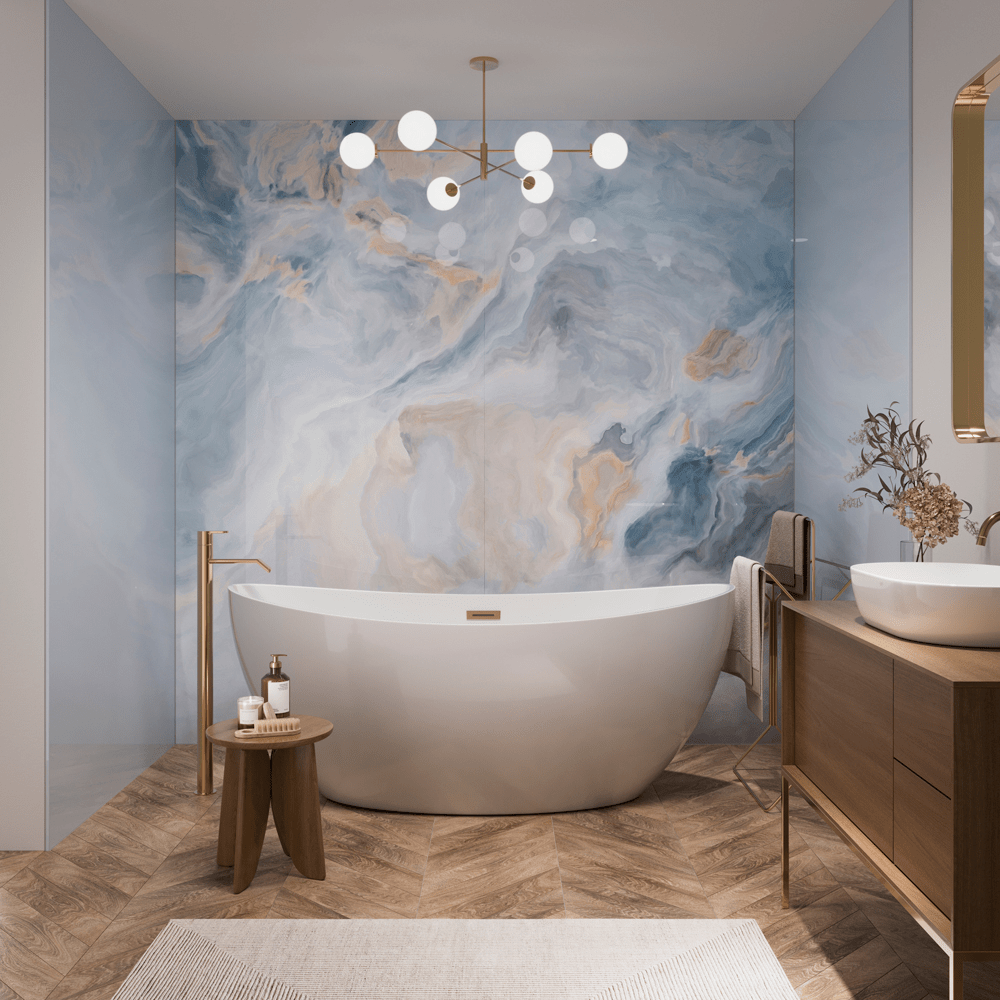
This collection explores how murals, wallpapers, stained-glass, and abstract installations can recreate the essence of the ocean. Waves, translucency, and shades of blue awaken calm, flow, and contemplation—showing that water can inhabit space not only as a material, but as metaphor, texture, and emotion.
1. Creating the Illusion of Water
How is it done?
Through materials, lighting, textures, imagery, or sound that evoke water without using it physically.
Examples:
- Reflective surfaces (glass, polished stone, stainless steel)
- Light and shadow play mimicking ripples
- Murals or photography featuring seascapes
- Ambient soundscapes (waves, rainfall, flowing streams)
- Flooring patterns that suggest waves or rivers
Advantages:
- Low maintenance
- No need for plumbing or moisture control
- Suitable for small interiors or dry climates
- Cost-effective and sustainable
- Allows symbolic or artistic approaches
Disadvantages:
- May feel artificial if poorly executed
- Doesn’t provide the physical benefits of real water (humidity, freshness, ionisation)
- May lack the full multisensory experience

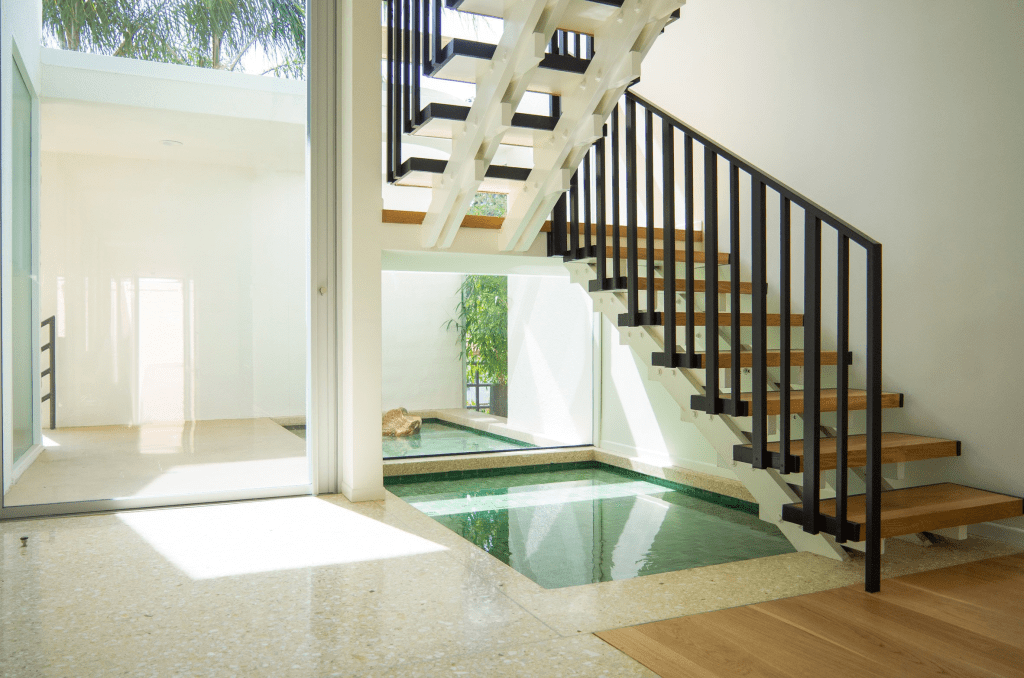
2. Incorporating Real Water Features
How is it done?
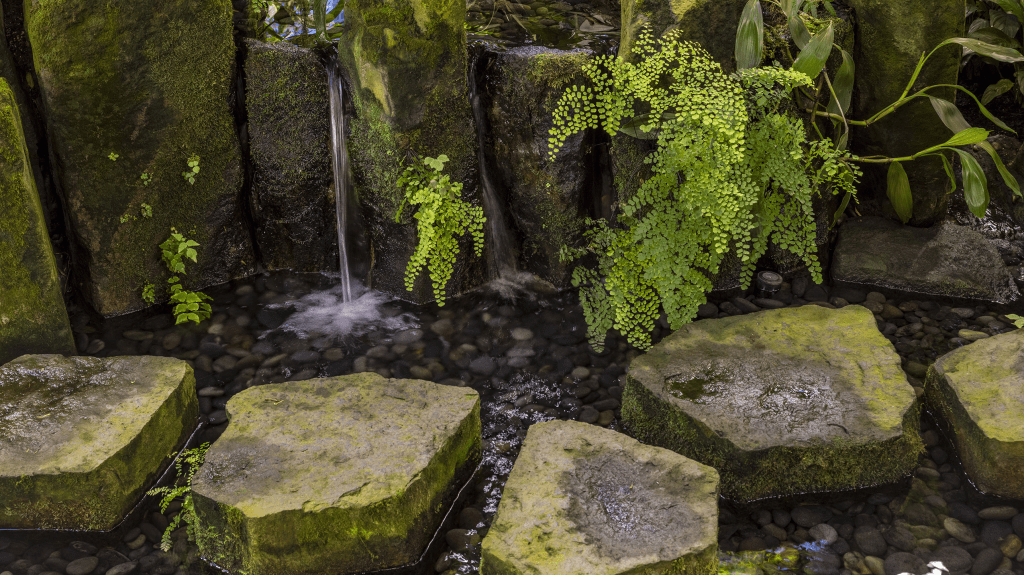
Through installations where water flows or rests as part of the built environment.
Examples:
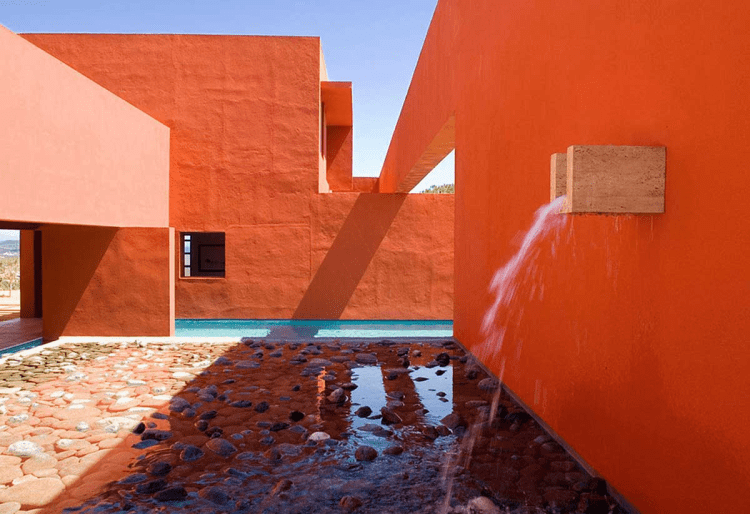
- Fountains in courtyards or entrances
- Reflecting pools indoors or outdoors
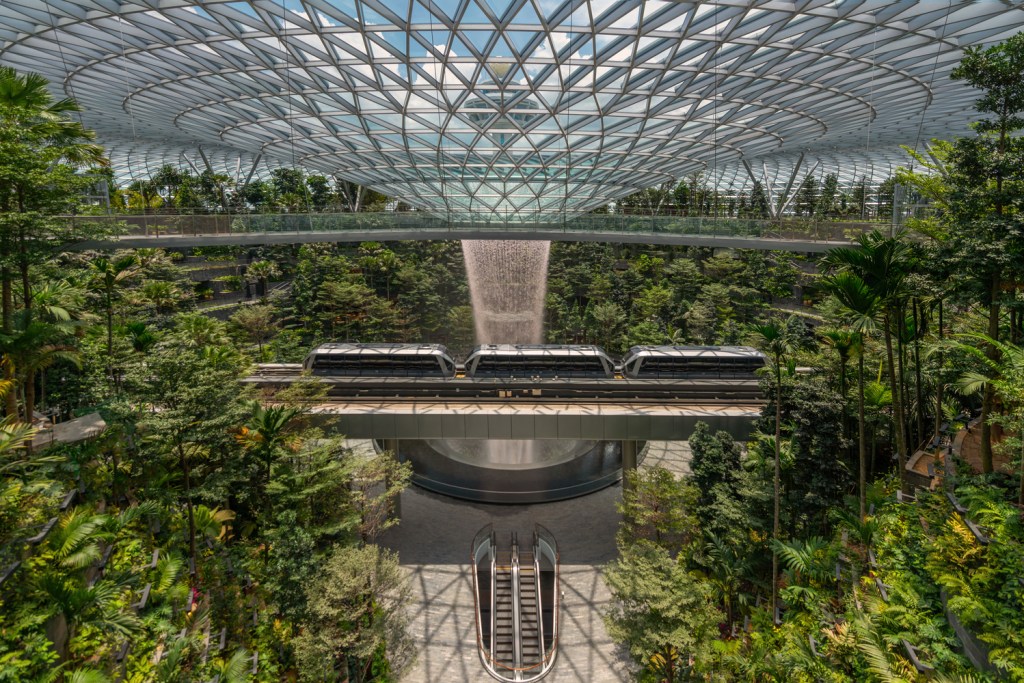
- Indoor controlled waterfalls
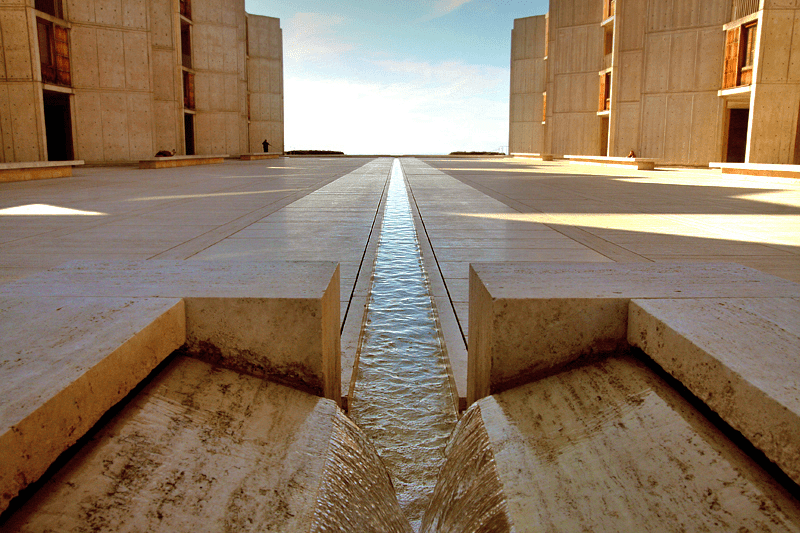
- Water walls or linear canals integrated into landscaping
Advantages:
- Provides natural humidity and improves microclimate
- Engages multiple senses (sight, sound, freshness, movement)
- Encourages relaxation, contemplation, and wellbeing
- Can act as a central biophilic design feature
Disadvantages:
- Requires regular maintenance (cleaning, algae control, filters)
- Can cause damp or humidity issues if poorly managed
- Higher installation and operational expenses
- Potential safety concerns (slippery surfaces, children)
- Requires technical planning (waterproofing, pumps, drainage)
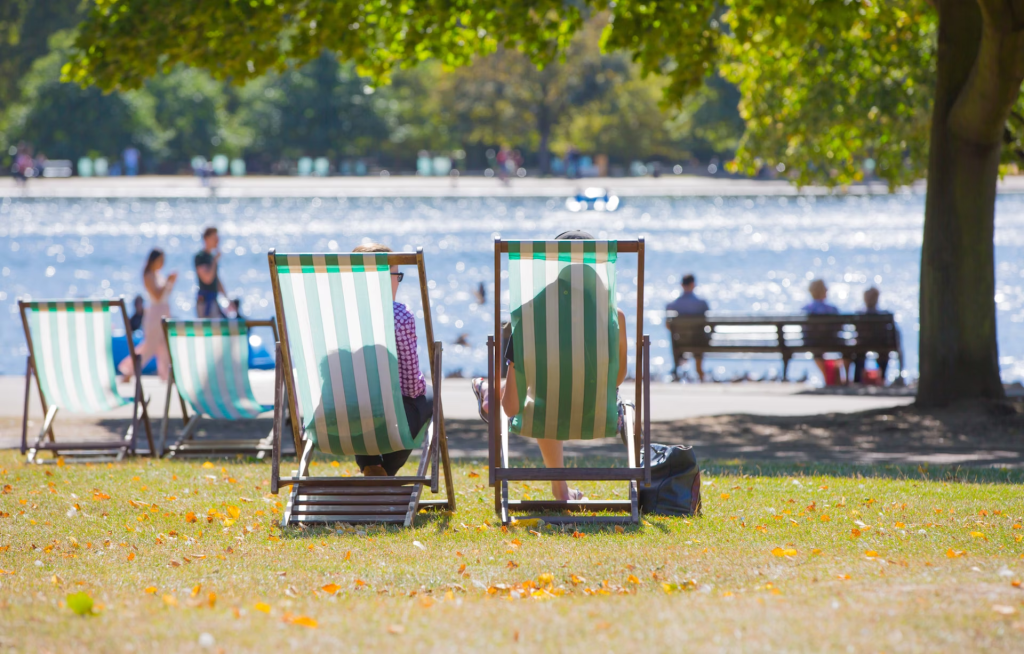


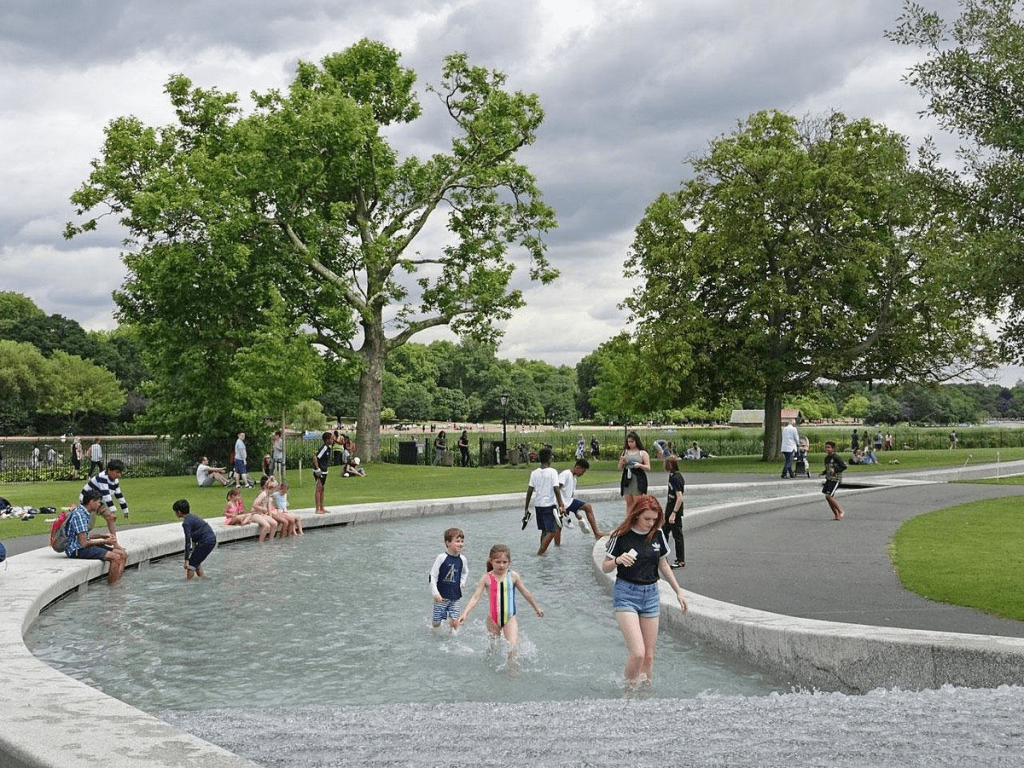
3. Urban Water Design for the Common Good
When it’s not possible to include water inside buildings, its presence in public space becomes essential.
- Enhances urban quality and microclimate
- Provides wellbeing that is accessible to all
- Fosters social connection and sense of place
Water in cities is not just decoration—it is emotional and social infrastructure.
Final Reflection
Which strategy to choose?
It depends on the climate, the purpose of the space, the budget, and the kind of experience you wish to create.
Sometimes, the most powerful approach isn’t to replicate water, but to evoke its essence.
Other times, a simple fountain can transform an entire atmosphere.
Finally, it’s not about imitating water — it’s about translating the way it makes us feel.
💬 What are your thoughts? Share your reflections in the comments.
References
White, M. P., Alcock, I., Grellier, J., Wheeler, B. W., Hartig, T., Warber, S. L., … & Fleming, L. E. (2019). Blue space, health and well-being: A narrative overview and synthesis of potential benefits. Environmental Research, 191, 110169. https://doi.org/10.1016/j.envres.2020.110169
Nichols, W. (2014). Blue Mind: The surprising science that shows how being near, in, on, or under water can make you happier, healthier, more connected, and better at what you do. Little, Brown Spark.
Völker, S., & Kistemann, T. (2011). The impact of blue space on human health and well-being–Salutogenetic health effects of inland surface waters: A review. International Journal of Hygiene and Environmental Health, 214(6), 449–460. https://doi.org/10.1016/j.ijheh.2011.05.001
Ryan, C. O., & Browning, W. D. (2014). Biophilic design patterns: Emerging nature-based parameters for health and well-being in the built environment. International Journal of Architectural Research, 8(2), 62–76. https://doi.org/10.26687/archnet-ijar.v8i2.436
 neurotectura.com