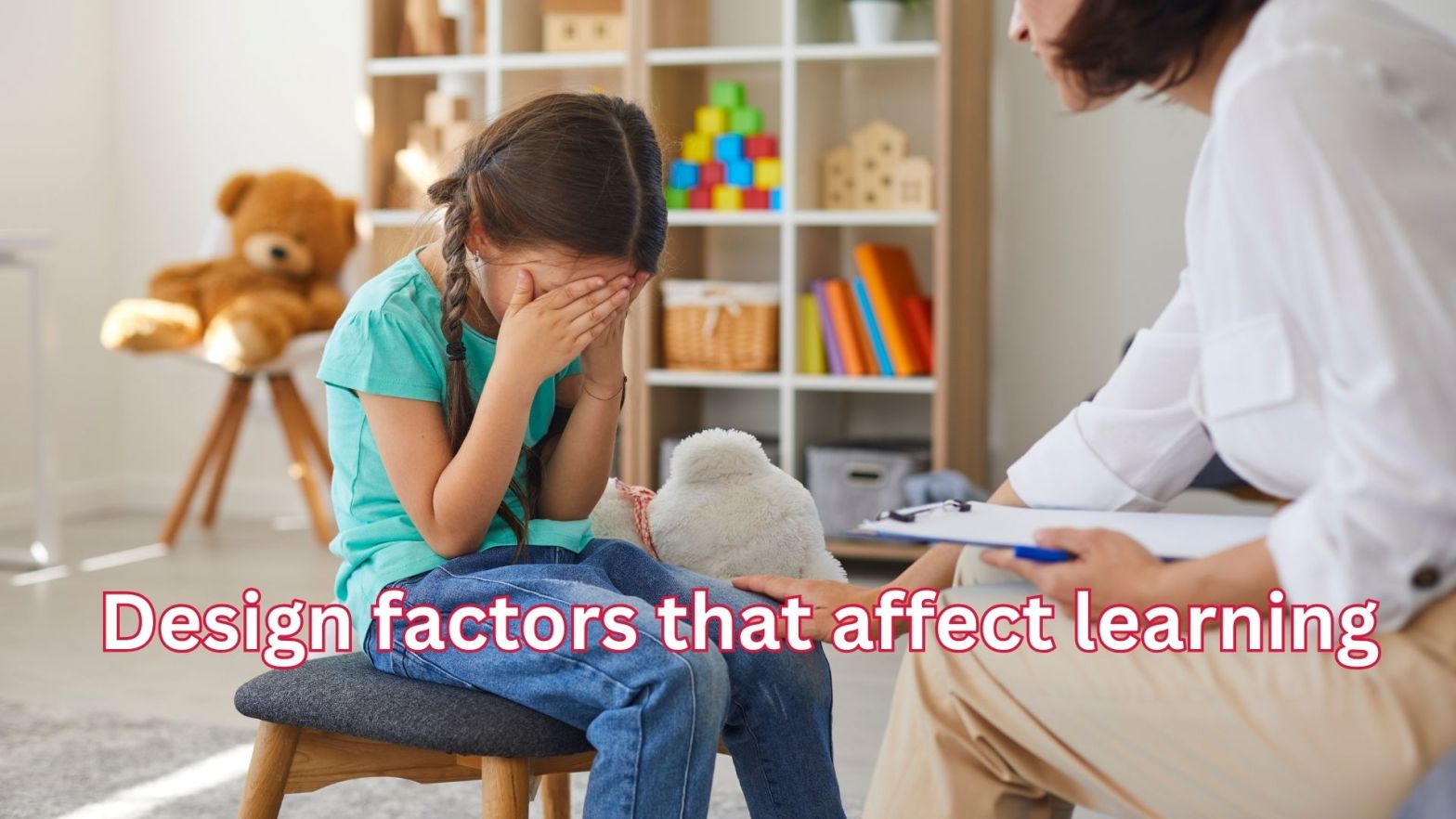
María is a bright and curious student. Yet, every time exam season arrives, she feels unwell. The night before, she barely sleeps. In the morning, her stomach aches and her head throbs. As she walks into the exam hall, the harsh fluorescent lights flicker above, rows of identical desks stretch endlessly, and the ticking clock on the wall seems louder than her thoughts. By the time she opens her paper, anxiety has already won.
María’s story is not unusual. For many students, academic pressure combines with the physical environment to create stress so intense it disrupts learning. Neuroscience shows us why: when the brain’s amygdala is activated by stress, fear responses rise, while the hippocampus—essential for memory and learning—functions less effectively. In other words, when anxiety takes over, it literally blocks the pathways for concentration and retention.

If stress can close the brain to learning, then schools must combine supportive teaching with supportive environments. Design and pedagogy are not separate worlds — they must work hand in hand.
Neuroscience and the environment: unlocking safety and learning
Modern neuroscience reveals that learning is not just a cognitive task—it is emotional, embodied, and deeply influenced by the environment. When classrooms ignore this, they risk amplifying stress. When they respond to it, they create emotional safety and open the brain for learning.
Research has identified several environmental factors with strong links to academic performance and emotional well-being:
- Ownership: Displaying student work and allowing personalisation builds belonging and emotional security.
- Light: According to a U.S. study of over 21,000 students, classrooms with abundant natural daylight saw pupils progress 20% faster in maths and 26% faster in reading than those with the least.
- Air quality & ventilation: Poor ventilation increases fatigue and illness. Classrooms with operable windows supported 7–18% faster learning progress, regardless of air conditioning.
- Temperature: Stable thermal comfort prevents distraction and frustration.
- Colour: Balanced hues stimulate curiosity without overwhelming the senses.
- Flexibility: Spaces that adapt to different teaching methods and student needs, support inclusion.
According to a large study in the United States, students in classrooms with the most day lighting progressed 20% faster in maths and 26% faster in reading in a single year compared to those with the least.
Day lighting in Schools – Relationship Between Day lighting and Human Performance

Pedagogy and space: a partnership shaped by design
Pedagogy and design cannot be separated: they must work hand in hand. New teaching models are already reshaping classrooms, supported by insights from neuroscience:
- Trauma-informed pedagogy: Quiet zones, soft lighting, and calm colours give children space to regulate emotions.
- Mindfulness and SEL: UK trials led by the Anna Freud Centre are introducing breathing, reflection, and emotional check-ins in up to 370 schools. Classrooms with pause spaces and reflection corners make these practices tangible.
- Flexible, student-centred learning: Movable furniture and varied seating activate students’ sense of agency, lowering stress.
- Project-based learning: Maker spaces, laboratories, and outdoor classrooms encourage curiosity over performance anxiety.
- Universal Design for Learning (UDL): Multimodal spaces—quiet corners, tech-rich zones, communal hubs—reflect the brain’s diversity in processing information.
Case in focus: Vittra School, Sweden
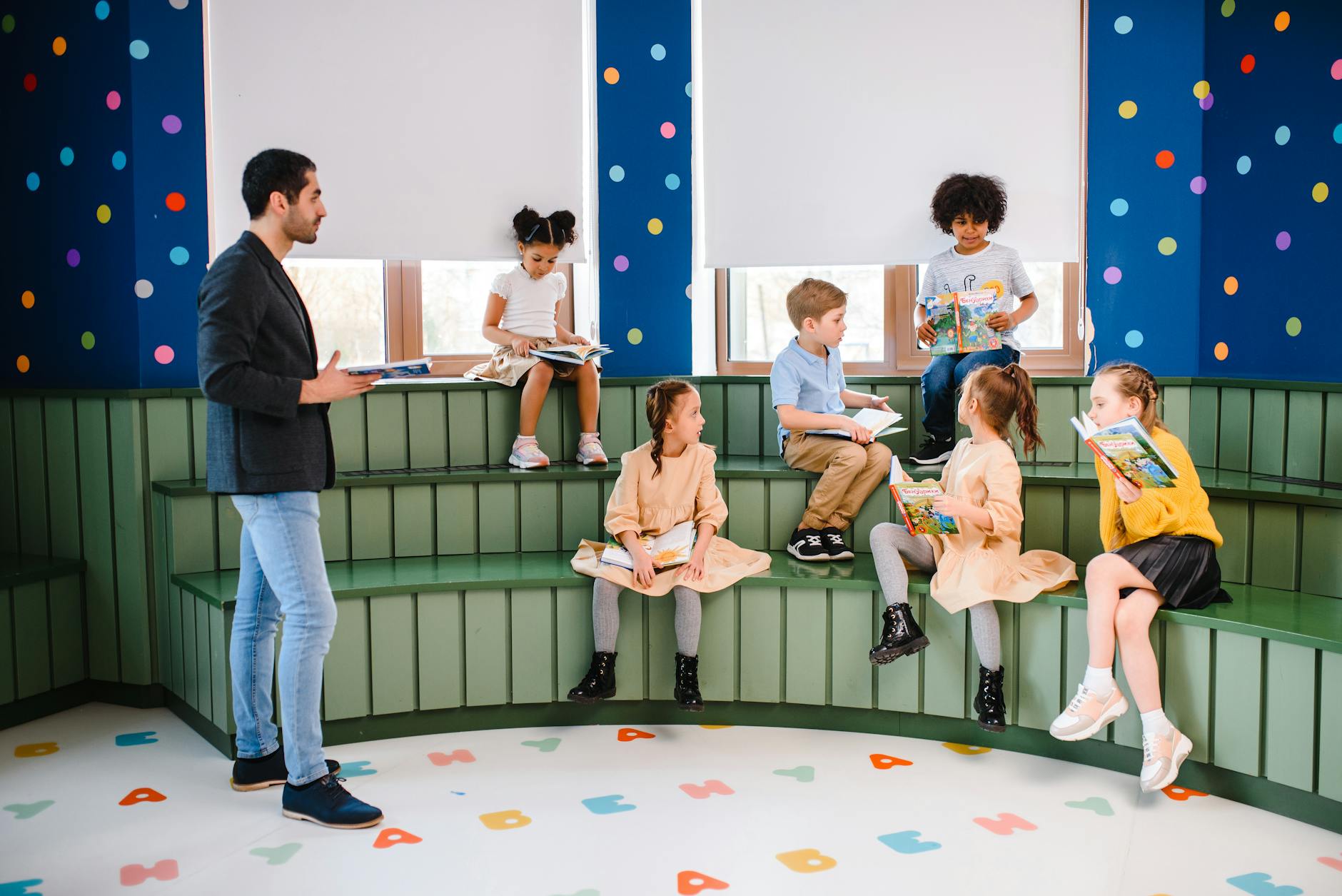
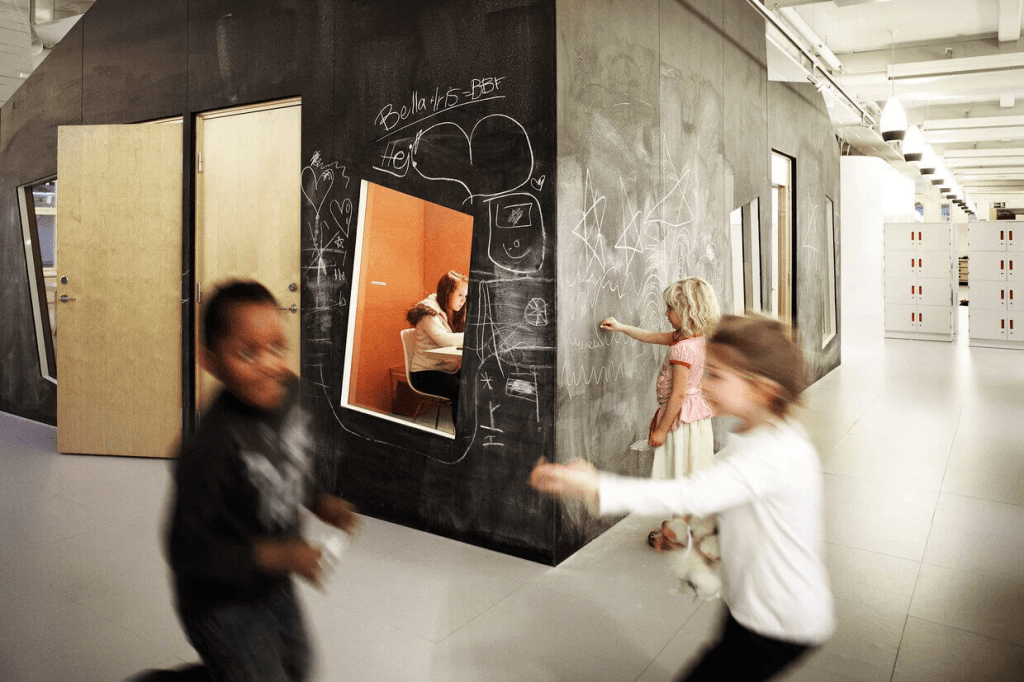
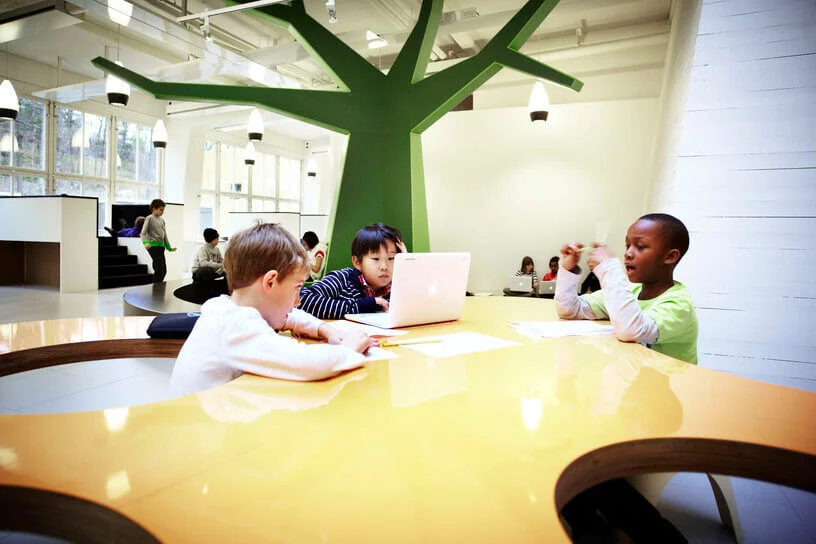
Vittra School Telefonplan by Rosan Bosch, shows what happens when pedagogy and design evolve together. Rejecting passive rows of desks, it offers a learning landscape where space itself becomes a teaching tool.
Students can gather on or inside a massive iceberg structure with a cinema and platforms, collaborate beneath an indoor tree, or focus deeply in flexible laboratories. They work hands-on with robotics, experiment with digital media, or simply read in a quiet alcove.
As the school explains:
“Not two children are alike, and everyone has different learning needs… We have created diversified zones, heights, and spaces that serve as educational tools for each student’s individual path.”
Here, the physical design is not decoration but a support system for the school’s teaching philosophy. Neuroscience helps explain why this works: autonomy, sensory richness, and emotional safety reduce stress and unlock learning.
Challenges and solutions
Of course, not every school can implement radical redesigns overnight. Common barriers include:
- Budget constraints: Renovations and technology can be costly.
- Institutional inertia: Traditional pedagogy is tied to traditional classroom layouts.
- Policy gaps: Well-being is often secondary in infrastructure planning.
Vittra’s example illustrates a wider truth: educational change cannot rely on teaching methods alone, nor on architecture alone. The two must work hand in hand, creating environments where the design supports the pedagogy, and the pedagogy makes full use of the design.
A wider lesson
Well-designed schools do more than raise test scores—they reduce absenteeism, strengthen teacher well-being, and foster environments where students feel safe, supported, and capable of thriving.
As the Education Market Association (2024) notes:
“Well-designed classrooms and communal spaces are critical in supporting teacher well-being, which in turn impacts not just students but entire school communities.”
These changes do not merely beautify buildings; they transform the educational experience.
Reflection
Think back to your school days. Did the classrooms you learned in feel safe, inspiring, and supportive—or tense and constraining? Imagine how different your experience might have been in a calmer, more human-centred space.
And now imagine the students of tomorrow. What small changes—more daylight, better air, a quiet corner—could we advocate for today to help them learn not only with their minds, but with their hearts at ease?
References
Barrett, P., Zhang, Y., Moffat, J., & Kobbacy, K. (2015). Clever Classrooms: Summary report of the HEAD project. University of Salford. Retrieved from https://www.salford.ac.uk/clever-classrooms
Education Market Association. (2024, October). How smart school design promotes teacher wellness. EDmarket Essentials. Retrieved from https://essentials.edmarket.org/2024/10/how-smart-school-design-promotes-teacher-wellness/
Felver, J. C., Hoyos, C., Tezanos, K., & Singh, N. N. (2016). A systematic review of mindfulness-based interventions for youth in school settings. Mindfulness, 7(1), 34–45. https://doi.org/10.1007/s12671-015-0389-4
Jagers, R. J., Rivas-Drake, D., & Borowski, T. (2018). Equity & social and emotional learning: A cultural analysis. Journal of Educational Psychology, 110(2), 227–238. https://doi.org/10.1037/edu0000174
McKeown, R., Weare, K., & Rothwell, C. (2017). Mindfulness and schools: Developing theory and practice. Routledge.
Substance Abuse and Mental Health Services Administration (SAMHSA). (2014). Trauma-Informed Care in Behavioral Health Services (Treatment Improvement Protocol 57). Rockville, MD: SAMHSA. Retrieved from https://store.samhsa.gov/product/TIP-57-Trauma-Informed-Care-in-Behavioral-Health-Services/SMA14-4816
Zimmerman, B. J., & Kitsantas, A. (2014). Comparing students’ self-discipline and self-regulation measures and their prediction of academic achievement. Contemporary Educational Psychology, 39(2), 145–155. https://doi.org/10.1016/j.cedpsych.2014.03.004
Rosan Bosch https://www.rosanbosch.com/
 neurotectura.com