
In a world saturated with stimuli, silence has become a scarce commodity.
However, more than a luxury, it is a form of health. Every door slam, every running engine, every plane crossing the sky leaves a mark that we do not always hear, but our nervous system records it.
The invisible noise of modern life —constant, urban, unpredictable— has become one of the most silent forms of environmental stress.
The ear doesn’t switch off when we sleep
Our auditory system remains active even during sleep.
Although the body rests, the brain keeps listening.
In his study, M. Spreng (2000) demonstrated that if a sound exceeds a certain threshold — even when we are not consciously aware of it — the body interprets it as a threat and activates the stress axis: the hypothalamus, pituitary gland, and adrenal glands.
The result is an increase in cortisol, the hormone that keeps us alert. When this activation is repeated night after night, hormonal balance is disrupted, the immune system weakens, and cognitive functions — such as memory and attention — begin to deteriorate.

When Noise Accumulates in the Body
A recent study published in the prestigious journal Environmental Research (2025) analysed cortisol levels in children aged 5 to 12 who were exposed to environmental noise in their neighbourhoods.
Researchers measured cortisol both in urine (acute response) and in hair (cumulative response), and found a clear relationship: children living in noisier environments showed higher cortisol levels.
This means that everyday noise — from traffic, construction, sirens, or neighbours — does not simply fade away at the end of the day. It accumulates, slowly inscribing itself in the child’s body, affecting their ability to concentrate, regulate emotions, and rest. Noise ceases to be a sound and becomes a form of chronic stress.
Sound is vibration: it travels through air, matter, and the body, awakening physical and emotional responses.
Hearing: The Sense That Never Sleeps
Hearing is the second sense to develop in the foetus, but the first to connect us with the outside world.
From weeks 18 to 20 of gestation, the foetus can already perceive and react to sounds, and by weeks 24 to 28 its auditory system is almost complete: it distinguishes the mother’s voice, the heartbeat, the flow of the world.
It is also one of the last senses to fade before death.
Sound accompanies us throughout life. It creates a constant reverberation that can keep the body on alert, preventing rest and mental recovery. And when that state persists, stress turns into anxiety — and anxiety into exhaustion.


What Cortisol Reveals, and What the Environment Conceals
Both studies confirm something that neuroarchitecture had already intuited:
Cortisol has become a biomarker of healthy design.
It reveals how sound affects our hormonal systems and allows us to measure what was once intangible — the sound load as an architectural variable.
Architecture, therefore, carries a new responsibility: to design for silence and calm, to modulate the soundscape, and to offer sensory refuge amid urban noise.
Wellbeing does not depend entirely on what we see, but also on what we hear — and on what the body senses without us realising it.
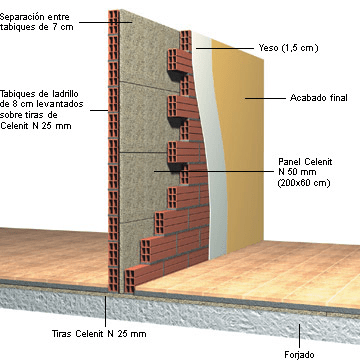

Double walls with insulating materials inside and specialized acoustic finishes, along with double-glazed windows, help to reduce noise transmission significantly and improve interior sound comfort.
Principles of Acoustic Neuroarchitecture
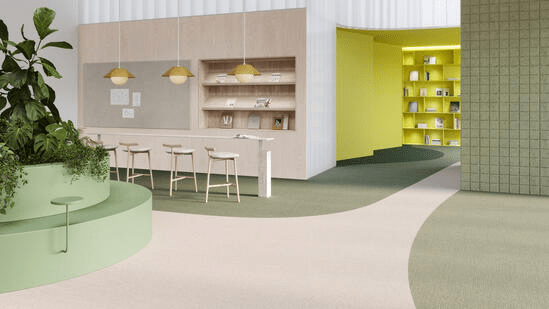
The human brain reacts with greater stress to uncontrollable and unpredictable noise — the office chatter, the unexpected doorbell, changing traffic. That’s why spaces must anticipate and tame sound, not just isolate it.
| Design Strategy | Practical Application |
|---|---|
| Source Isolation | Use of heavy acoustic barriers (double walls, laminated glass) to isolate external noise—such as traffic or construction—from the building envelope. |
| Internal Absorption | Integrate absorbent materials (carpets, porous panels, acoustic ceilings) to **reduce reverberation** and soften conversations. |
| Quiet Zoning | Create “focus” or “rest” areas where the absence of unscheduled noise promotes calm and cognitive security. |
Security Introduction: Replacing the Noise
The ear never goes silent.
That is why the complete absence of sound can be perceived as unsettling.
The key is not absolute silence, but replacing unwanted noise with a stable and benign background sound.
- Sound masking: introducing a low-intensity sound —like white or pink noise— that softens acoustic differences, making sudden noises less perceptible.
- Function: dampens volume variations that the brain perceives as a threat.
- Outcome: enhances acoustic privacy and concentration, especially in open offices or schools.
- Biophilic sound: incorporate natural sounds (water, wind, bird song) to induce a feeling of calm and connection.
- Biological basis: the human brain recognizes natural sounds as signals of safety and refuge.
The goal is not to eliminate sound, but to create an acoustic balance that promotes physiological calm.

Final Reflection
In contemporary architecture, dominated by the image, we forget that we also inhabit a world of vibrations. Sound is the invisible pulse of space: its excess makes us ill, its harmony heals us.
Every time a building dampens noise, it allows for rest or protects against sensory overload, it is acting on something deeper than aesthetics: it is caring for the nervous system.
Neuroscience confirms that the sound environment is not a secondary factor, but a primary stressor that directly influences health, attention, and performance.
Chronic and unpredictable noise activates the hypothalamic-pituitary-adrenal (HPA) axis, raising cortisol levels and keeping the body in a constant state of alert.
Acoustic neuroarchitecture proposes to go beyond simple insulation: to design soundscapes that convey safety and serenity to the brain.
Its strategies are based on two complementary principles:
1. Control of the auditory environment (avoiding threats):
Reducing distracting noises through source isolation and internal absorption frees cognitive resources and enhances sustained attention.
2. Introduction to security (noise replacement):
Incorporating natural sounds or acoustic masking creates predictable and emotionally stable sound environments.
Applying these principles in homes, schools, hospitals, or offices not only decreases cortisol activation: it improves concentration, reduces anxiety, and strengthens mental health.
Because every space that protects silence also protects the mind that inhabits it.
References
Spreng, M. (2000). Possible health effects of noise induced cortisol increase. Noise & Health, 2(7), 59–64. PubMed 12689472
[Environmental Research, 2025]. Association of environmental noise exposure with cortisol — acute and cumulative levels in children 5-12 years of age. ScienceDirect. DOI: S0013935125007923
 neurotectura.com