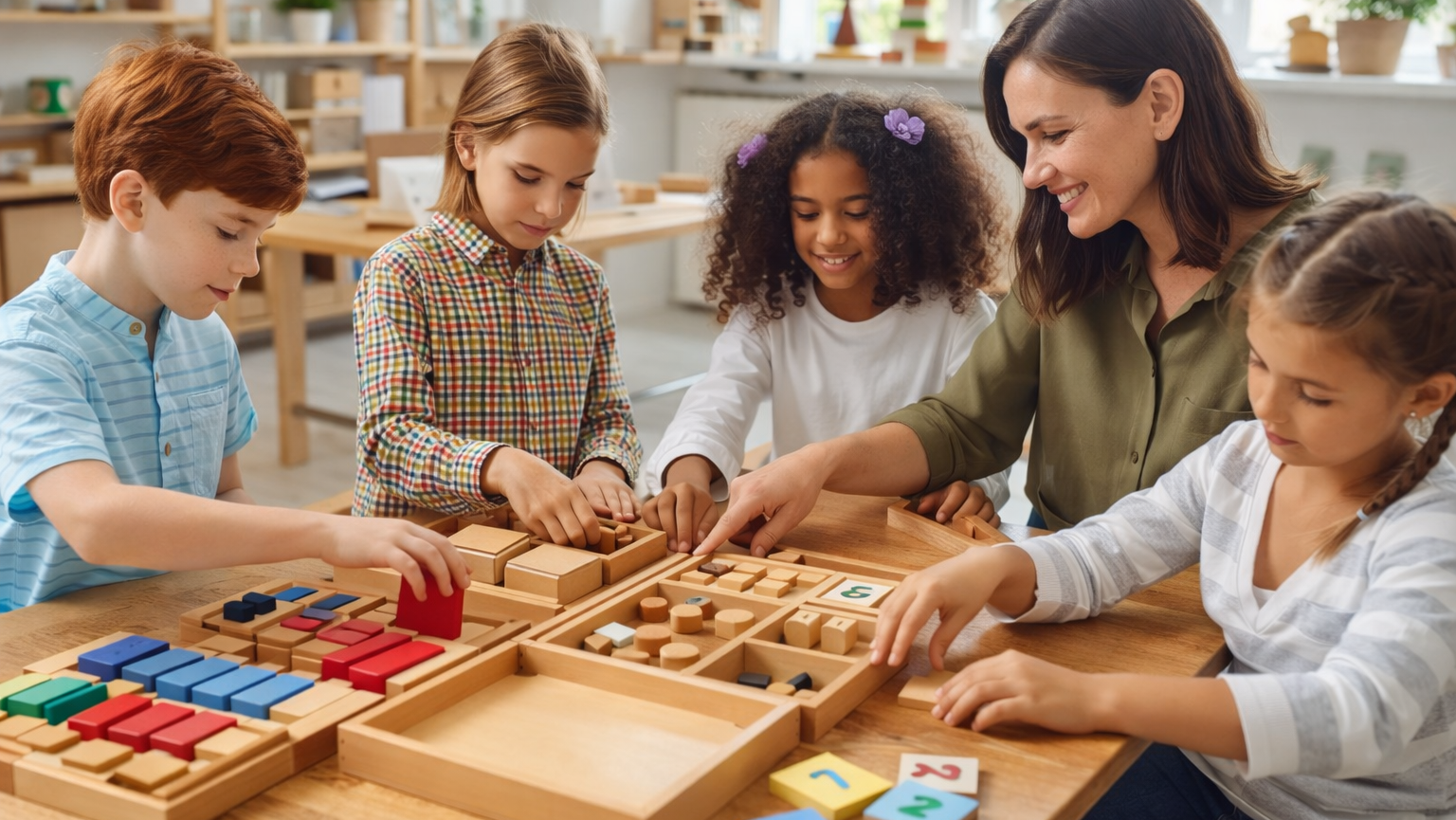
Generation Alpha, made up of children born from around 2013 onwards, is the first generation to grow up without ever knowing a world without the internet, mobile devices, touch interfaces and intelligent digital systems. For them, technology is not an innovation; it is simply part of the environment they inhabit.
This fact alone calls into question many of the foundations on which formal education is built. The recent emergence of artificial intelligence systems capable of generating answers, texts, and images in seconds intensifies this challenge—particularly in primary education.
The real issue is not whether AI will replace teachers or schools—an idea that quickly collapses when applied to childhood—but something far more fundamental: what is the purpose of an educational model centred on the accumulation of information when information is always available?
The central argument of this article is clear: primary education for Generation Alpha must evolve from a content-driven model into an environment focused on curation, critical thinking, shared experience and human reconnection.
Technology has transformed the way we live, but the human brain—and the way it learns—has barely changed over thousands of years.
Education: preparing for an uncertain future
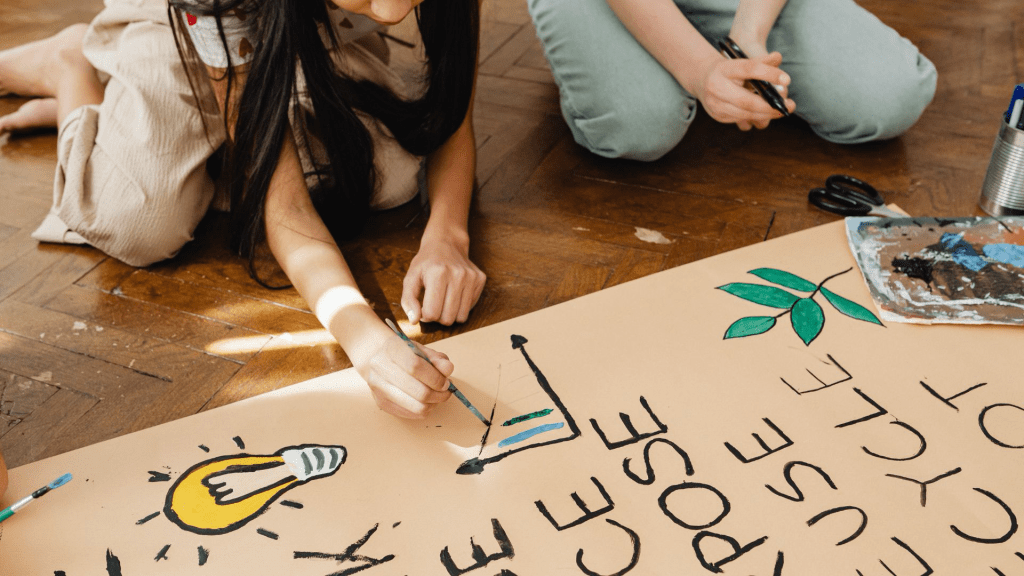
Formal education exists, at its core, to prepare people for the future. Yet in a world that is increasingly dynamic, technological and unpredictable, preparing for the future can no longer mean training for specific tasks or transmitting stable bodies of knowledge. For decades, pedagogy, developmental psychology and the cognitive sciences have converged on a key idea: education is about forming individuals who can learn continuously, live alongside others, adapt to change and make informed, thoughtful decisions.
In primary education, this role is especially critical. At this stage, schools are not training professionals, but laying the foundations of human development: the relationship with learning itself, emotional self-regulation, empathy, curiosity, creativity, and life in community. The emergence of artificial intelligence does not diminish this responsibility; on the contrary, it makes it more visible—and more urgent than ever.
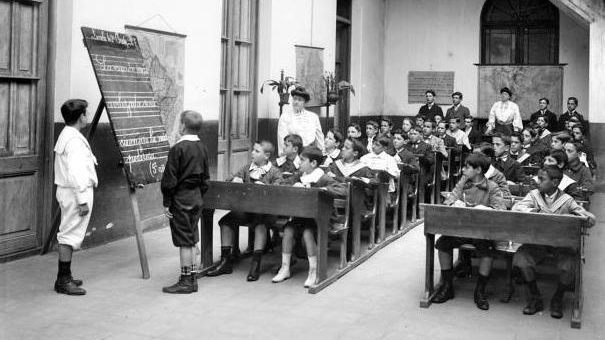
Today, front-facing classrooms, fragmented curricula and assessments centred on the “correct answer” are increasingly at odds with children who grow up in digital, interactive and intelligent environments. The digital era calls for a profound transformation of the education system.a educativo.
A legacy model under strain
Despite the technological changes of recent decades, the dominant structure of primary education still largely reflects a model inherited from the twentieth century. Classrooms remain organised in a frontal layout, with the blackboard at the centre of the learning process and the teacher positioned as the primary transmitter of knowledge. The curriculum continues to be fragmented into isolated subjects, and assessment prioritises the “correct answer” over process, reasoning or deep understanding.
This model was effective in a historical context marked by limited access to information. However, it no longer aligns with the cognitive and social realities of Generation Alpha, who grow up immersed in constant flows of information, digital stimuli and continuous interaction. In this new landscape, the challenge of primary education is not to deliver more data, but to help children develop judgement, critical thinking and a meaningful relationship with learning itself.
The role of artificial intelligence
Artificial intelligence is a powerful tool—but it remains a tool. In primary education, it neither replaces the teacher nor human interaction, nor can it. Childhood requires trusted adults, relationships, care and emotional mediation.
What AI does do is expose the limits of an educational model centred on repetition. When answers are available in seconds, educational value shifts away from memorisation towards the ability to interpret, question and use information meaningfully. In this context, AI can function as an educational co-pilot: supporting personalised learning, reducing repetitive tasks and expanding opportunities for exploration—always under human pedagogical judgement.
Far from replacing the teacher, artificial intelligence can restore the teacher’s most essential role: observing, accompanying, guiding and supporting human development. In primary education, its true value lies not in accelerating content, but in allowing schools to focus on what matters most—developing judgement, critical thinking, creativity, empathy, and the capacity to live and learn with others.
Primary schools in the 21st century: a new paradigm?
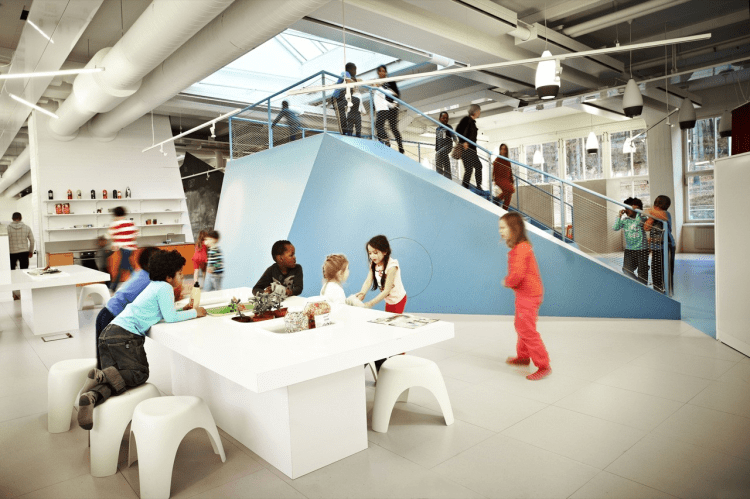
More than a simple system update, we are facing the possibility of a paradigm shift—one in which curriculum, teaching, and architecture are reorganised to respond to new ways of inhabiting, experiencing and understanding the world.
1. The curriculum
The curriculum moves away from being organised solely around subjects and towards learning with meaning and purpose. Media and critical literacy become essential, enabling pupils to question what appears on screen, verify sources and recognise manipulated or artificially generated content. In response to fragmented attention, concentration and focus are actively trained through brief explanations followed by extended periods of hands-on, creative work. Assessment shifts from short-term memorisation to an emphasis on processes, projects, and collaboration.
2. The teacher
The role of the teacher is redefined. Rather than acting primarily as a lecturer, the teacher becomes a mentor and educator, guiding pupils through a complex and ever-changing information ecosystem. This role includes content curation, the development of socioemotional skills, early detection of digital fatigue and support for emotional self-regulation. These transformations raise unavoidable ethical challenges—digital inequality, data privacy and the attention crisis—that can only be addressed through shared responsibility between schools, families and public policy.
3. The building
This pedagogical shift also requires rethinking the physical learning environment. The rigid, front-facing classroom gives way to flexible and modular spaces that support movement, collaboration and diverse learning rhythms. The integration of biophilic principles—natural light, ventilation and contact with nature—supports emotional wellbeing and helps regulate anxiety linked to digital overstimulation. At the same time, dedicated analogue spaces remain essential, providing technology-free zones for deep reading, reflection and the development of sustained attention.
| Characteristic | Traditional School | Generation Alpha Model (2026) |
|---|---|---|
| Primary goal | Memorisation and standardisation | Critical thinking and adaptability |
| Technology | Prohibited or treated as a distraction | Integrated as a creative “co-pilot” |
| Attention | Enforced through authority | Captured through relevance and purposeful play |
| Measures of success | High exam scores | Ability to solve complex problems |
Comparative table of traditional education and a proposed model for 2026.
Final Reflections
Educating Generation Alpha requires far more than introducing new technologies into the classroom. It calls for a deeper reconsideration of the purpose of primary education in a context shaped by automation and the attention economy. Artificial intelligence does not undermine the role of the teacher or the school as a space; rather, it exposes the exhaustion of a model built on repetition, standardisation, and passivity.
Paradoxically, many responses to this moment can be found in long-established pedagogies such as the Montessori approach, now reinforced by neuroscience. The key shift is clear: while education once sought the child’s independence from the adult, it must now also cultivate independence from the algorithm. Protecting attention, fostering deep thinking and sustaining shared human experiences become essential educational priorities.
There is, however, a risk that cannot be ignored—that meaningful human guidance, critical thinking and experience-rich education become a privilege. A primary education reduced to automation and screens may deepen existing inequalities. For this reason, 21st-century schooling should not aim to produce efficient users of technology, but individuals capable of thinking, creating and living together with discernment, safeguarding what no artificial intelligence can replace: shared human experience.
Recommended Readings
Montessori, M. (1912/2013). The Montessori method. Transaction Publishers.
Montessori, M. (1949/1995). The absorbent mind. Henry Holt and Company.
National Research Council. (2000). How people learn: Brain, mind, experience, and school. National Academies Press. https://doi.org/10.17226/9853
Gazzaley, A., & Rosen, L. D. (2016). The distracted mind: Ancient brains in a high-tech world. MIT Press.
Organisation for Economic Co-operation and Development. (2019). OECD learning compass 2030: A series of concept notes. OECD Publishing. https://www.oecd.org/education/2030-project/
UNESCO. (2021). AI and education: Guidance for policy-makers. UNESCO Publishing. https://unesdoc.unesco.org/ark:/48223/pf0000376709
 neurotectura.com