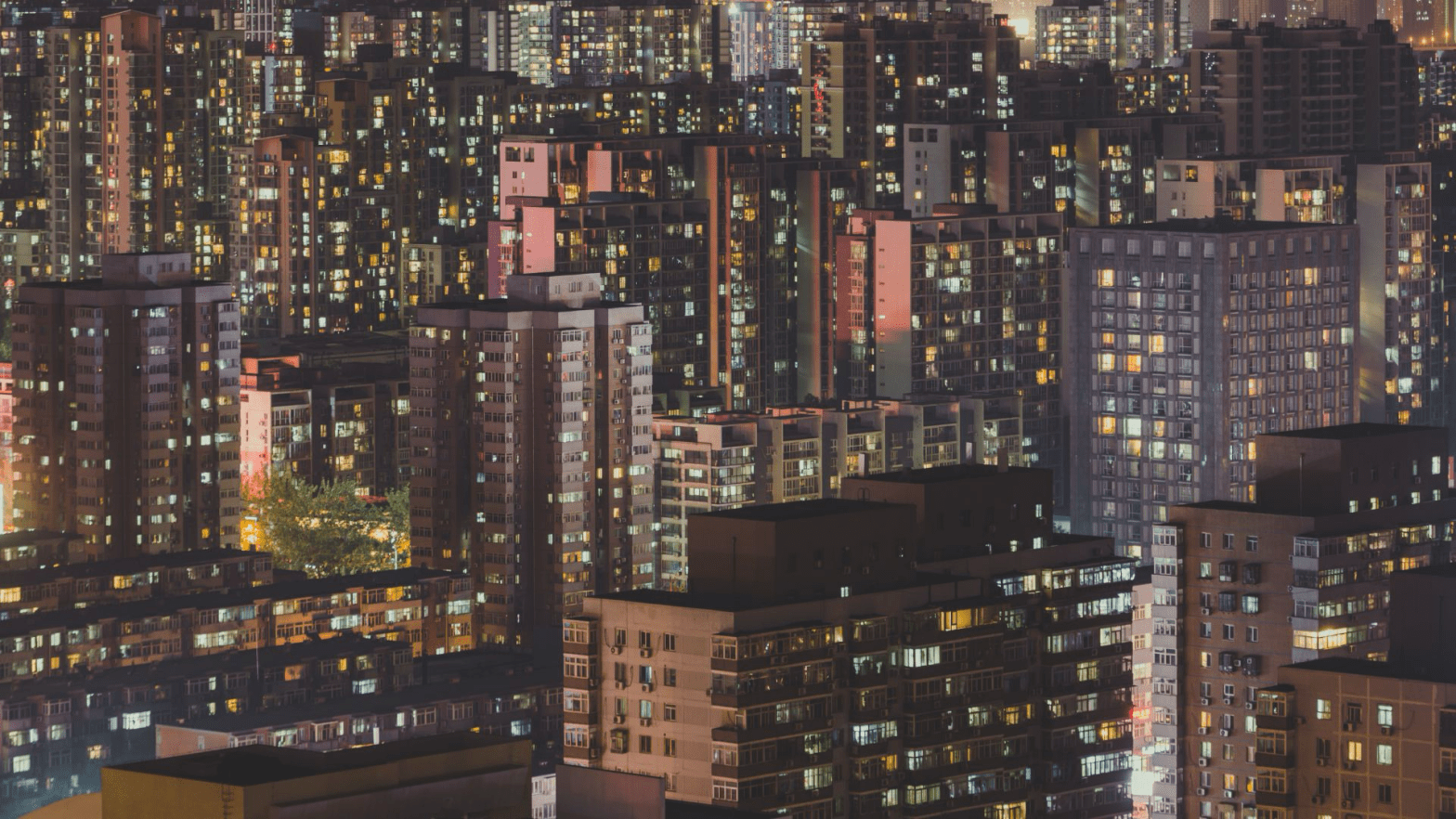
Do large cities make you feel stressed?
The global shift towards urban living has not only increased density in city centres but also intensified the mental health challenges linked to stress.
This growing concern has led fields such as neuroarchitecture and neurourbanism to explore how the brain processes urban environments.
A recent study published in 2024 in the Journal of Environmental Psychology, titled “Beyond built density: From coarse to fine-grained analyses of emotional experiences in urban environments”, approaches this question from an innovative perspective.
By analysing the relationship between urban density, the presence of vegetation, and emotional responses, the researchers aim to understand not just what we see in the city but also how these visual experiences translate into feelings of calm, stress, or sensory overload.
Their goal is clear: to uncover how different elements of the urban landscape shape our everyday emotional experience.
Methodology Applied
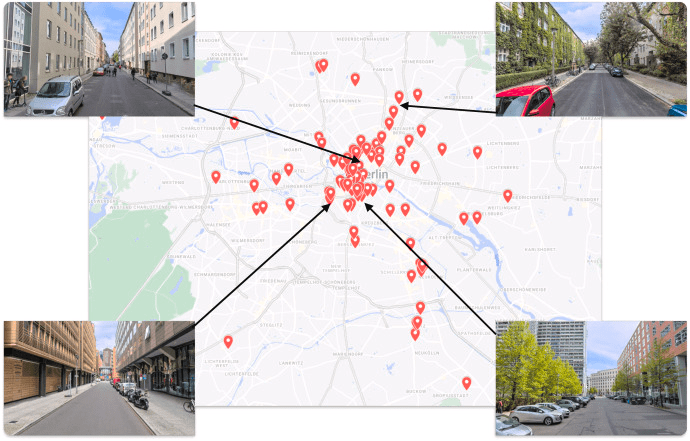
To understand how people emotionally perceive urban environments, the researchers combined a classical approach with more advanced tools.
In the first phase, participants were shown realistic urban images of Berlin, categorised into broad groups such as high or low density and the presence or absence of vegetation. This provided an initial insight into their emotional responses.
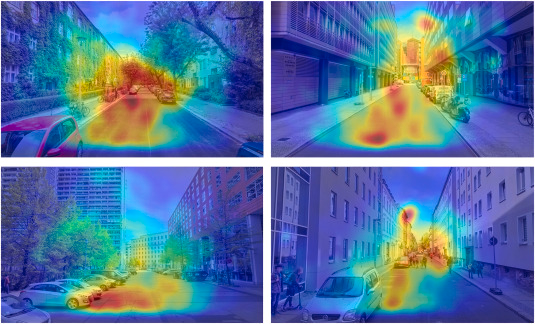
A second, more detailed level of analysis was then introduced. Using AI-assisted visual segmentation techniques, the images were broken down into specific elements—such as buildings, sky, trees, vehicles, or people—allowing the researchers to identify more precisely which components of the environment influence perception.
This was complemented by the use of eye-tracking, which recorded where participants directed their attention while observing the urban scenes, adding another layer to their emotional evaluations.
This combined approach made it possible to compare two ways of understanding the city: a simplified view and one that more closely reflects how the brain actually processes the environment.
The brain does not interpret the city as a collection of isolated objects but as a continuous visual composition.
Results: How Do We Really Perceive the City?
1. Built Density: More Than Quantity, a Perceptual Experience
The findings confirm something many of us intuitively sense: environments with high built density tend to elicit more negative emotional responses.
However, the study introduces a crucial nuance. Density is not perceived solely as a quantitative measure—such as the number of buildings or the total built volume—but also as a visual and spatial experience.
Factors such as the proportion of visible sky, the proximity between buildings, and the continuity of façades directly influence how the brain interprets the environment.
In this sense, a space may be objectively dense without necessarily feeling oppressive. The difference lies in how that density is organised and presented within the visual field.
2. Greenery: Nature as an Emotional Regulator
The presence of vegetation emerges as one of the most consistent factors in shaping emotional responses.
Environments that include trees, grass, and other natural elements tend to be evaluated more positively, regardless of the level of density. Their role is not merely aesthetic.
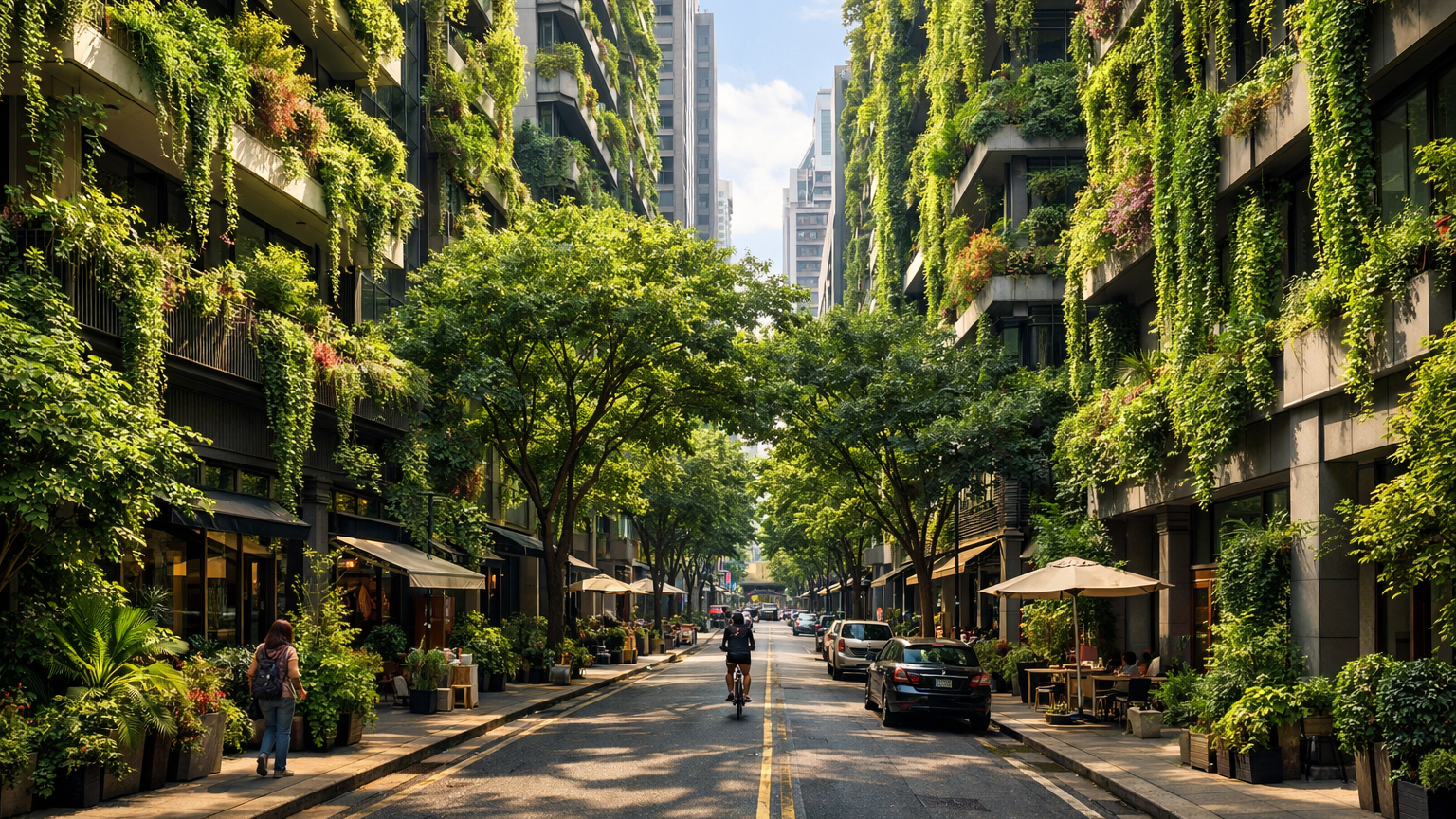
Vegetation acts as an emotional regulator within the environment, capable of softening the perception of density, reducing visual saturation, and fostering a greater sense of calm.
This suggests that nature is not a complement but an essential perceptual infrastructure within the city. It is not simply about adding greenery but about understanding how it reshapes the spatial experience as a whole.
3. Visual Composition: The Invisible Order the Brain Reads
One of the study’s most significant findings is that emotional perception does not depend solely on the elements present but on how they are organised within the visual field.
Through detailed analysis, the researchers identified that different components—buildings, sky, vegetation, and other urban elements—have varying impacts depending on their distribution and proportion.
This reveals that the urban experience is deeply influenced by the openness or enclosure of space, the contrasts between elements, and the legibility of the environment.
The same set of elements can produce entirely different sensations depending on how they are arranged.
Complexity is not the problem. The problem is the lack of structure, balance, or perceptual clarity.
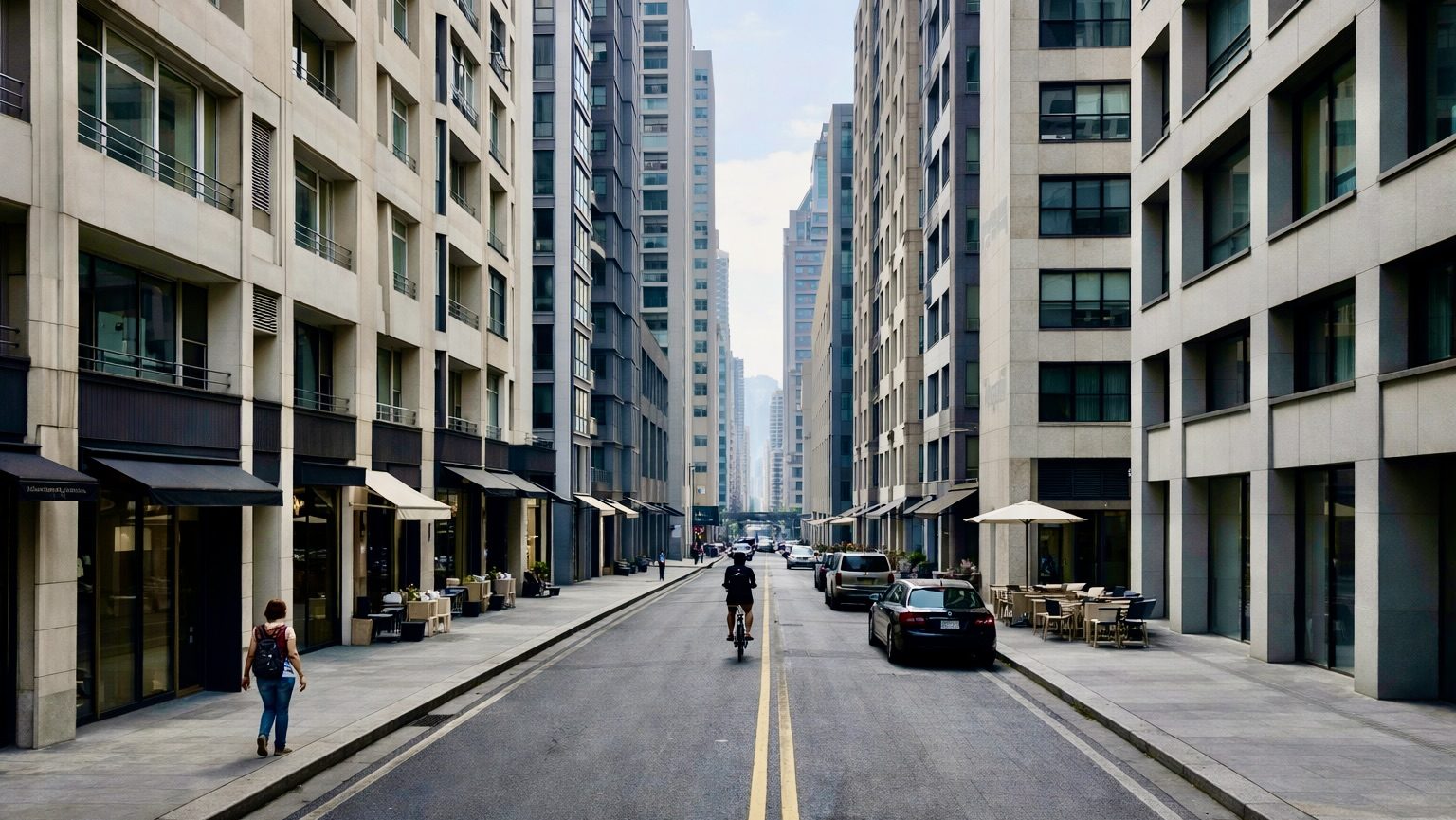
Designing cities that exhaust the brain is not merely a planning failure; it is a disregard for what science is already revealing about mental health.
Conclusion
It is important to recognise that urban densification is not, in itself, the problem. As cities grow and populations concentrate, increasing density is often a necessity. Alternatives such as urban sprawl do not resolve the challenge; they simply displace it, bringing significant costs: greater dependence on cars, loss of natural land, social fragmentation, and an increased environmental footprint.
The challenge, therefore, is not to avoid density, but to design it better—to create cities capable of regulating human experience and fostering wellbeing at every spatial scale.
This becomes especially relevant in a context where mental health conditions are rising in urban environments. Anxiety, chronic stress, and sensory overload cannot be understood solely at an individual level; they are also deeply connected to the characteristics of the environments we inhabit.
The brain does not perceive the city in fragments but as an integrated system, where each element contributes to a continuous emotional experience. Understanding how we interpret density, vegetation, and visual composition allows us to move towards more conscious, evidence-based planning.
Studies like this provide practical guidance for design: balancing the relationship between built mass and visible sky, integrating vegetation as a structural component of urban space, and organising elements in ways that make the environment legible rather than overwhelming.
Because if a city feels like pressure, chaos, or saturation, it is not merely a subjective impression—it is the brain’s response.
And that means it can be redesigned.
References
Sander, I., Mazumder, R., Fingerhut, J., Parada, F. J., Koselevs, A., & Gramann, K. (2024). Beyond built density: From coarse to fine-grained analyses of emotional experiences in urban environments. Journal of Environmental Psychology, 96, 102337. https://doi.org/10.1016/j.jenvp.2024.102337
Adli, M., Berger, M., & Brakemeier, E. L. (2017). Neurourbanism: Towards a new discipline. The Lancet Psychiatry, 4(3), 183–185.
Lederbogen, F., Kirsch, P., Haddad, L., Streit, F., Tost, H., Schuch, P., … Meyer-Lindenberg, A. (2011). City living and urban upbringing affect neural social stress processing in humans. Nature, 474(7352), 498–501.
Peen, J., Schoevers, R. A., Beekman, A. T., & Dekker, J. (2010). The current status of urban–rural differences in psychiatric disorders. Acta Psychiatrica Scandinavica, 121(2), 84–93.
 neurotectura.com