In 1998, geneticist Fred Gage discovered that the adult brain continues to produce new neurons, challenging the long-held belief that brain growth ceases after a certain age. Furthermore, it was revealed that the brain can adapt and change its structure throughout our lives. These groundbreaking findings sparked Gage’s interest in exploring how our environment shapes brain structure and function.

These facilities were specifically built to provide multidisciplinary therapy and research on neurodevelopmental disorders, including autism. They were designed to be accessible, inclusive, and welcoming.
While the brain has a strong hereditary component, many of its capabilities, knowledge, and even neurological challenges are influenced by the environment in which we grow. Scientific evidence demonstrates how the built environment affects mood, concentration, stress levels, cognitive abilities, and behaviour. This highlights the critical role architects play in understanding the impact their designs can have on people’s mental and emotional well-being.
What is Autism?
Autism Spectrum Disorder (ASD) or autism is a neurodevelopmental disorder that impacts communication, social interaction, and behaviour. Individuals with autism may exhibit a range of symptoms, from mild to more significant. Common characteristics include difficulties in verbal and non-verbal communication, repetitive behaviours, and an intense focus on specific interests.
Autism is primarily hereditary, although certain external and environmental factors can influence its manifestation.
Autism has a genetic basis, where individuals are born with a predisposition to develop it. Studies indicate that genetic factors are key, as it is common in families with a history of autism. Environmental factors, such as complications during pregnancy, can also influence the severity of the disorder, but they are not direct causes.
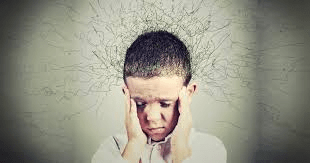
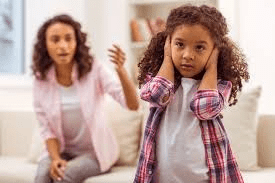

Perception: sensory difficulties and autism
People on the autism spectrum may experience both hypersensitivity and hyposensitivity to sensory stimuli, which affects their response to sounds, lights, textures, smells, or tastes.
Hypersensitivity generates intense reactions to these stimuli, causing sensory overload, stress, and anxiety. In contrast, hyposensitivity implies a reduced perception of certain stimuli, such as pain, or the search for more intense sensations to meet sensory needs.
These challenges vary from person to person and can impact their cognitive abilities, behaviour, and overall well-being.
- Noise Sensitivity: Loud or sudden noises, such as an alarm or the noise of a loud environment, can be extremely disturbing.
- Visual Processing Issues: Individuals on the autism spectrum may be altered by fluorescent or flickering lights. Additionally, some experience atypical visual perception, such as difficulty filtering out irrelevant details in visually overloaded environments.
- Difficulties with physical contact: Some individuals with ASD may avoid physical contact or prefer clothing without tags due to the extreme discomfort caused by the texture of certain materials.
- Altered smell and taste: It is common for some people with autism to be very sensitive to certain smells or flavours, which can influence their food preferences or make them avoid certain spaces with strong odours.

Contact with nature offers numerous benefits; however, for children and adults with autism, it is essential to provide calm areas where they can recover from sensory overstimulation in environments with large crowds or excessive noise.
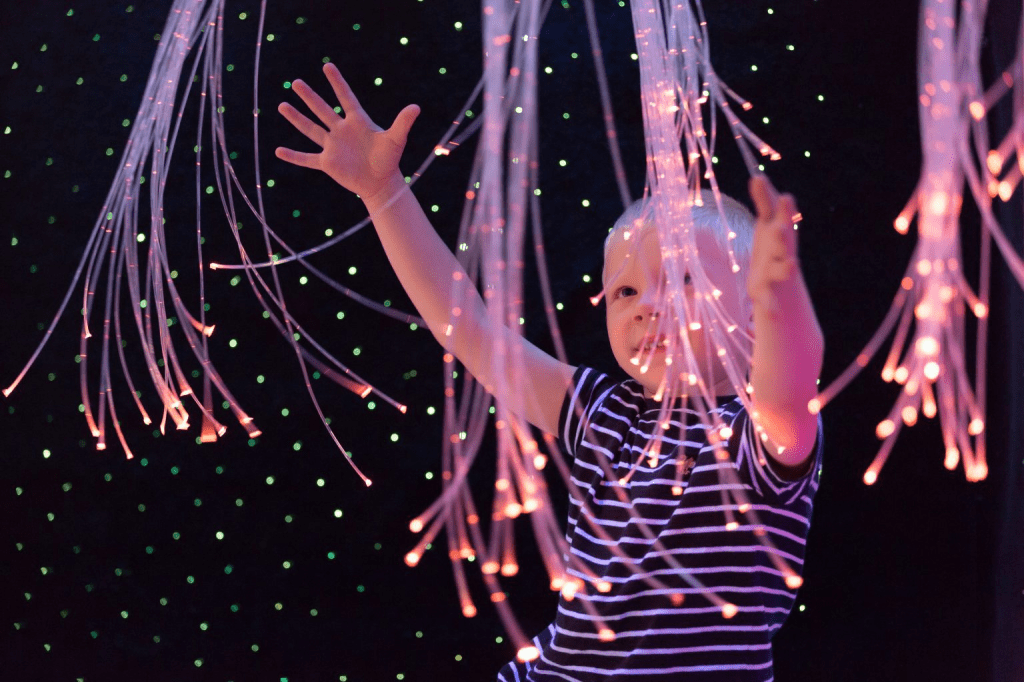
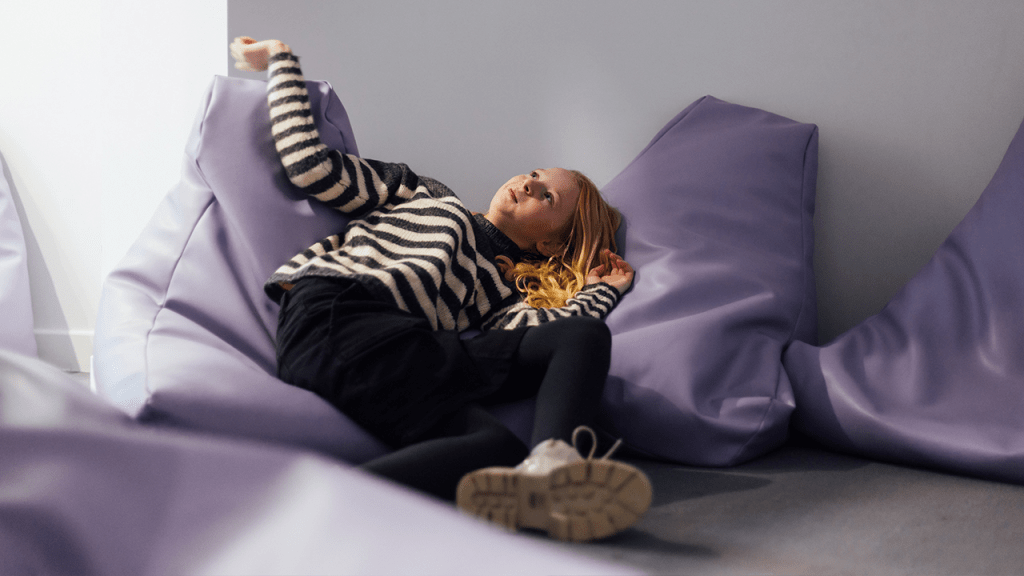
On the right, a retreat space. These areas create a calm environment where children with ASD can withdraw if they feel overwhelmed or overstimulated.
Recent studies indicate that the UK has the highest autism prevalence rate worldwide, with 700.07 cases per 100,000 people. This figure is significantly higher than other countries, including Sweden (661.85 per 100,000) and Japan (604.72 per 100,000).
https://worldpopulationreview.com/country-rankings/autism-rates-by-country
Designing for autism
Designing for autistic individuals is of paramount importance considering that over 700,000 people in the UK (more than 1% of the population) have this condition, affecting the daily lives of approximately 2.8 million people when including their families. Focusing solely on the sensory aspect in individuals with autism, some architects who have worked on this issue recommend the following strategies:
Sensory-Sensitive Design
Opt for indirect, dimmable lighting over fluorescent lights to help reduce sensory overload. Incorporate acoustic treatments and sound-absorbing materials to effectively minimize noise and echoes. Select calming, matte colours, steering clear of bright or overly stimulating hues. Use natural materials for floors, walls, and furniture to foster a serene and grounding atmosphere.
Clear Spacial Organisation
Create a straightforward, well-ordered layout with wide central spaces and designated quiet areas for retreat. Group spaces based on activity types and sensory stimulation levels to implement effective sensory zoning. Ensure clear and intuitive circulation paths with visual connectivity to aid navigation, and incorporate transition zones between areas of differing sensory intensities to provide gradual adjustments and prevent sensory overload.
Flexibility and Personalization
Provide a mix of open and enclosed spaces to accommodate different sensory needs. Include “escape spaces” or quiet rooms for individuals to retreat when overwhelmed. Allow for customisable elements that users can adjust to their preferences. Design multifunctional spaces that can adapt to various activities and needs.
In conclusion
Understanding autism empowers architects and designers to create inclusive environments that address the unique needs of individuals with autism spectrum disorder (ASD). By implementing evidence-based design strategies, they can significantly enhance the quality of life for people with ASD –and other individuals with neurological and sensory conditions such as dementia.
For instance, a thoughtful design could help to improve cognitive abilities, mood, and behaviour through clear and simple designs that allow flexibility, personalization and facilitate navigation to promote independence. By considering autism in design, inclusivity is encouraged, ensuring that individuals with diverse abilities can interact on equal terms. Ultimately, architects and designers can create spaces that significantly enhance the well-being and quality of life for people with autism.
References
Neuroarchitecture: How the Built Environment Influences the Human Brain. Revista Científica Multidisciplinar Núcleo do Conhecimento, 2023. Online.
Designing a Neurodiverse Workplace. Research on how organisations can rethink their spaces to include a neurodiverse workforce. Journal of Digital Landscape Architecture, 2020.
Presence of Mind: The Leipzig Trade Fair Hall and Other Recent Work by Ian Ritchie. AA Files, 1999.
Architecture for Autism https://issuu.com/magdamostafa/docs/2013-arcvision-image-sheets_copy
The Autism Friendly University Guide https://issuu.com/magdamostafa/docs/the_autism_friendly_design_guide
Wellbeing in nature — how being outside can help autistic people’s wellbeing https://www.autism.org.uk/advice-and-guidance/professional-practice/wellbeing-in-nature-how-being-outside-can-help-aut#:~:text=What%20are%20the%20benefits%20of,Li%20et%20al%2C%202019).
What are the key principles for architects when designing for autism? https://www.architecture.com/knowledge-and-resources/knowledge-landing-page/architects-designing-for-autism?srsltid=AfmBOopCkUHuM3aO5AwoMCCvjyPljoFGeFNOWEaHKGuOqKeTV_hQpvw6
An Interview with Magda Mostafa: Pioneer in Autism Design. https://www.archdaily.com/435982/an-interview-with-magda-mostafa-pioneer-in-autism-design.
Prevalence and Characteristics of Autism Spectrum Disorder Among Children Aged 8 Years — Autism and Developmental Disabilities Monitoring Network, 11 sites, United States, 2020. https://www.cdc.gov/mmwr/volumes/72/ss/ss7202a1.htm.
 neurotectura.com