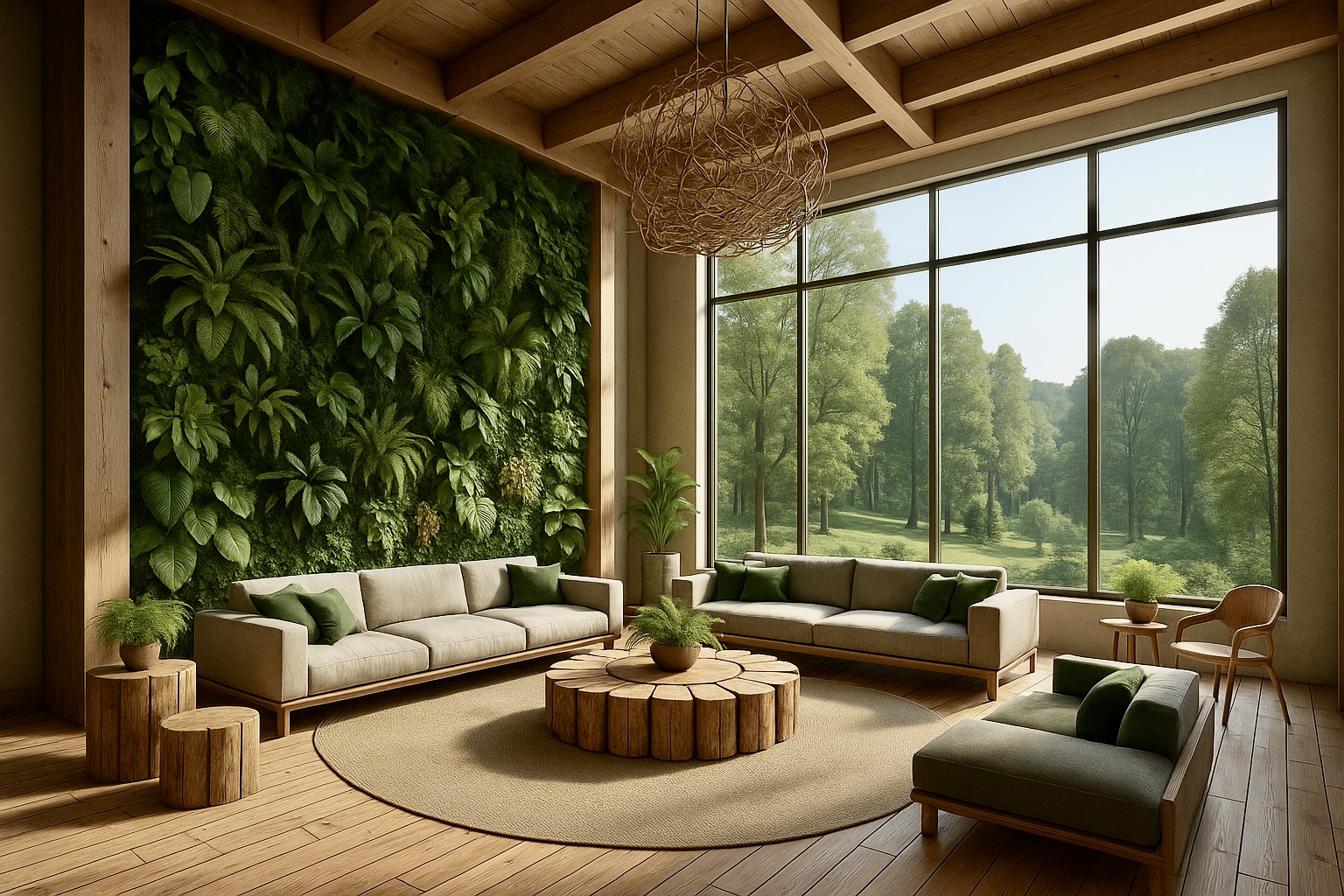
In recent years, the world has witnessed a surge in climate-induced catastrophes: unprecedented wildfires scorching vast landscapes, devastating floods submerging cities, and relentless heatwaves threatening human health and infrastructure.
These events underscore the pressing need for architecture to transcend traditional aesthetics and functionality. Our built environments must evolve into resilient sanctuaries, capable of withstanding and adapting to the escalating challenges posed by climate change.
Three Paradigms Shaping the Future of Design
Against this backdrop, three architectural paradigms emerge as critical pathways: sustainable architecture, eco-design, and biophilic design. Though often used interchangeably, each carries distinct priorities and strengths.
Recognising their differences — and their powerful potential when combined — is essential for developing environments that promote both planetary health and human wellbeing, while fostering a harmonious relationship between humans and nature.
What is Sustainable Architecture?
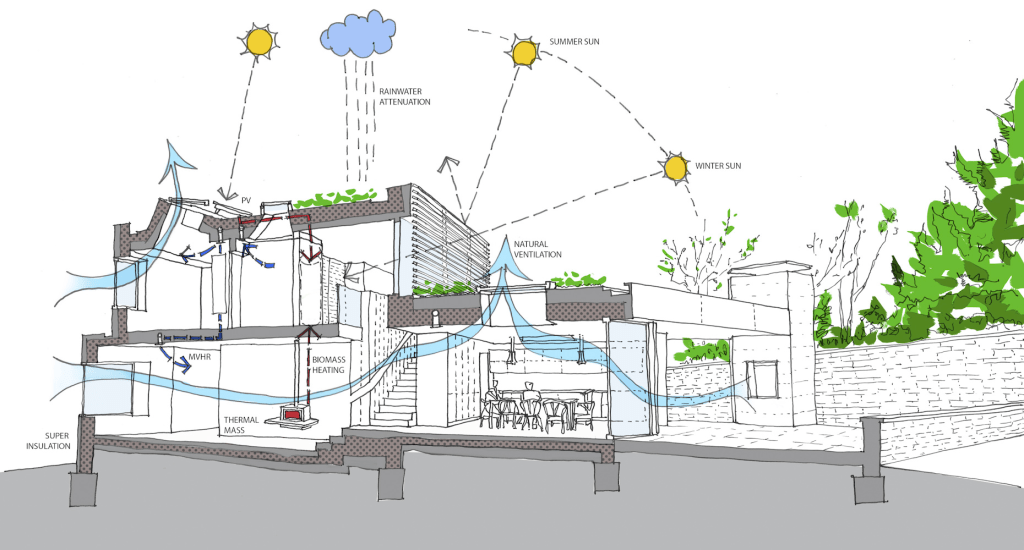
Sustainable architecture is a broad, holistic approach that aims to reduce the environmental impact of buildings throughout their entire lifecycle — from design and construction to operation and end-of-life. Its primary concern is long-term ecological balance. Key principles include:
- Maximising energy efficiency and reducing carbon emissions
- Selecting renewable or low-impact materials
- Conserving water and minimising waste
- Integrating buildings with natural ecosystems and climate conditions
This approach frequently aligns with international frameworks such as the UN’s Sustainable Development Goals (SDGs), embedding architecture within the wider goals of social equity, economic viability and ecological resilience.
What is Eco-Design?
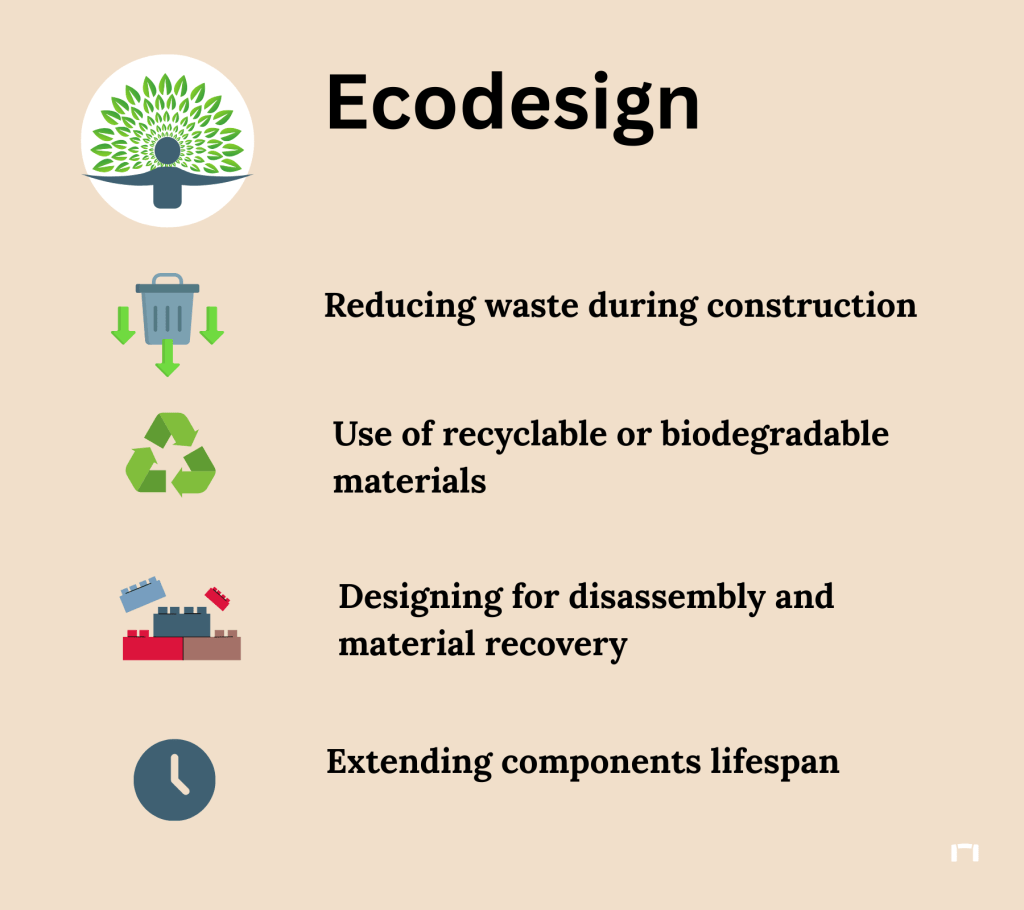
Eco-design (or ecological design) is more product-focused. It refers to the practice of designing objects, systems, or spaces with minimal environmental impact, taking into account their entire lifecycle. In architecture, this might involve:
- Simplifying construction processes to reduce waste
- Choosing recyclable or biodegradable materials
- Designing for disassembly and material recovery
- Extending the useful life of components
Eco-design is inherently practical — it focuses on measurable outcomes and optimisations. While it shares sustainability goals, it regularly operates at a more technical and material level.
What is Biophilic Design?
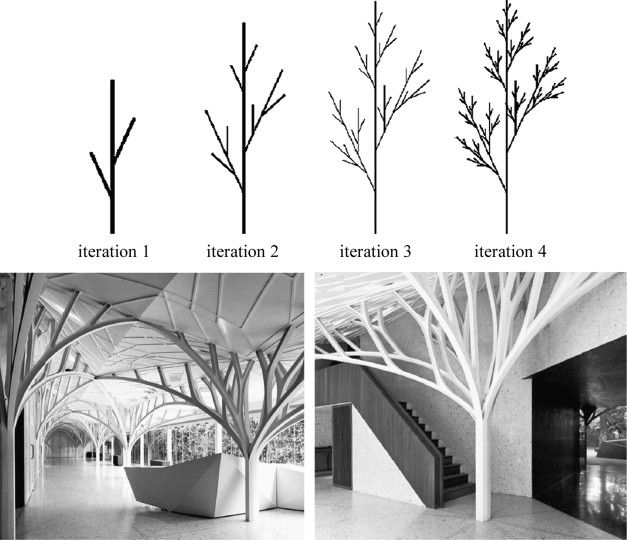
Biophilic design draws on our innate biological need to connect with nature. Inspired by the concept of biophilia (Wilson, 1986), it aims to foster wellbeing through the integration of natural elements and patterns in the built environment.
Importantly, biophilic design is not just about adding plants. According to Terrapin Bright Green (2014), it includes 14 core patterns grouped into three categories:
- Nature in the space: visual and non-visual contact with nature, water, airflow, daylight
- Natural analogues: organic shapes, materials, textures
- Nature of the space: sensory variation, prospect and refuge, mystery, and subtle risk
In other words, it’s about designing for how nature feels — and how those feelings can support mental health, emotional regulation and cognitive function.
Comparison: How These Approaches Differ
| Aspect | Sustainable Architecture | Eco-Design | Biophilic Design |
|---|---|---|---|
| Focus | Whole building + lifecycle | Components, materials, systems | Human–nature connection |
| Main Goals | Ecological balance, carbon reduction | Lifecycle efficiency, minimal impact | Wellbeing, psychological restoration |
| Scope | Systemic, long-term | Material-specific, technical | Sensory, experiential |
| Primary Outcome | Environmental protection | Reduced resource use and waste | Improved mental and emotional health |
Synergies and Overlaps
Despite their differences, these three frameworks are highly complementary. In fact, their integration may be the most powerful strategy for truly regenerative design.
- A sustainable building designed with eco-design strategies will consume fewer resources.
- A biophilic environment embedded in that same structure will enhance human experience — making sustainability feel good, not just function well.
- And when all three converge, we move from simply reducing harm to actively restoring balance between people and planet.

A Real-World Example: Khoo Teck Puat Hospital, Singapore
The Khoo Teck Puat Hospital (KTPH) in Singapore exemplifies how sustainable architecture, eco-design, and biophilic design can converge to create not only an efficient building but a healing environment. Designed by CPG Consultants and completed in 2010, the hospital incorporates passive design strategies that maximise natural ventilation and daylight, significantly reducing energy consumption. Rainwater harvesting and green roofs further minimise the environmental footprint while contributing to the site’s biodiversity and thermal comfort.
At the material and construction level, eco-design principles guided choices that reduced waste and promoted the use of recyclable, locally sourced materials. Modular construction techniques minimised onsite waste, and building systems were designed with long-term adaptability in mind. This lifecycle thinking ensures that the building can evolve over time while maintaining a minimal environmental impact.
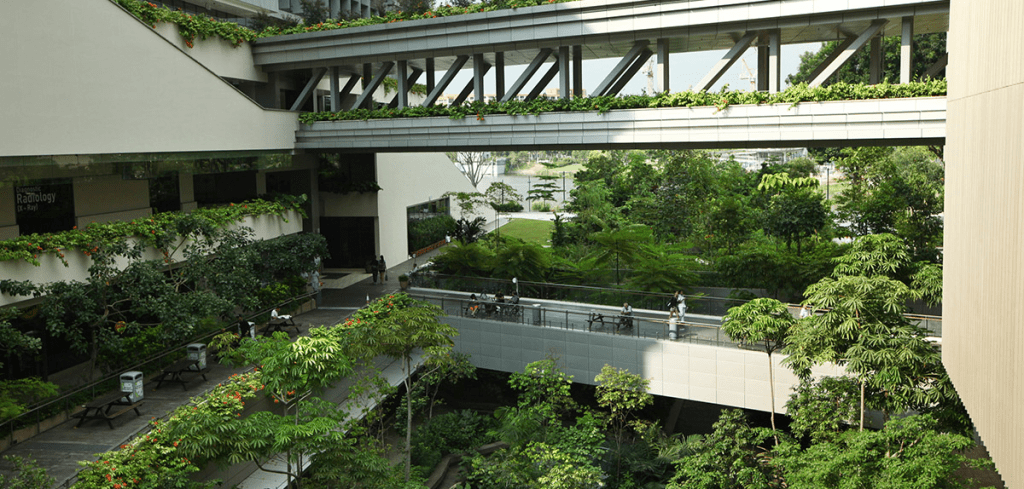
Biophilic design is at the heart of KTPH’s success. Over 70% of the hospital’s footprint is dedicated to greenery, including therapeutic gardens, water features, and a central courtyard rich in biodiversity. Every patient room has a view of nature, supporting emotional wellbeing and potentially accelerating recovery. The hospital’s integration with public green spaces also fosters a sense of community, making it a beloved urban sanctuary as well as a medical facility. KTPH demonstrates that sustainable, eco-conscious, and biophilic design can—and should—coexist to promote both planetary and human health.
Why This Matters: From Metrics to Meaning
In architecture, numbers matter — energy savings, carbon footprints, durability. But so do the invisible dimensions: stress levels, creativity, sense of belonging.
Designing with sustainability, ecology and biophilia in mind allows us to design not only for efficiency, but for meaning. This is especially urgent in an age of eco-anxiety, urban overstimulation and growing mental health challenges.
Conclusion: Designing for Life
rue innovation in architecture today lies not in selecting one framework over another, but in harmonising them into a cohesive, resilient approach.
- Sustainable architecture provides a systemic foundation by focusing on ecological balance and energy efficiency.
- Eco-design ensures responsible material choices and lifecycle optimisation.
- Biophilic design reintroduces the human soul into built environments, fostering emotional connection and wellbeing.
When these paradigms intersect, they create spaces that meet functional needs while promoting wellbeing, resilience, and harmony between humans and the natural world.
Together, they allow us to reimagine spaces not just as structures — but as ecosystems for thriving.
References
BBVA. (2023). ¿Cuáles son las diferencias entre ecodiseño y diseño sostenible? https://www.bbva.com/es/sostenibilidad/cuales-son-las-diferencias-entre-ecodiseno-y-diseno-sostenible/
Cámara de Comercio de España. (n.d.). Diseño sostenible. https://www.camara.es/innovacion-y-competitividad/como-innovar/diseno-sostenible
Domestika. (2023). ¿Qué es el diseño sostenible? https://www.domestika.org/en/blog/6902-que-es-el-diseno-sostenible
Terrapin Bright Green. (2014). 14 Patterns of Biophilic Design. https://www.terrapinbrightgreen.com/reports/14-patterns/
ArchDaily. (2024). Biophilic Architecture without Plants: Invisible Design for Wellbeing. https://www.archdaily.com/1029257/biophilic-architecture-without-plants-invisible-design-for-wellbeing
UCEM. (2024). Biophilia: 15 real-world examples in the built environment. https://www.ucem.ac.uk/whats-happening/articles/biophilia-examples-built-environment/
Tree-inspired dendriforms and fractal-like branching structures in architecture: A brief historical overview https://www.scipedia.com/public/Md-Rian_Sassone_2014a
Sustainable Design https://www.casa-architects.co.uk/approach/sustainable-design/
Khoo Teck Puat Hospital https://cpgconsultants.com.sg/blog/projects/khoo-teck-puat-hospital-singapore/#:~:text=Khoo%20Teck%20Puat%20Hospital
Healing Through Nature https://living-future.org/case-studies/award-winner-khoo-teck-puat-hospital/
 neurotectura.com