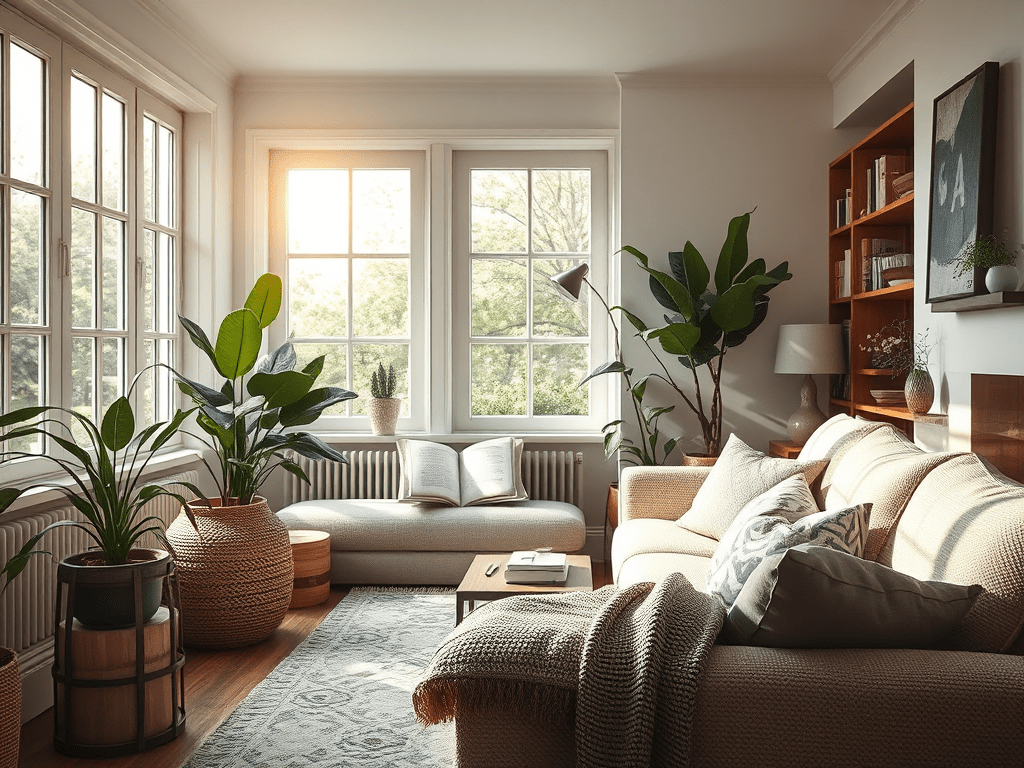
After a day filled with work, study, commuting, and endless demands, where do we land?
We should return to a space that offers more than shelter—a place that helps us decompress, slow down, and reconnect.
With ourselves. With our loved ones. With what truly matters.
We spend around 90% of our time indoors
World Health Organization
Yet, too often, our homes reflect the same overstimulation we encounter outside: noise, clutter, harsh lighting, constant alerts.
Instead of calming us, they continue to activate us.
It doesn’t have to be this way.
A well-designed home can act as a nervous system ally. It can regulate, soften, and soothe—through intentional choices in light, sound, layout, texture, and flow.
If we are spending most of our lives indoors, then surely the design of those spaces deserves our attention. Especially the one place meant to restore us: home.
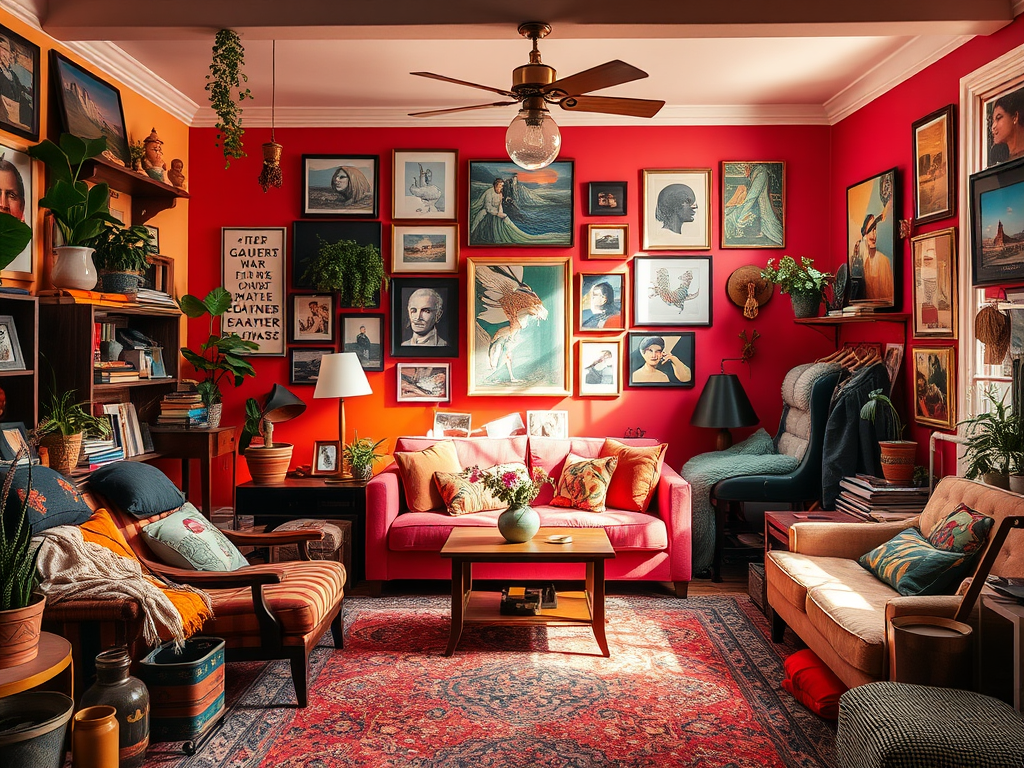
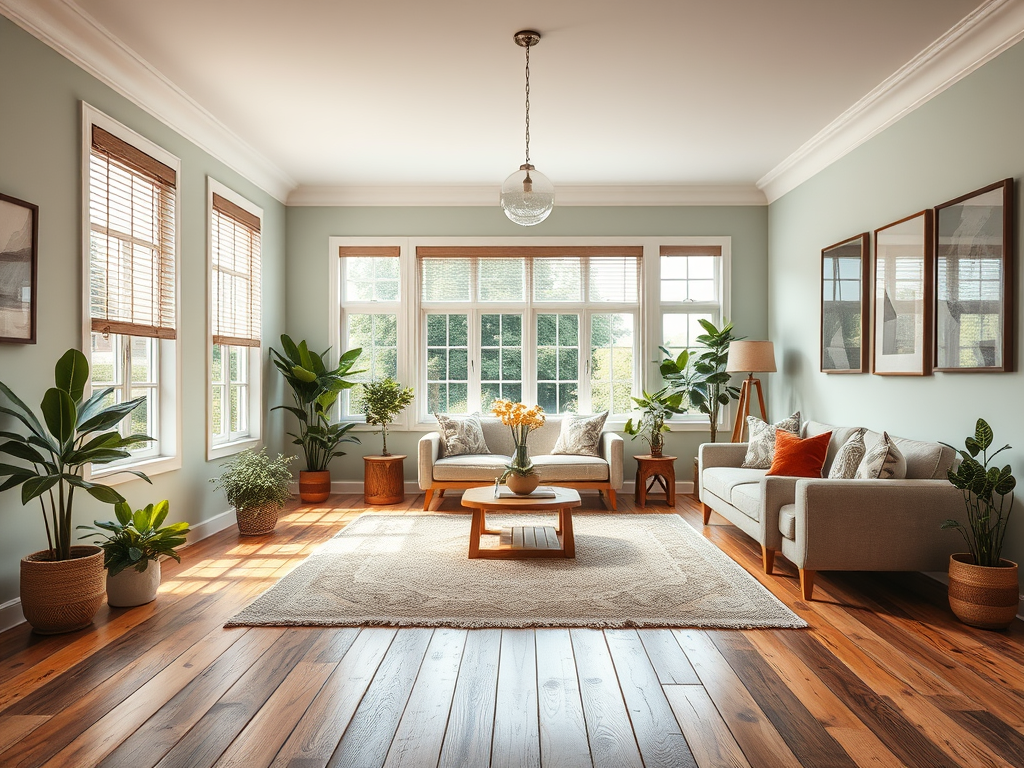
In the first image, bold colours, visual clutter and heavy furniture create a space that may overstimulate or overwhelm. In the second, soft tones, natural light, and breathing room invite calm, clarity, and emotional ease.
Anxiety and the Built Environment: A Hidden Connection
Anxiety disorders are among the most common mental health challenges worldwide, affecting approximately 1 in 6 adults in the UK. While much attention has been placed on therapy and medication, the role of the built environment—particularly our homes—remains largely overlooked.
Environmental psychology and neuroarchitecture suggest that spatial experience shapes emotional well-being. Clutter, noise, harsh lighting, lack of control, or poor spatial flow can all act as triggers, increasing heart rate, irritability, or a sense of being overwhelmed.
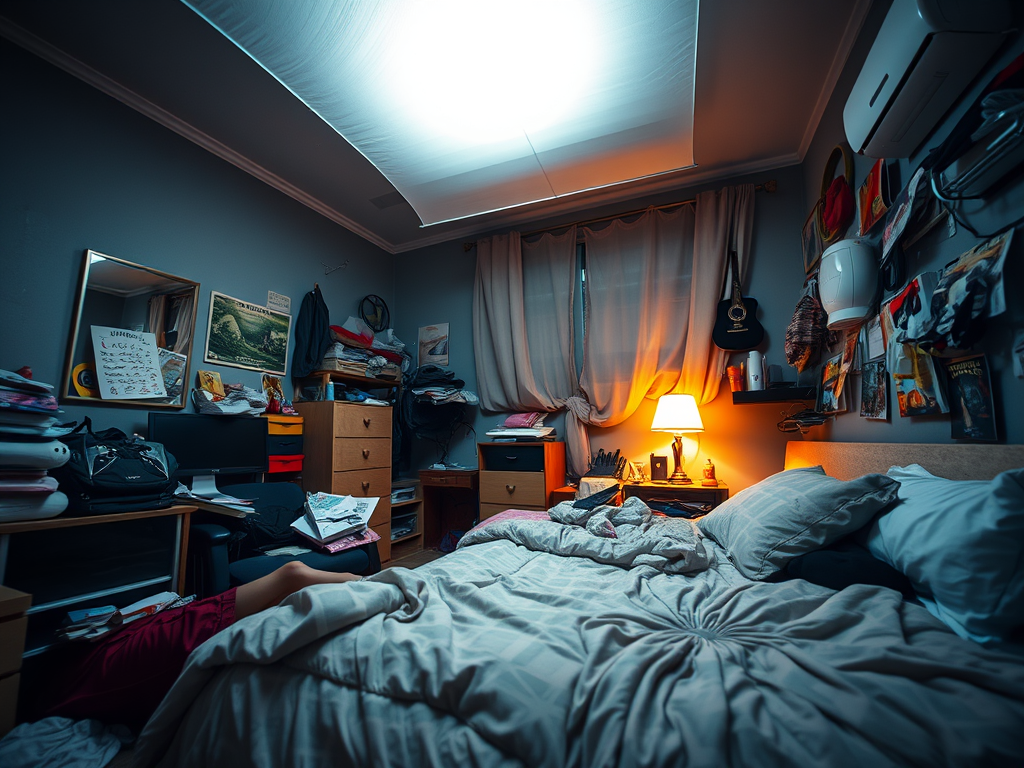
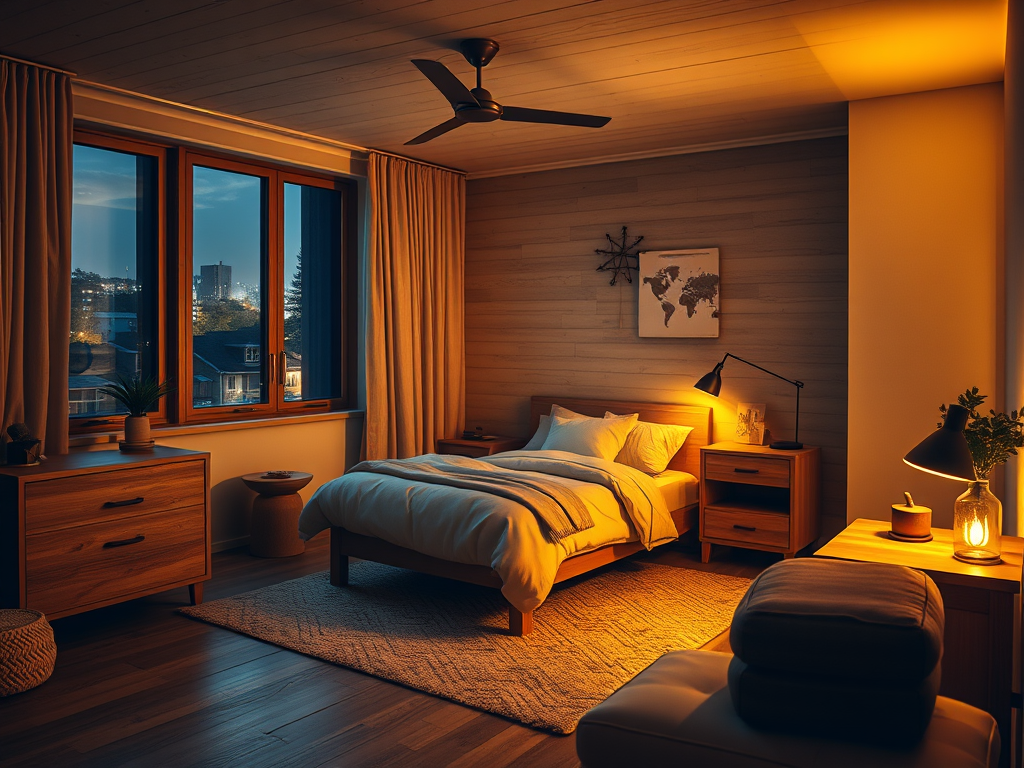
Good sleep is not a luxury—it’s a foundation for mental clarity, emotional balance, and daily energy. Thoughtful lighting design can help us get there. 💡 In the first image, a cluttered bedroom lit by a single, bright white ceiling lamp may unintentionally disrupt rest. This type of light can interfere with melatonin production, delaying sleep and affecting sleep quality. 🌙 The second bedroom creates a more nurturing environment: soft lighting from multiple warm-toned sources, minimal visual input, and a calm aesthetic—all supporting the body’s natural circadian rhythm.
Good sleep is essential for mental health, emotional balance, and energy. Disrupted rest can worsen anxiety, lower mood, and affect our ability to cope with everyday life.
What Makes a Home Feel Safe (or Not)?
Let’s break it down through key design elements:
• Visual Order
Visual clutter contributes to cognitive overload. Open shelves full of random items or chaotic colour palettes can subtly induce restlessness. Calm often emerges from visual clarity: concealed storage, consistent materials, muted tones.
• Zoning and Refuge
Homes that lack spatial hierarchy can feel disorienting. Introducing clear zones (for rest, work, socialising, retreat) helps anchor behaviour and emotion. A room within a room—like a reading nook or curtained corner—can offer refuge, especially in shared homes or small flats.
• Lighting
Anxious minds are sensitive to light—especially artificial glare or flickering fluorescents. Maximising natural light and using warm-tone LEDs with dimmers can ease overstimulation and support circadian rhythm.
• Acoustic Comfort
Hard surfaces amplify sound, while soft materials (rugs, curtains, upholstered furniture) absorb it. This isn’t just comfort—it’s regulation. For someone with anxiety, even distant noise can feel invasive.
• Control and Agency
Small design choices that allow personalisation—like moveable furniture, layered lighting, or scented elements—restore a sense of control. And control, in anxiety, is often the difference between coping and spiralling.
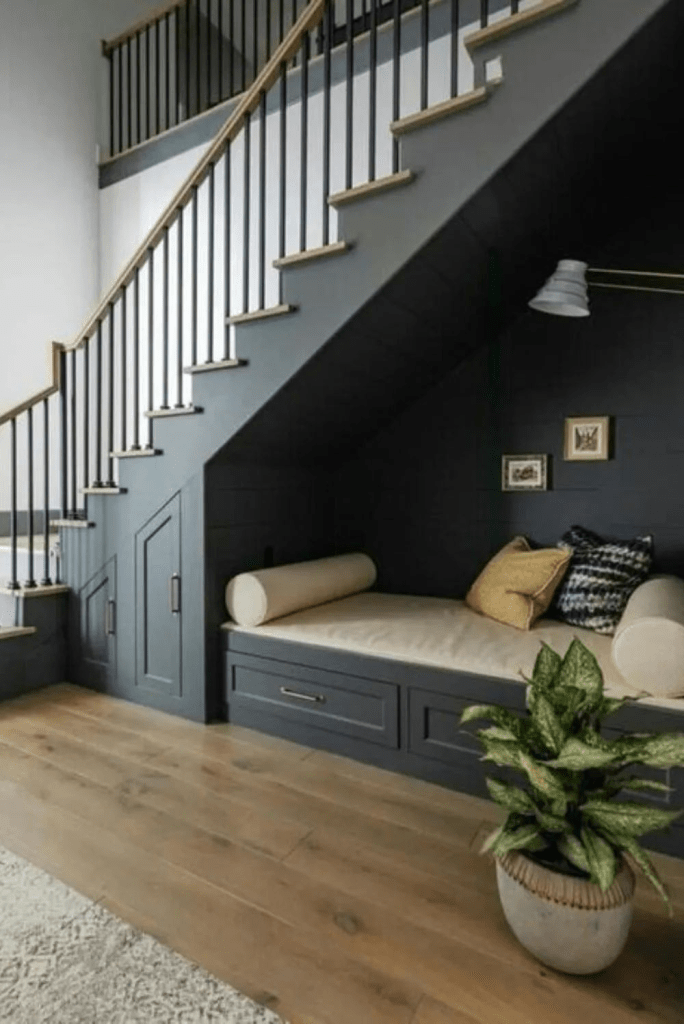
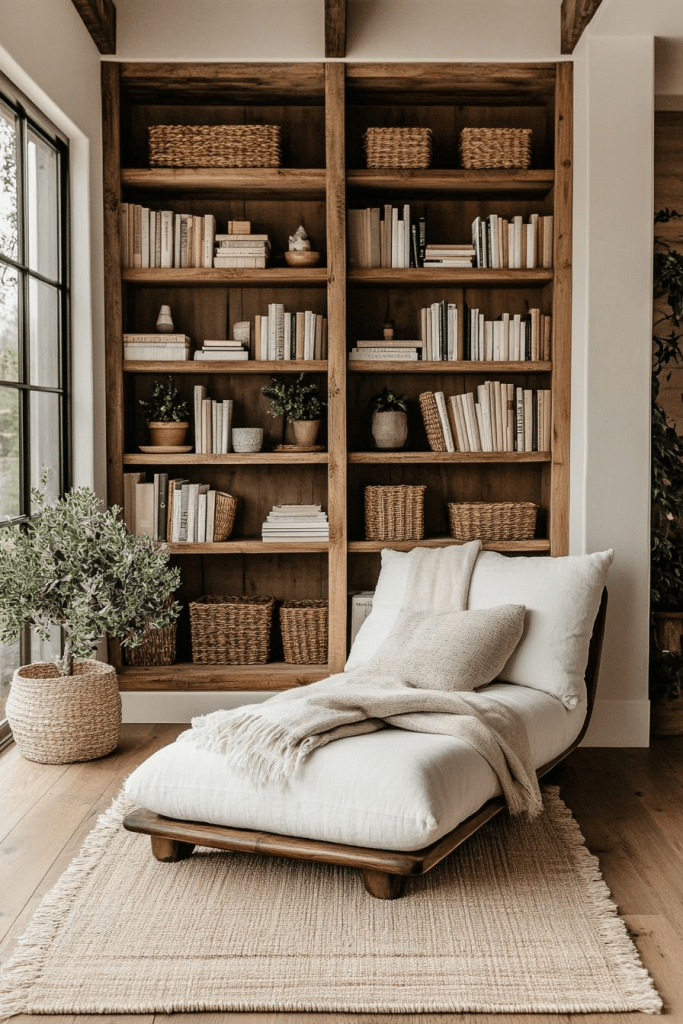
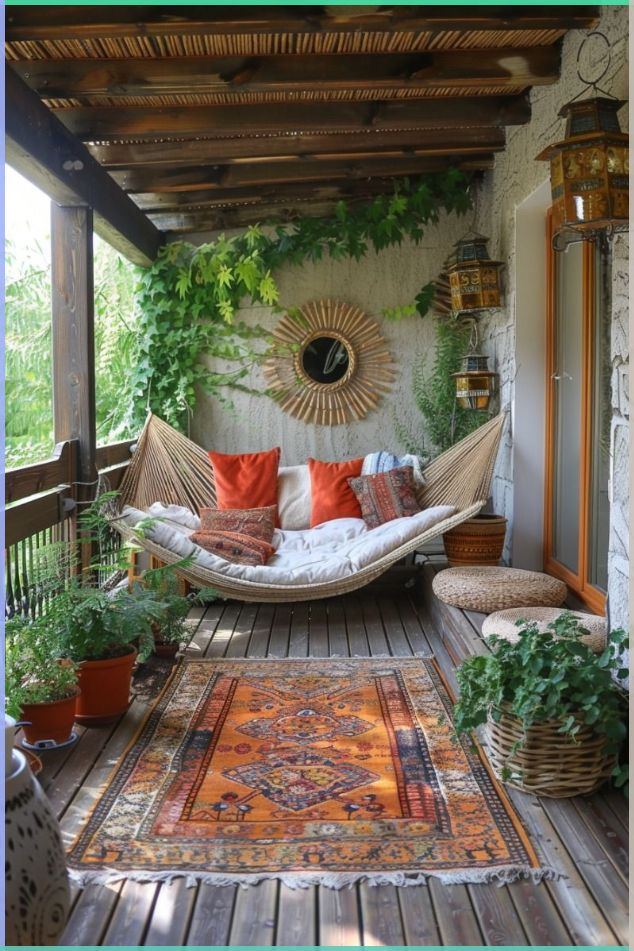
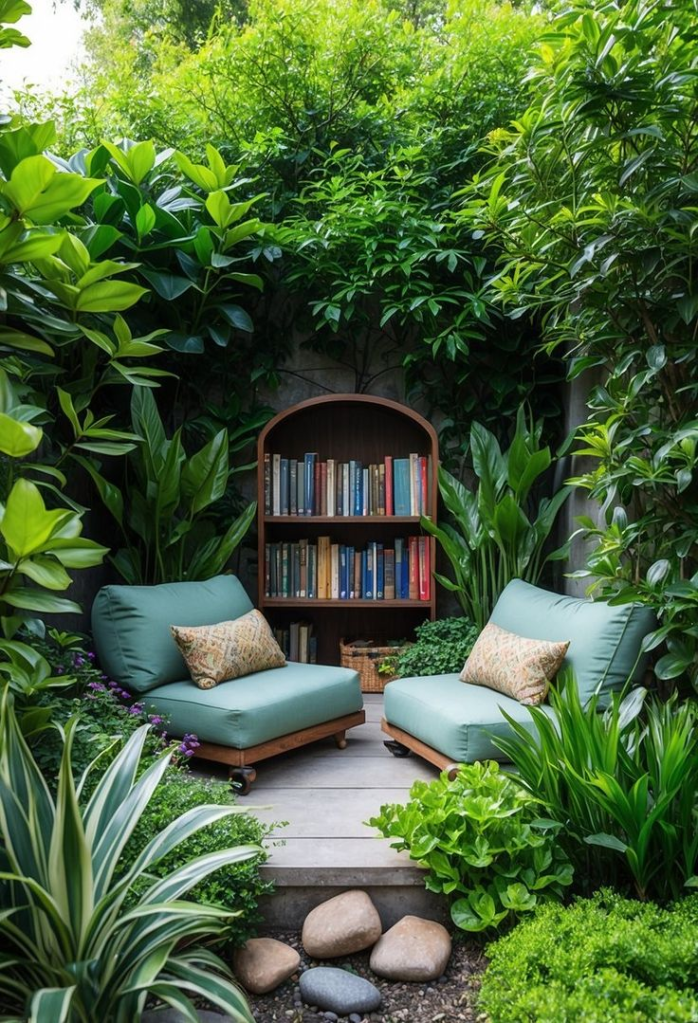
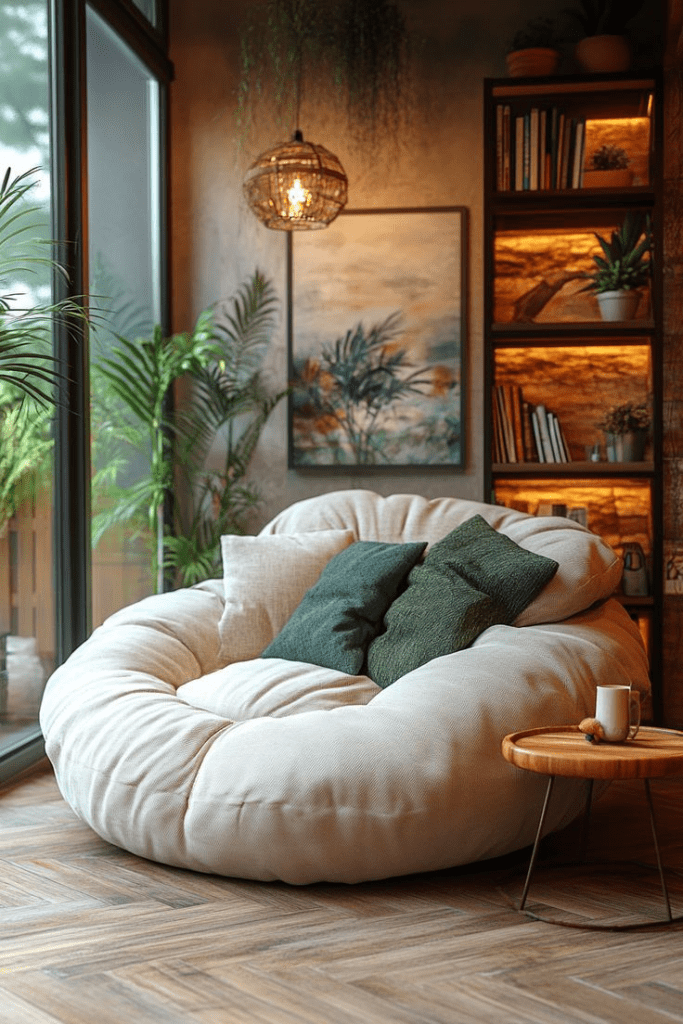
From hammocks to garden benches, pastel palettes to bold tones—these five relaxation corners remind us that well-being isn’t about size, style, or perfection. Whether it’s a balcony, a nook, or a patch of grass, what matters is having a space where you can pause, breathe, and reconnect with yourself.
From Concept to Practice: Everyday Strategies
You don’t need to remodel your entire home to reduce stress. Start here:
- Choose one overstimulating area—perhaps your hallway or kitchen—and simplify it. Introduce smart storage solutions to optimise space and reduce visual noise.
- Introduce biophilic elements: a plant, a water feature, a natural material.
- Create a dedicated calm zone—a cushion by a window, a low-lit room for downtime.
- Review your lighting and soundscape: is it supporting your mood or draining it?
Small shifts can create big emotional ripples.
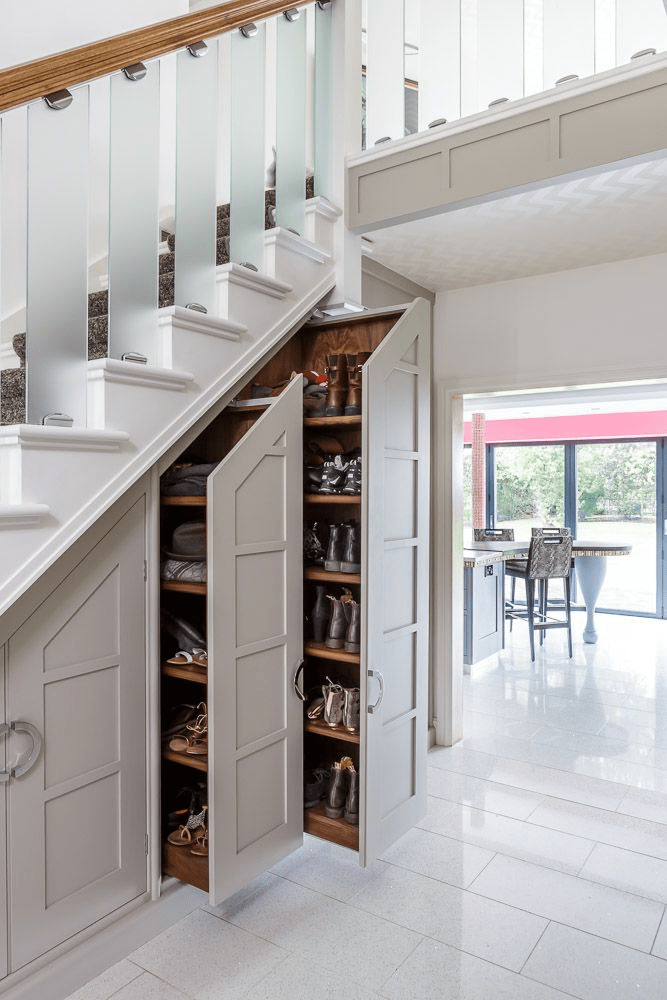


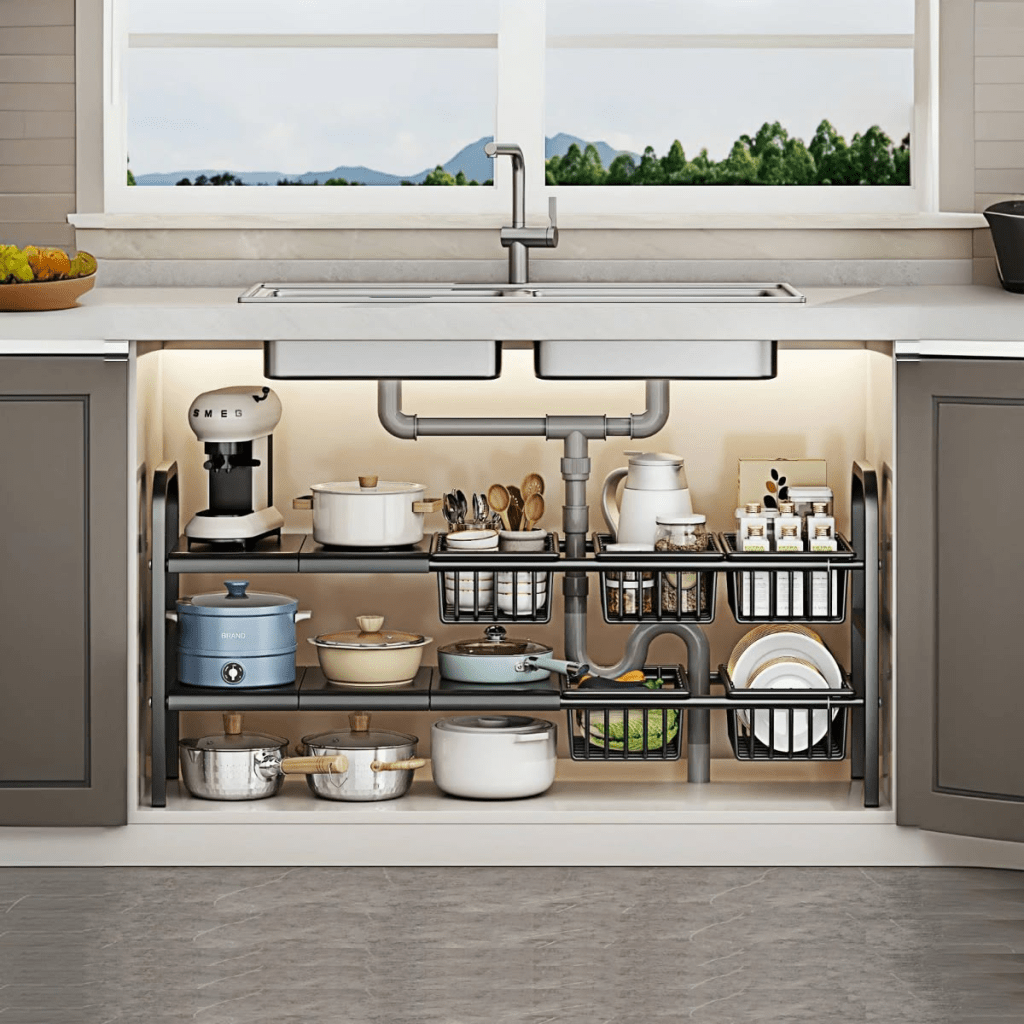
Thoughtful storage isn’t just about keeping things tidy—it’s about shaping how we feel in our spaces.
From closed cabinets to woven baskets and soft bins, these storage solutions reduce visual noise, support clarity, and help restore calm.
✨ Final Reflection: Designing Emotionally Intelligent Homes
Designing for anxiety isn’t about creating sterile, silent spaces. It’s about building emotional literacy into the structure of our lives. As we rethink what it means to live well, we must ask not just how our homes look—but how they feel.
It isn’t about buying expensive things. Calm doesn’t come from price tags—it comes from spaces that feel safe, familiar, and emotionally attuned to who we are. What truly soothes is not luxury, but belonging: a chair that fits your body, a plant you’ve kept alive, a photo that reminds you’re loved.
Designing for well-being starts with noticing: how does light fall into your room in the morning? Where does noise accumulate? What colours, textures, or memories make your nervous system exhale? These small, sensory decisions are where the real work of healing environments begins. They don’t demand perfection—only intention.
If You’d Like to Read More
Here are some trusted sources that explore how our environment affects stress, sleep, and mental health:
- Harvard Health Publishing. (2020). Blue light has a dark side.
https://www.health.harvard.edu/staying-healthy/blue-light-has-a-dark-side - Mental Health Foundation (UK). (2021). Sleep and mental health.
https://www.mentalhealth.org.uk/explore-mental-health/a-z-topics/sleep-and-mental-health - World Health Organization. (2018). Housing and Health Guidelines.
https://www.who.int/publications/i/item/9789241550376 - Kellert, S. R., Heerwagen, J. H., & Mador, M. L. (2008). Biophilic Design: The Theory, Science, and Practice of Bringing Buildings to Life. Wiley.
- Vohs, K. D., et al. (2013). Physical order produces healthy choices, generosity, and conventionality, whereas disorder produces creativity. Psychological Science, 24(9), 1860–1867.
 neurotectura.com