Light came before architecture. For thousands of years, the sun decided when we woke, when we worked and when we rested. When we learned to master fire, light also became a refuge: around a flame we gathered, protected each other and told stories.
That relationship is still written into our bodies. Light does more than let us see. It regulates our biological functions, shapes our mood and changes the way we perceive a space. Think of how different a sunrise feels from a candlelit room or from a hospital corridor flooded with cold white light.
Today we spend most of our lives indoors, under artificial light. So the question is no longer just how much light we need, but what kind of light.
Can lighting help us heal, rest and feel safer?
Neurolighting says it can, and that designing light also means designing how we feel.
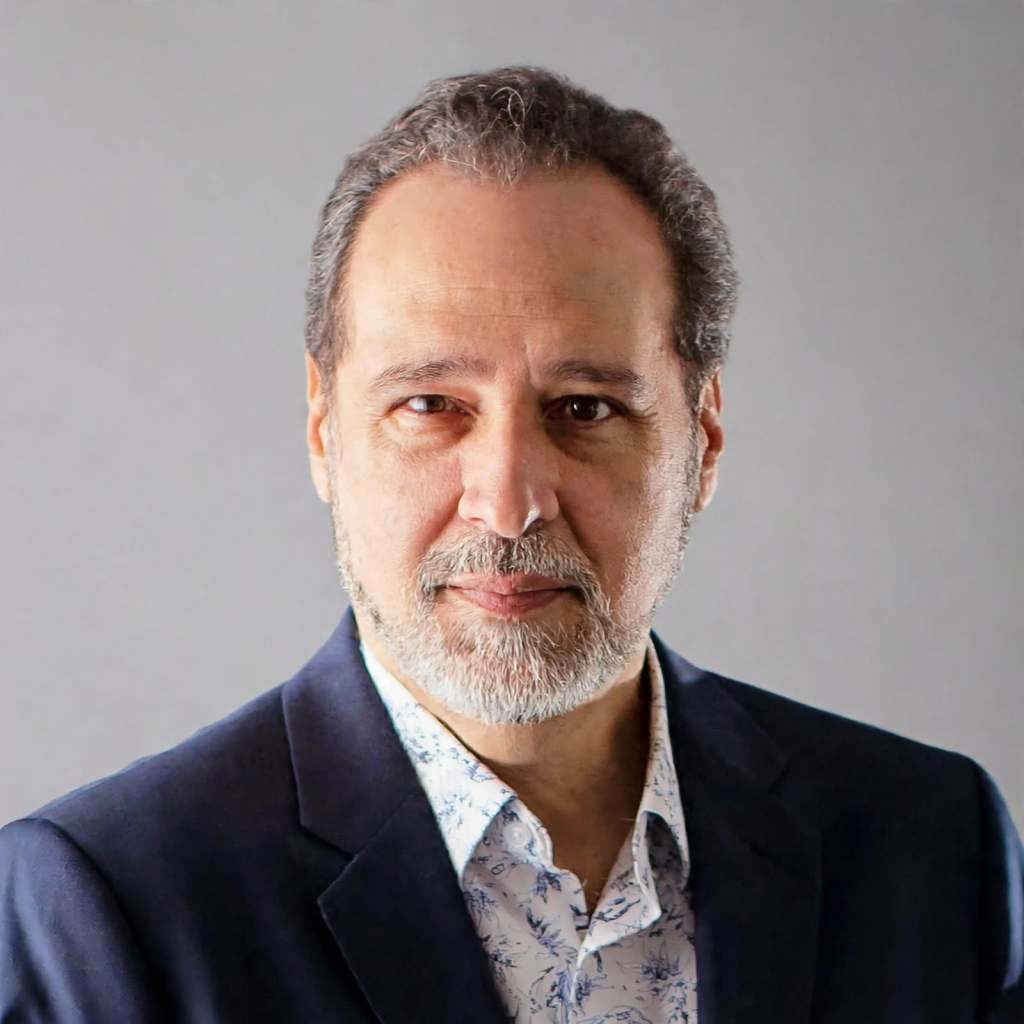
Who is Fernando Mazzetti?
Fernando Mazzetti is a Buenos Aires-based interior and lighting designer with more than forty years of experience in the world of light. He has worked on residential, commercial and heritage projects, teaches at university level and writes for specialist design and lighting magazines across the Spanish-speaking world. He is co-founder of Neuroiluminación (Neurolighting), a training and research platform that studies how light affects our emotions, our perception and our wellbeing.
He has taken part in lighting projects for heritage buildings such as the Palacio Barolo in Buenos Aires and Le Corbusier’s Casa Curutchet in La Plata, and in several editions of Casa FOA, Argentina’s leading interior design exhibition. Since 2007 he has taught interior and lighting design throughout Latin America. His articles appear in magazines such as Luminotecnia (Argentina), Iluminet (Mexico) and Lightecture (Spain).
We spoke with him:
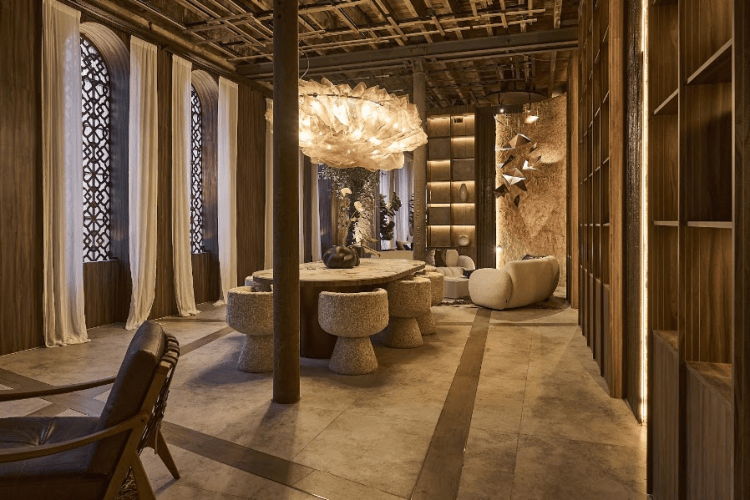
Natural light, filtered through lattice screens and curtains, blends with warm artificial light.
How did you come to lighting, and when did you start looking at it through the lens of neuroscience?
My relationship with light began in childhood, playing with torches under the bedsheets to create effects of light, shadow and contrast. But the memory that marked me most was a school trip to the Mausoleum of José Artigas, Uruguay’s national hero, in Montevideo. The darkness of the place and the light on the walls had a powerful visual and emotional impact on me. I think it was the first time I became aware of the power of artificial light. A few weeks ago I went back after many years and felt the same emotion. I had no idea then that lighting would become my profession and my passion.
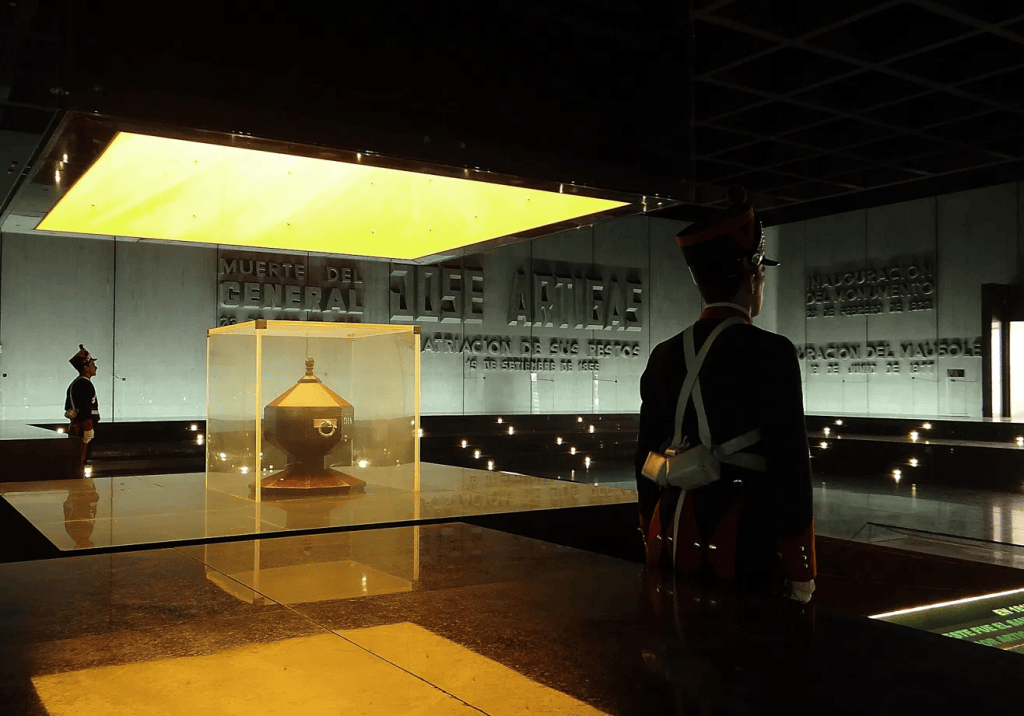
Photo: Federico Cetrulo, via Wikimedia Commons.
Throughout my career I have worked with lighting from many different angles, and I always felt there was a lot of technique and very little humanity. Human-centric lighting was the first step towards understanding how light transforms people. Then I became interested in neuroarchitecture, for everything it offers on the impact of interior design. Neurolighting is the specific field of research that now allows me to study light from a neuroscience perspective, and it keeps opening new windows of knowledge.
If you had to explain neurolighting to someone who isn’t an architect or a designer, how would you define it?
Neurolighting brings neuroscience and light together to understand how we respond to light on a sensory, emotional, perceptual and cognitive level, both in buildings and in the wider environment.
It means approaching lighting design from a multidisciplinary perspective: neuroscience, neuropsychology, and our visual and non-visual responses to light. Solving the functional, technical or aesthetic side is not enough. We should also bring new tools into the design process that improve people’s quality of life. Neurolighting doesn’t claim to be disruptive or definitive. It offers a new way of looking, based on what we already know and on what future research will show.
In your talk “Light as a Design Tool in Healthcare Settings”, you describe light as a tool. How can lighting help a patient recover better?
Healthcare is one of the areas where neurolighting has the most direct application. Studies have shown that a hospital patient in a room with natural light and a view outside recovers faster and is in a better mood.
The industry is developing artificial lighting that recreates indoors the changing colours and intensities of daylight. This tunable white technology substantially improves treatment and the patient’s overall condition. Light therapy is also used with people who have conditions such as bipolar disorder. Ultimately, it’s medicine, technology and industry working together.
Healthcare staff work long shifts, often at night. How can lighting also look after doctors, nurses and carers?
For a long time, architectural, interior and lighting design focused only on the patient. Neuroscience has led us to include medical staff and companions too, because they are also key players in patient care.
One of the most sensitive issues is night work, which throws the circadian rhythm out of sync and has long-term consequences for health. It is also a highly stressful job in which errors must be kept to a minimum. Some shift-rotation strategies partly improve the situation. Another solution, according to Uruguayan biologists Bettina Tassino and Ana Silva, authors of Cronobiología traslacional y salud circadiana (Translational Chronobiology and Circadian Health, 2025), is to expose night workers to bright light up to two hours before the end of their shift. This has been shown to improve both alertness and performance, although it should be combined with avoiding bright light on the commute home the next morning, using suitable glasses.
Work performance depends on good rest, and that is where lighting design can make a real difference.
Thinking of older people, children and neurodivergent people, who are more sensitive to light, what should we bear in mind when lighting a healthcare space?
One of the most important aspects of neurolighting is tailoring the design to the individual. A general lighting scheme may work for most people, but not for everyone. Older adults, for example, need higher light levels and different types of light, and they are more affected by dark areas and harsh shadows. For a neurodivergent person, a dark, high-contrast patch on the floor can look like a hole and make them feel unsafe. What matters is addressing these particular needs with specific technical strategies.
What is the lighting mistake you see most often in healthcare settings that would be easy to fix?
The most common one is colour temperature. The familiar cold, bluish “hospital white” is starting to change thanks to design tools that adapt to each area, each activity and each moment of the day and night. Another common mistake in patient rooms is placing a light fitting in the centre of the ceiling, forgetting that a patient lying in bed spends most of the time looking straight up at it.
Many people recover at home after an illness or surgery. What simple lighting advice would you give them?
The key is to get natural light at home, especially in the morning, to keep the circadian rhythm in sync. During the day, in rooms with little natural light, it’s best to use neutral-toned lighting. Towards the evening, lower the light levels. And sleep in complete darkness.
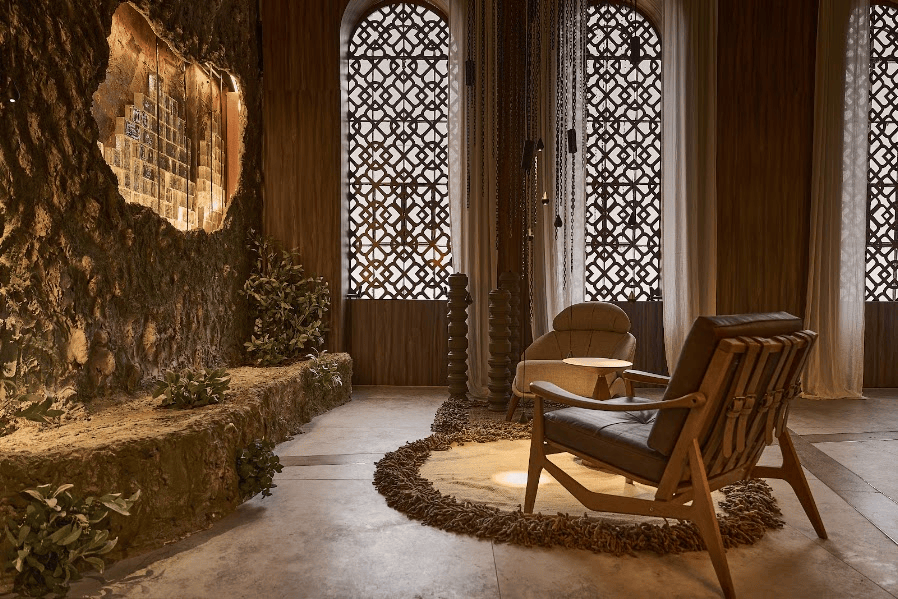
Filtered daylight and a single pool of warm light: a corner that invites rest.
Light as a design responsibility
Our conversation with Fernando leaves one idea clear: light is never neutral. It affects how we sleep, how we heal, how we work and how we experience the spaces we live in.
In healthcare settings, this is especially evident. A patient who receives daylight, a nurse working nights who needs to stay alert, and an older person who must move safely along a corridor all have different lighting needs.
Neurolighting invites us to look beyond lux levels, colour temperatures and technical data sheets. It reminds us that lighting must also consider how our bodies respond, how we perceive our surroundings and how those experiences vary from one person to another.
It is not about finding a universal solution but about better understanding the relationship between light and the people who inhabit our spaces.
Designing light also means designing the conditions in which we live, rest, work and recover.
This interview reflects the views and professional experience of Fernando Mazzetti. It was conducted in Spanish and has been edited and translated for publication. The original Spanish version was reviewed by the interviewee. Leer en español.
Keep learning
💡 Explore Fernando Mazzetti’s courses, talks and articles (in Spanish) at neuroiluminacion.com.
📖 Read more interviews and articles at neurotectura.com

