“Less is boring”
Robert Venturi
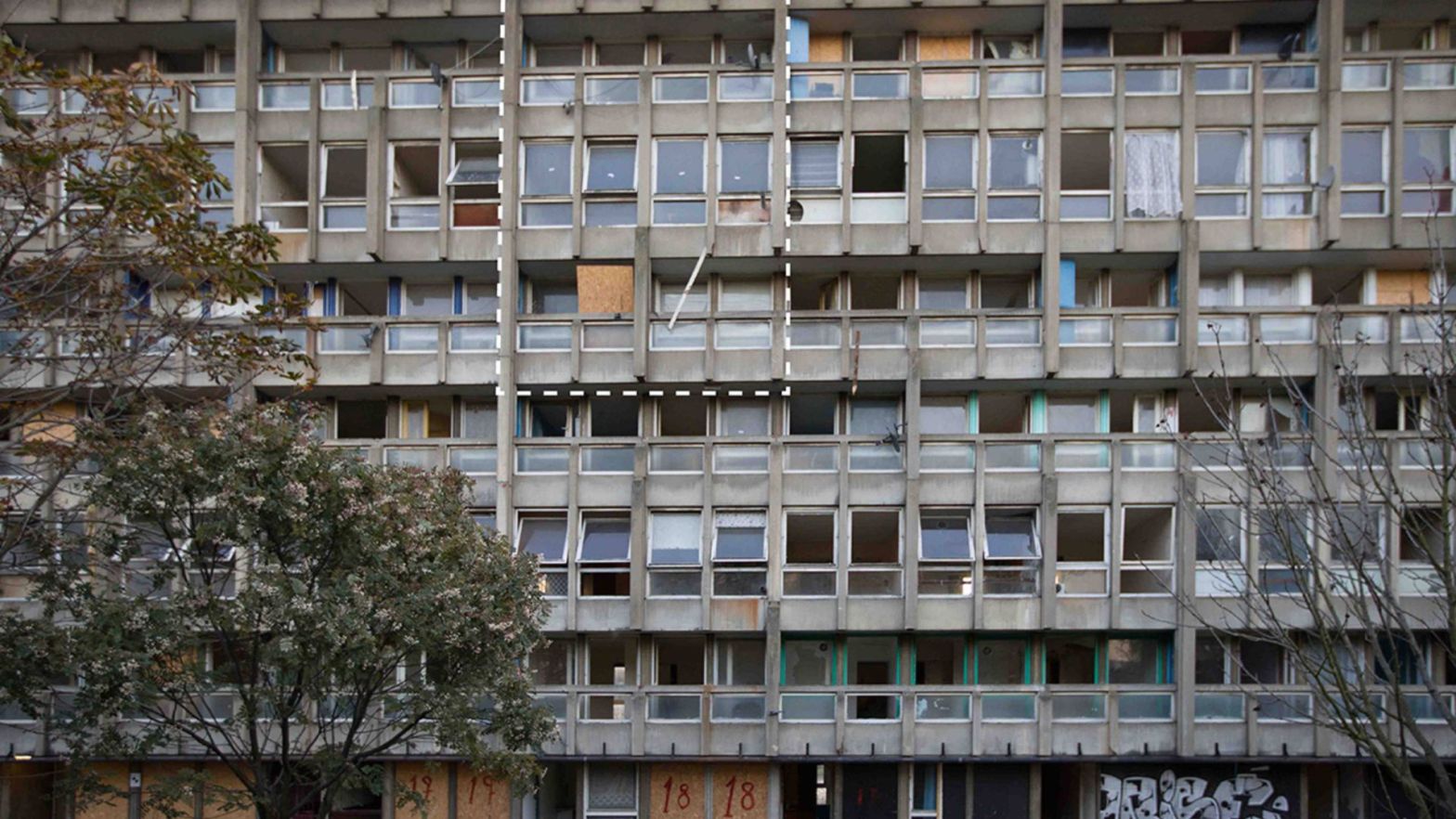
Few architectural projects capture the promise and pitfalls of Brutalism as vividly as Robin Hood Gardens in East London. Designed by Alison and Peter Smithson in the early 1970s, it was conceived as a social experiment: vast concrete blocks connected by “streets in the sky” and centred around a green “stress-free zone.” Supporters hailed it as a bold attempt to reimagine urban life—an architecture of honesty and community, where working-class families could find dignity and connection.

Alison and Peter Smithson’s 1972 Brutalist estate, once hailed as visionary social housing, later condemned and demolished, yet preserved in fragments as a symbol of architectural ambition and controversy.
Yet from the start, critics highlighted its flaws. Poor maintenance, leaking flats, unsafe corridors, and social stigma eroded the utopian vision. What was meant to be a neighbourly space often became a stage for isolation and decline. The debate split sharply: was the problem the architecture itself, or the neglect and policies surrounding it? In the end, demolition was chosen. In a symbolic gesture, however, the V&A Museum salvaged a section of the building, preserving its concrete façades and part of a “street in the sky” for future generations to reconsider.
The story of Robin Hood Gardens reveals why Brutalism is so controversial. Admired for its radical ideals yet criticised for its lived reality, Brutalism stands as both a monument to ambition and a warning about the gap between architectural vision and human experience.
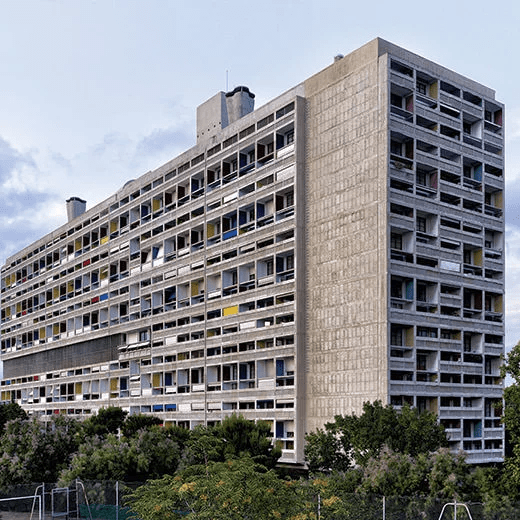

Le Corbusier’s pioneering experiment in Brutalism, this 135-metre-long, 56-metre-high housing bar was conceived as a ‘vertical city’ balancing the individual and the collective. With 330 dual-aspect apartments in 23 types, it originally offered a shopping street, hotel-restaurant, kindergarten, and rooftop sports facilities—bringing communal life under one roof. Its modular units reflect naval and monastic ideals of rationalism and simplicity.
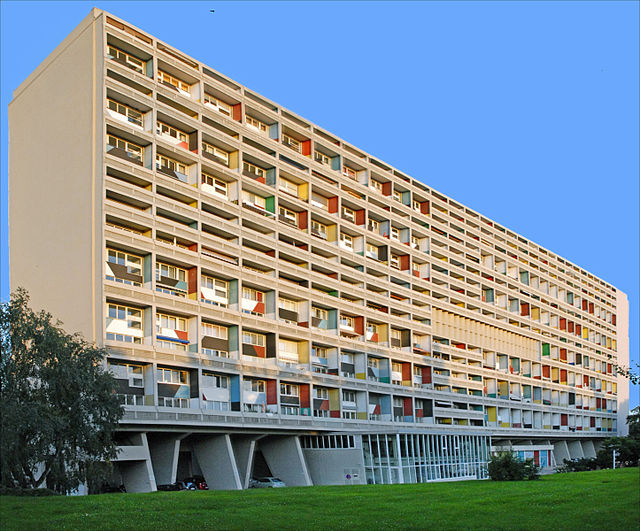
Inspired by the Cité Radieuse in Marseille, this Unité d’Habitation by Le Corbusier sought to embody the vision of a vertical village—housing, services, and community life under one roof. With 575 apartments spread across 17 storeys, it remains a striking post-war response to Berlin’s housing crisis.
This architecture embodied a utopian idea: that architects and urban planners could act as agents of social change by improving people’s quality of life, providing access to services and amenities regardless of social class or economic status.
Brutalism and its Origins
The term Brutalism began in the 1950s, influenced by Le Corbusier’s Unité d’Habitation in Marseille (1945–1952). This experimental project aimed to improve living conditions by providing quality housing for those affected by war or slum clearance.
Designed as a “vertical city,” it combined homes, shops, workspaces, leisure, and exercise all in one building. This concept reflects a belief that architects and urban planners can drive social change by enhancing quality of life with access to services and amenities for everyone, regardless of class or income.
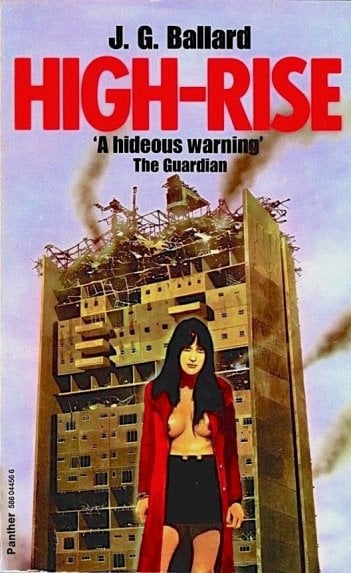

This book was later adapted to film, imagined a Brutalist tower where utopia collapses into chaos—an allegory of how architecture, when detached from human psychology, can both reflect and distort society
Brutalism and controversy
Brutalism’s problems can be traced to recurring themes: monotony, with repetitive forms that bred boredom; disconnection, where buildings felt cut off from urban and social life; and scarcity, where raw, unadorned environments offered little in the way of comfort, greenery, or emotional relief.
Ballard’s High-Rise (1975)
Later adapted into film, this dystopian allegory imagined a Brutalist tower where utopia collapses into chaos—an unsettling reminder of how architecture, when detached from human psychology, can both reflect and distort society.
This raises a more profound question: what happens when we design without considering the user’s psyche—their emotions, behaviour, and need for belonging?
What happens when we design without considering the user’s psyche—their emotions, behaviour, and need for belonging?
1. Monotony
The austere looks and repetitive elements characteristic of many Brutalist buildings breed boredom, leading to disengagement with the surrounding environment. In urban settings, where these structures dominate the skyline, the effect can be particularly disconcerting.
Dr James Danckert, who has studied the psychology of boredom, found it correlates with elevated heart rate and increased cortisol—the stress hormone—linked to higher blood pressure and long-term health issues. His findings suggest that visual uniformity in architecture not only diminishes aesthetic appreciation but also has tangible effects on mental and physical well-being. The implications of living or working in such environments extend beyond dissatisfaction, potentially impacting community health on a larger scale.
2. Disconnection
Many social housing projects were disconnected from both their urban fabric and their social environment. Architectural choices often prioritised scale over community, producing buildings that felt isolated and unwelcoming. Their monumental presence evoked powerlessness, leaving individuals feeling small in the face of overwhelming concrete.
Because many estates housed low-income groups—often including immigrants, the elderly, people with disabilities, or those struggling with addictions—this isolation compounded social stigma. The result was an environment that reinforced exclusion rather than dissolving it. Feelings of alienation and rootlessness became common, with detrimental effects on behaviour and mental health. To overcome such disconnection, future design must focus on integration, inclusivity, and a genuine sense of belonging.
3. Scarcity
Visually bare, raw environments contribute to stress and anxiety. Adornments in architecture, often dismissed as superficial decoration, play a vital role in shaping human experience. Ornament, colour, texture, and pattern provide richness that stimulates curiosity, supports memory, and conveys cultural meaning.
Environmental psychology shows that spaces stripped of variation or symbolic markers can feel monotonous, fostering boredom and alienation. Conversely, ornament and detail create opportunities for micro-discoveries—moments when the eye and mind engage with subtle differences that offer comfort and delight. Neuroscientific studies confirm that visual complexity activates reward pathways in the brain, enhancing positive emotions. In this sense, architectural ornament is not mere embellishment but a psychological tool that transforms shelter into a place of meaning.
The scarcity of inviting spaces—green areas, spots for socialising, or aesthetically pleasing corners—deprives residents of necessary relief. Surrounded only by stark concrete, people can feel heightened isolation and unease. By integrating restorative design elements, communities can promote connection, reduce stress, and foster well-being.
These massive projects of ‘social engineering’ backfired, unleashing a wave of criticism not only against Brutalism but against modern architecture as a whole.
Social Engineering and Criticism
These massive projects of “social engineering” ultimately backfired, unleashing a wave of criticism not only against Brutalism but against modern architecture as a whole. A famous case was Pruitt–Igoe in St Louis, designed by Minoru Yamasaki and demolished in 1972—its implosions symbolising the collapse of faith in architectural determinism and marking a turning point in architectural thought.
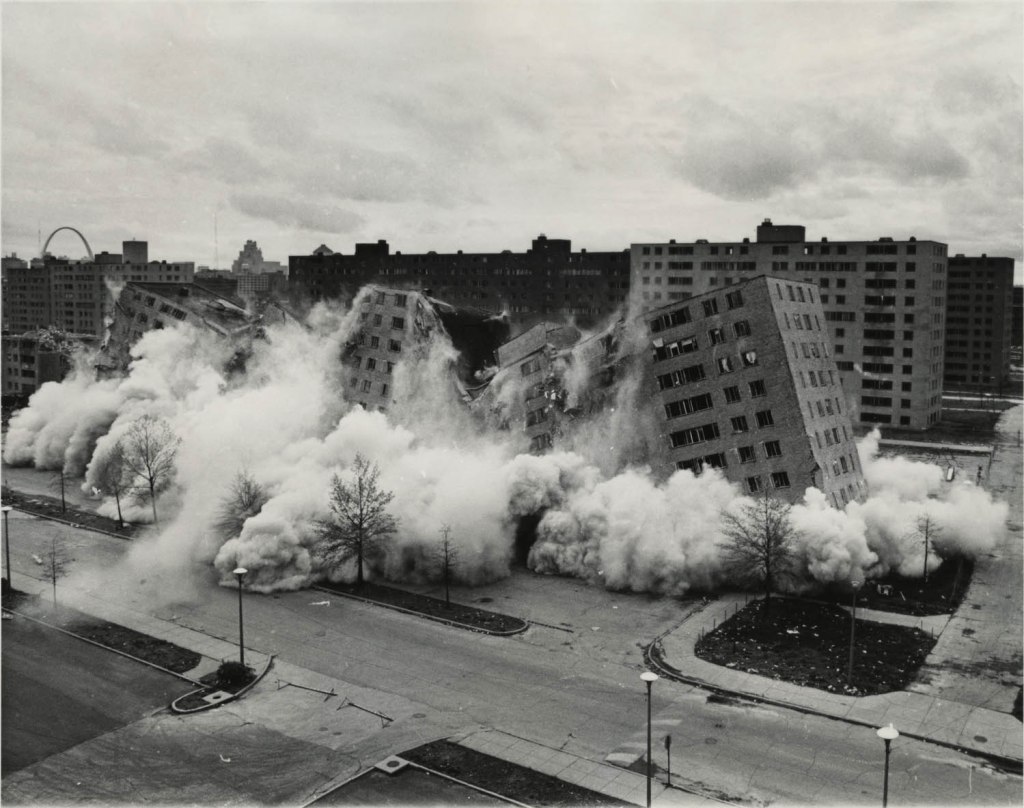
Its staged demolition started with the first implosion on 16 March 1972 and ended in 1976. Developed by Minoru Yamasaki, this modern housing project, once considered a success, became a symbol of failure. Its demolition reflected a loss of faith in the idea that architecture can determine social outcomes, and affected the future of social housing in the country.
Brutalism and gentrification
If Robin Hood Gardens symbolised Brutalism’s failures, Trellick Tower in North Kensington shows how reputations can shift. Designed by Ernő Goldfinger and completed in 1972, its 31 storeys loomed with a stark silhouette and separate service tower. Poor maintenance, crime, and vandalism gave it the nickname “Tower of Terror.” For years, it embodied the public’s hostility towards high-rise social housing.
Trellick Tower, North Kensington, once known as the “Tower of Terror,” is now a Grade II* listed landmark and one of London’s most desirable addresses.
Over time, however, perceptions changed. By the 1980s and 1990s, residents secured better maintenance and security, while critics began to re-evaluate Brutalism’s sculptural power and ambition. Its location in gentrifying Notting Hill helped redefine the tower, transforming what was once forbidding into a marker of authenticity and modernist heritage.
Today, Trellick Tower is a Grade II* listed landmark and one of London’s most recognisable Brutalist icons. Flats that were once difficult to let now command high prices, symbolising the paradox of Brutalism: a style that moved from stigma to celebration. Context, maintenance, and social change proved decisive in turning terror into treasure.
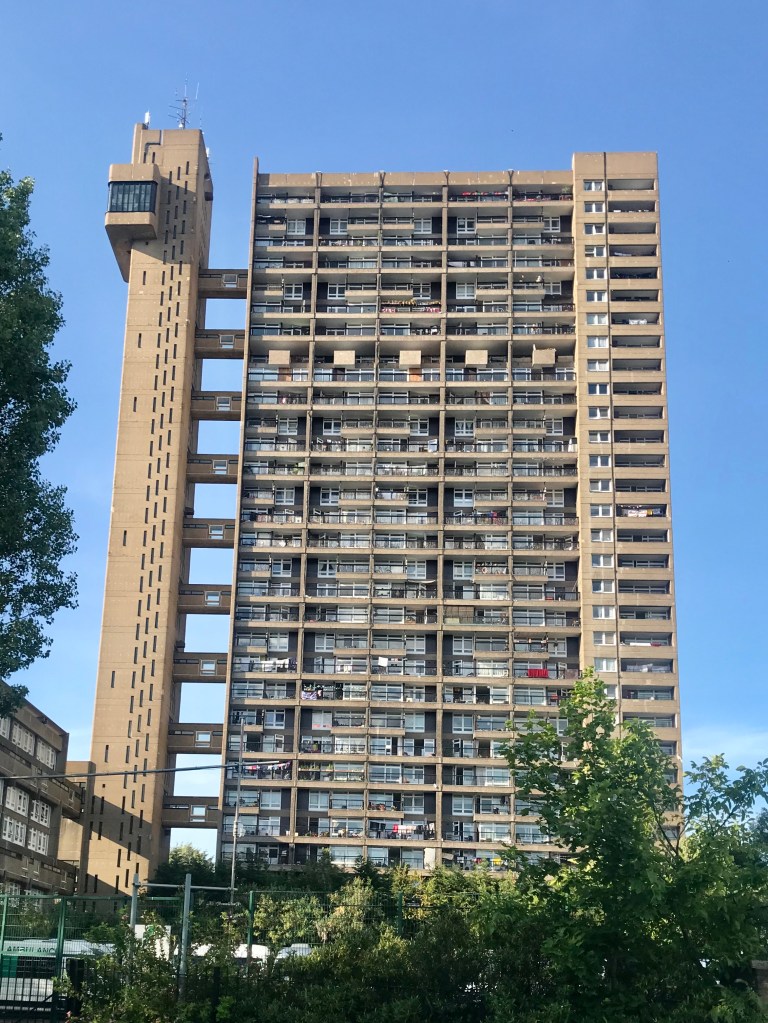

Brutalist landmark in North Kensington—once dubbed the ‘Tower of Terror,’ today a listed icon and sought-after address
Final thoughts
The controversy surrounding Robin Hood Gardens enriched architectural dialogue by raising questions about what should be preserved as cultural patrimony. Defenders saw the Smithsons’ vision as an irreplaceable chapter of post-war housing, while critics argued that its failures in function and social integration made demolition inevitable. The compromise—demolition of the estate but preservation of a fragment by the V&A—ensures that its lessons, ambitions, and contradictions remain part of the debate.
The transformation of Trellick Tower, meanwhile, shows how architecture can be reinterpreted over time. Once symbols of failure, Brutalist towers are now celebrated as design icons, sparking renewed appreciation for their bold forms and social ambition. Their history offers enduring lessons: the importance of care and maintenance, the centrality of community, and the need to design with human psychology in mind. Far from being mere monuments to controversy, Brutalist buildings remind us that architecture is a living dialogue—shaped by vision, reshaped by experience, and always open to reinterpretation.
Not all Brutalist buildings have shared the troubled fate of large-scale housing estates. Cultural institutions, universities, and civic buildings in the same style—such as London’s Barbican Centre, Boston City Hall, or the National Theatre—have been reappraised and admired for their sculptural boldness and enduring presence. Freed from the social and economic pressures that undermined housing projects, these structures are now celebrated as icons of modern heritage. Their survival and rehabilitation remind us that Brutalism was not a single story of failure, but a complex chapter in architectural history—capable of producing both alienation and awe, neglect and lasting admiration.
References
Banham, R. (1990). The new brutalism: Ethic or aesthetic? Architectural Press. (Original work published 1966)
Coleman, A. (1985). Utopia on trial: Vision and reality in planned housing. Hilary Shipman.
Danckert, J., & Eastwood, J. D. (2020). Out of my skull: The psychology of boredom. Harvard University Press.
Evans, G. W. (2003). The built environment and mental health. Journal of Urban Health, 80(4), 536–555. https://doi.org/10.1093/jurban/jtg063
Jencks, C. (1977). The language of post-modern architecture. Rizzoli.
Kaplan, R., & Kaplan, S. (1989). The experience of nature: A psychological perspective. Cambridge University Press.
Unesco World Heritage — The Unité d’habitation de Marseille. https://lecorbusier-worldheritage.org/en/unitehabitation/#:~:text=The%20Unit%C3%A9%20d’habitation%20de,monastic%20architecture:%20rationalism%20and%20simplicity.
Hotel Le Corbusier in Marseilles. https://www.architecturedecollection.fr/en/hotel-le-corbusier/


4 thoughts on “Brutalism and Social Housing: Utopia, Failure, and Legacy”