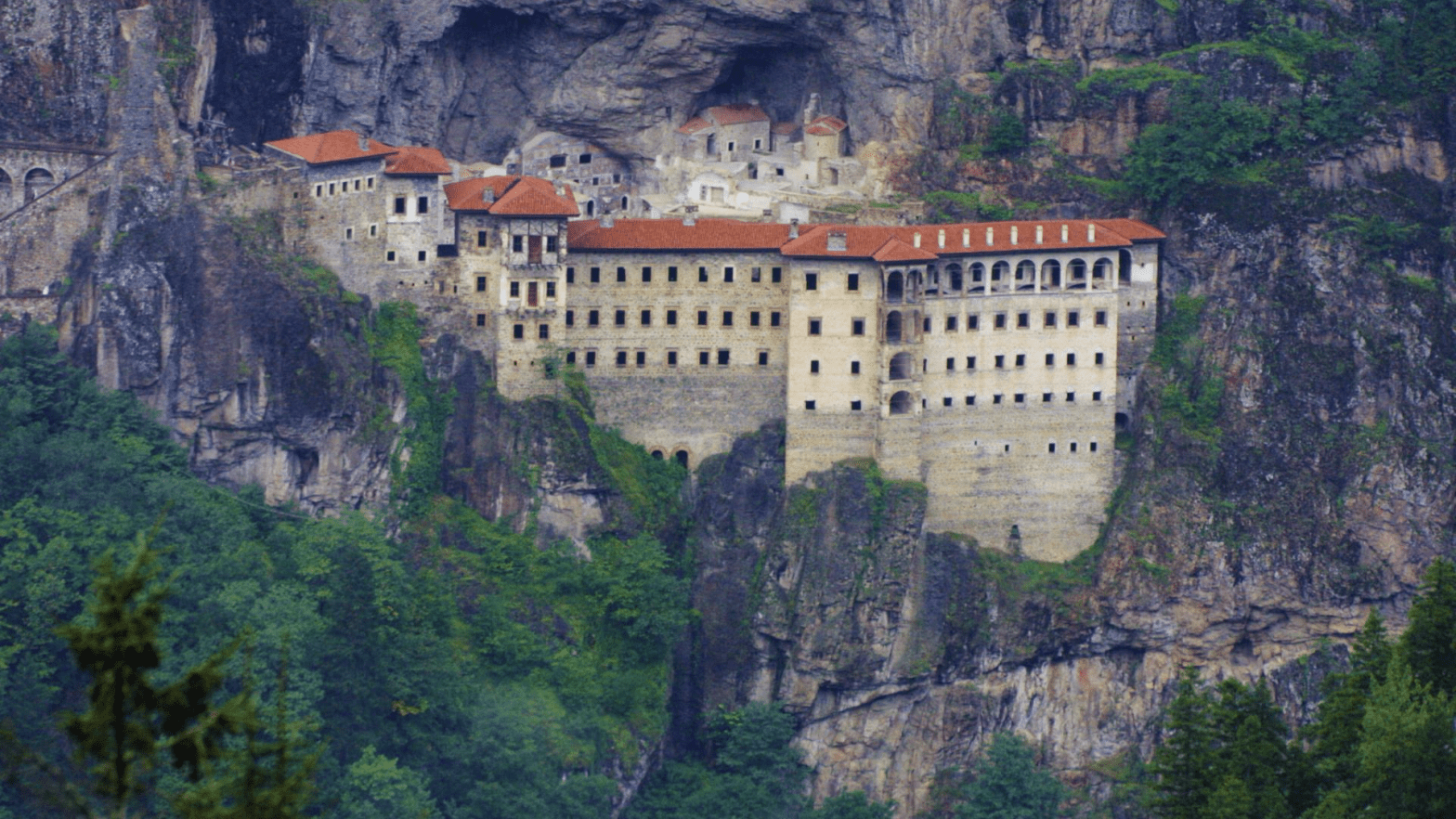
In the 1950s, Dr. Jonas Salk—on the verge of creating the polio vaccine—felt completely paralysed. After years of research, exhaustion and global pressure led to an absolute mental block.
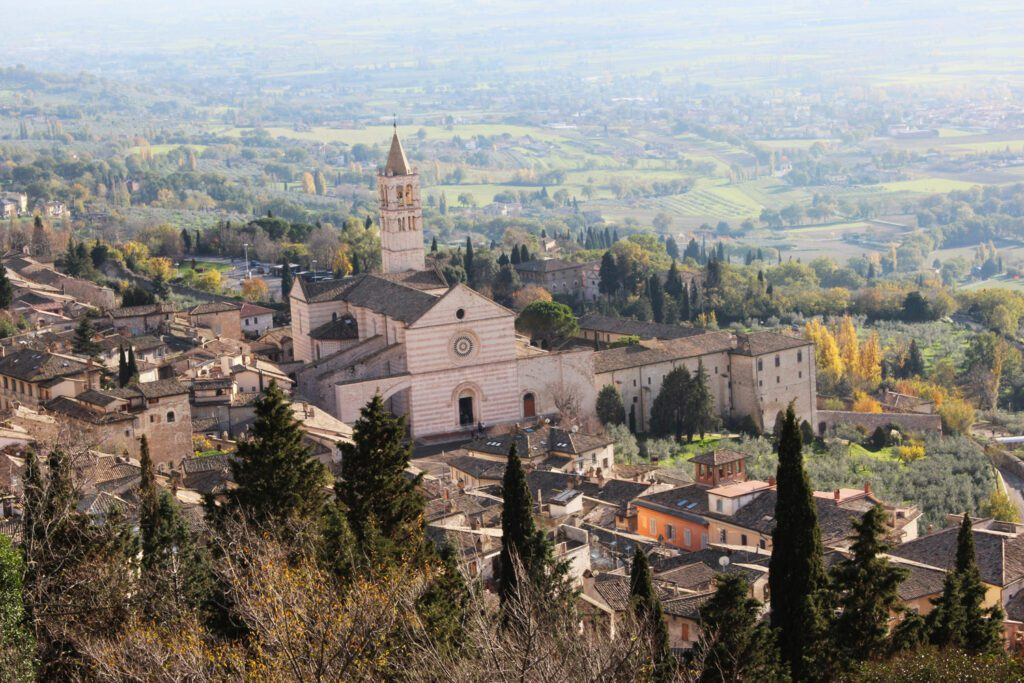
Exhausted and confused, he made a radical decision: to travel to the Monastery of Assisi, Italy, the home of Saint Francis. There, amidst silent walls, soft light, and a rhythm detached from the laboratory’s noise, his mind relaxed. The solution to his enigma did not arrive through effort, but as an intuitive illumination.
Returning to the lab, he confirmed his idea and succeeded in creating the polio vaccine. That experience was not just a pause but an inspiration: it led him to found the Salk Institute, convinced that certain spaces—serene, contemplative, carefully designed—have the power to awaken human creativity.
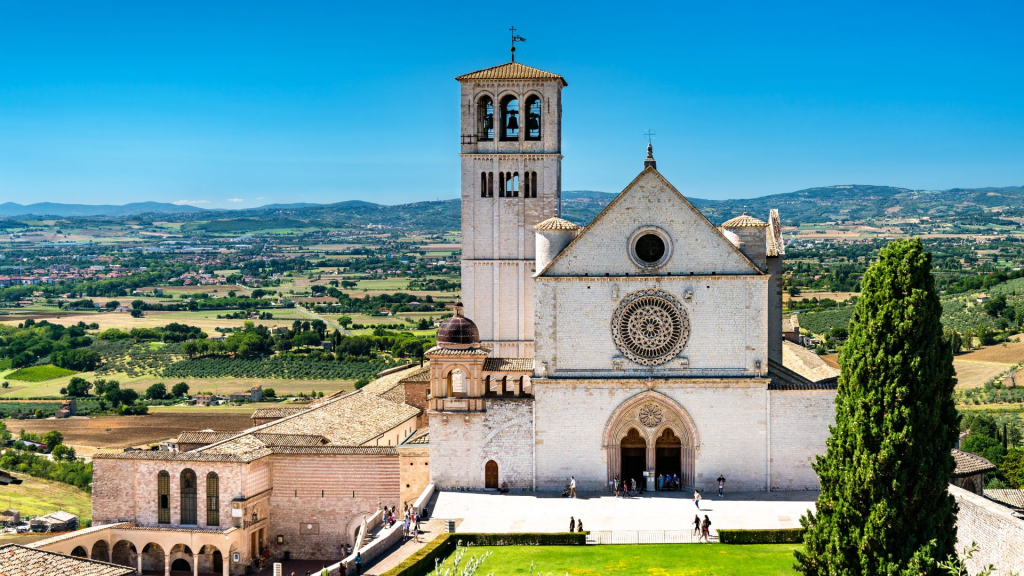
Set on the hillside overlooking the Umbrian valley, this medieval complex weaves stone, silence and light to sustain the contemplative life initiated by the saint. Its cloisters, corridors and chapels continue to offer a refuge of quiet, clarity and spiritual depth for pilgrims and visitors seeking pause and inner stillness.
The 21st Century Overload: Chronic “Attention Debt”
Today, the pressure we face is exponentially greater. Our minds no longer just deal with work demands, but with a constant “attention debt” that prevents them from finding calm. This overload stems from several sources:
- External Validation (Digital Overload): The need to measure our worth in likes and views, generating a ceaseless search for dopamine validation and underlying anxiety.
- The Tyranny of Being “Always On”: The culture of hyper-productivity, midnight emails, and the feeling that the work is never finished.
- The Global Crisis Cycle: A 24/7 news stream and constant exposure to conflicts that create an exhausting state of alert and diminish our capacity for empathy.
- Urban Noise: Acoustic, visual, and social pollution that prevents deep relaxation and genuine rest for the nervous system.
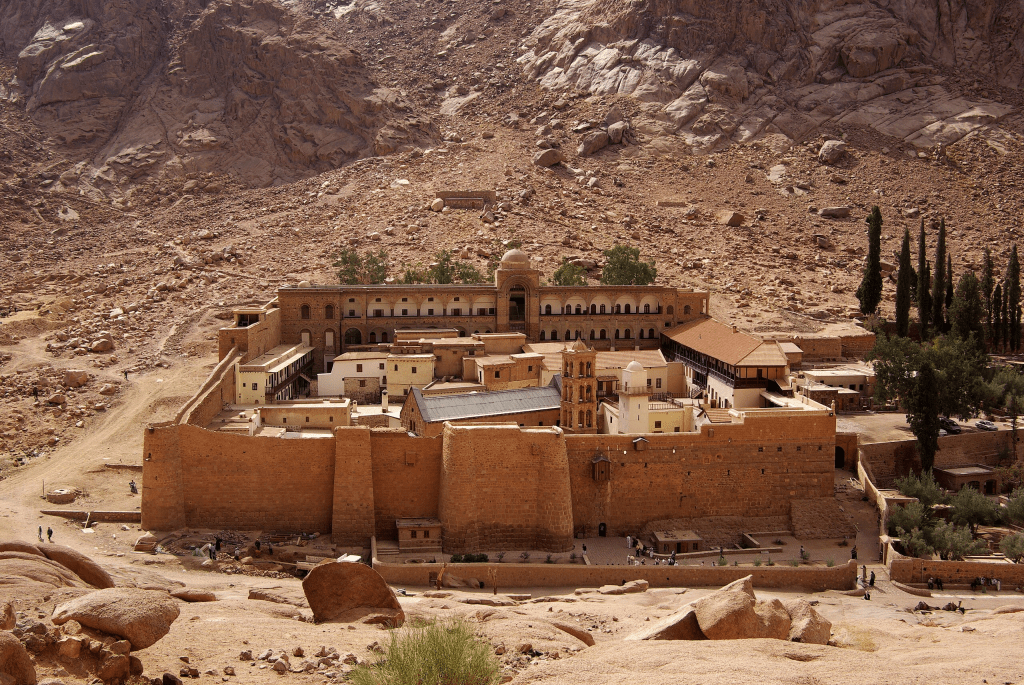
The history of the monastery dates back to the 3rd century, when the first anchorites, driven by the desire to draw closer to God through isolation, prayer and holiness, settled beside the site of the Burning Bush in the southern Sinai Peninsula. The structure we see today was commissioned in the 6th century by Emperor Justinian. Since then, the monastery has continued to welcome pilgrims seeking rest, contemplation and mystical experience.
Signs Your Mind Is Crying Out for Silence
Like Salk, our minds give us clear warnings. How do you know if you urgently need a break and a retreat? Pay attention to these signs of mental or emotional saturation:
- Brain Fog and Exhaustion: You feel like your mind is perpetually “on,” you struggle to concentrate, or you have a constant stream of noisy thoughts with no break.
- Heightened Irritability and Anxiety: Everyday situations easily overwhelm you, and you live in a state of permanent physical and emotional tension.
- Loss of Meaning: Routine and distractions no longer satisfy you; you feel an emptiness you try to fill with more activity and consumption.
- Chronic Digital Dependence: The idea of switching off your phone causes you anxiety (FOMO), or you check it compulsively, even when there is no real need.
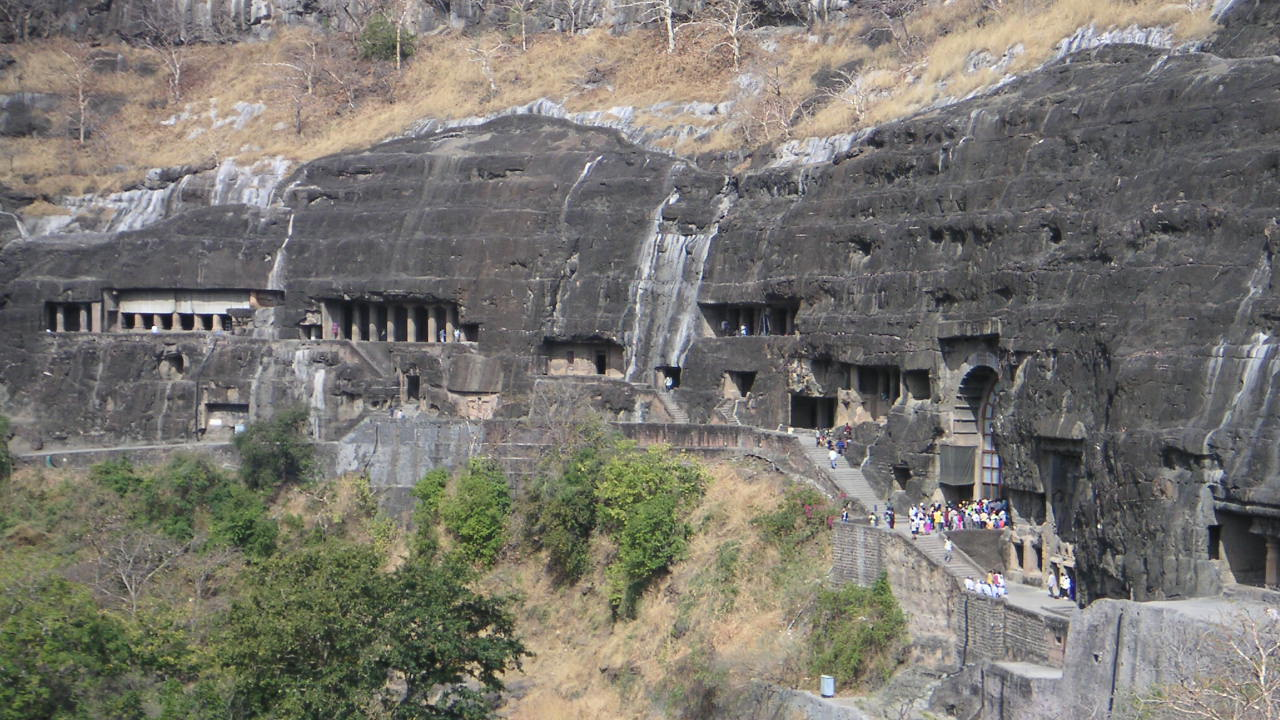
A complex of viharas and meditation halls carved into the rock since the 2nd century BCE, where the mountain itself becomes an architecture of retreat. Their silent chambers reveal how the earliest Buddhist communities found in the stone a refuge for deep contemplation.ofunda.
Learning from Ascetics, Anchorites, and Monks
If we look at history, retreat and contemplation have never been minor themes; we simply haven’t always called them that. The architecture of silence has evolved in two distinct ways:
1. Functional Austerity in the West
The concept of retreat began with the Eremitic Retreat in the Egyptian desert (3rd and 4th centuries AD). Pioneers like Saint Anthony the Great sought absolute solitude (anchoritism). The “architecture” consisted of caves and huts for penance.
This primitive solitude evolved into communal living (cenobitism), formalised by Saint Benedict of Nursia. He created the dominant architectural template of the Middle Ages: the monastery as a self-sufficient unit. Its design organised:
- The Church as the spiritual centre.
- The Cloister (central courtyard) as the meditative heart and connector.
- Functional spaces (cells, scriptorium) as support for a disciplined life.
It was this model that shaped monasteries like Assisi, where the structure became an extension of silence and inner routine.
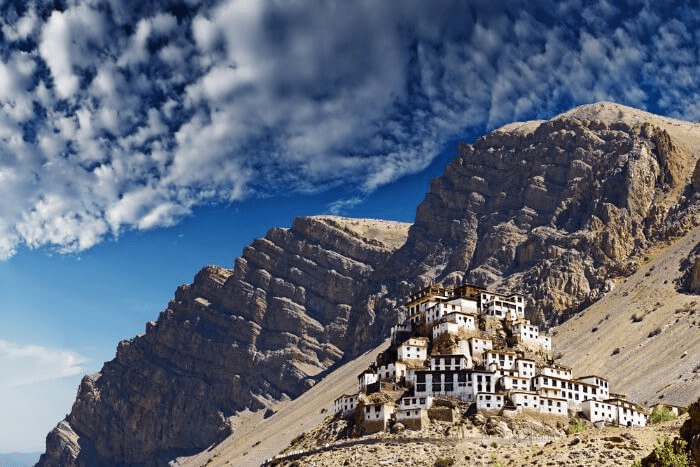
This Buddhist stronghold rises more than 4,000 metres above sea level, clinging to the mountainside like a natural extension of the rock. Surrounded by barren peaks and an immense sky, it remains a refuge of meditation, study and silence for monks and pilgrims seeking retreat in one of the most extreme landscapes of the Himalayas.
Contemplative Minimalism in the East
In the East, the architecture focused from the beginning on meditation for the pursuit of enlightenment (Nirvāṇa).
- Buddhist Viharas (India): Structures often excavated into the rock, like Ajanta. They were organised into austere cells around a large Meditation Hall (Chaitya Griha), compelling a simple life focused on communal silence and introspection.
- Zen Monasteries (Japan): Their architecture is characterised by radical simplicity and the use of natural materials. The design seeks to eliminate all distraction; the Dry Garden (Karesansui) is evidence of this, designed for static contemplation.
In all these traditions, the architecture is intentionally designed to calm the mind and cultivate the inner peace that the modern world disperses.
Monastic contemplation, in both East and West, is not an escape; it is the deepest way to inhabit the world. It is an inner tending that, far from isolating us, returns us to the core of what is essential with a stronger presence.
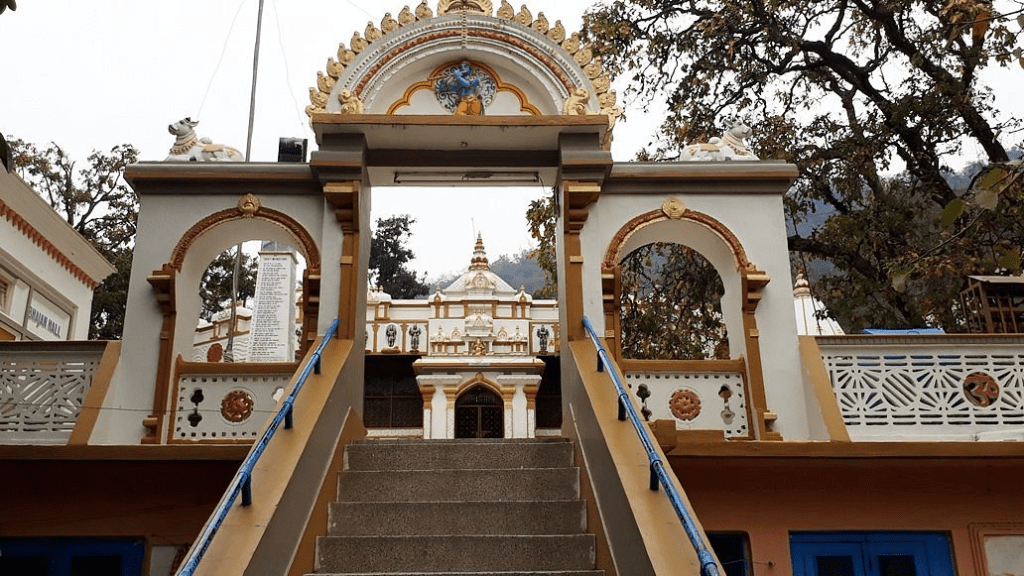
A Hindu monastic centre where spiritual discipline, meditation and service shape daily life. Its open halls, quiet courtyards and river views offer pilgrims and practitioners a space for retreat, silence and deep inner clarity.
The Monastic Medicine: Silence, Solitude, and Routine
Temporarily adopting a “retreat” lifestyle, inspired by monastic discipline, can serve as one of the most powerful therapies against modern exhaustion. The key is not the building itself, but the elements it encompasses:
- The Power of Silence: Sustained silence is not merely the absence of noise; it reduces cortisol, activates the parasympathetic system, and creates the conditions for creative thinking and mental clarity to emerge.
- Voluntary Solitude: This is not isolation, but a protected space where, without external distractions, we are compelled to observe our thoughts and emotions without judgement.
- The Liberating Routine: By removing the fatigue of making constant decisions, daily tasks become almost a ritual, freeing up mental energy for deep introspection.
- Digital Disconnection: This breaks the cycle of external validation and opens a gap of silence where it is possible to reconnect with internal sources of peace and meaning.
Taken together, these elements transform daily life into something more akin to a healing retreat than a never-ending race.
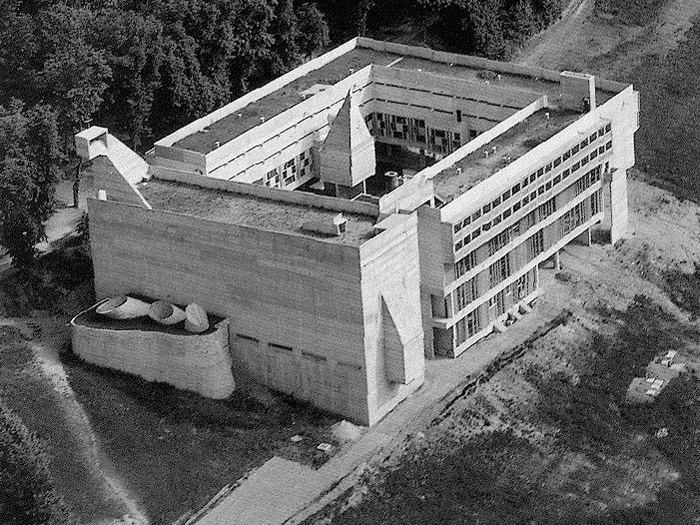
A modern monastery that turns concrete into silence. Set high on a hillside, its filtered light, austere cells and inner courtyards continue to offer monks and visitors a place of retreat, contemplation and mental clarity.
Conclusion: The Inner Monastery
Travelling through these sacred places—from the mineral silence of the Sinai to the meditative concrete of La Tourette—a truth emerges that cuts across cultures and centuries: the mind flourishes when it finds silence.
Long before neuroscience spoke of the amygdala or introspective networks, East and West already knew that retiring is not renouncing the world, but returning to oneself with a stronger presence.
In an age of constant urgencies, pausing is not a luxury but a biological necessity. The brain needs stillness to reorganise, to feel without rush, and to recover the clarity that everyday noise erodes.
Yet, we do not need deserts or sacred mountains to begin this gesture.
We can start small: a quiet corner at home, ten minutes without interruption, a simple routine that sets its own pace, a deliberate disconnection from what demands attention without offering meaning.
Because perhaps the true monastery is not a remote building, but a daily act of will. A decision to slow down, to listen to what moves within, to open space for intuition—just as it happened to Salk in Assisi—to emerge once more, clean and luminous.
In a world that pushes us outwards, the inner retreat is the most urgent and vital architecture of our time.
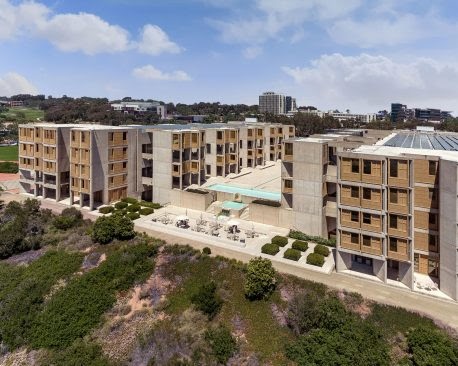
Right: panoramic view of the Salk Institute, designed by Louis Kahn — a complex that embodies Jonas Salk’s vision of creating architecture that inspires contemplation, clarity and creativity.
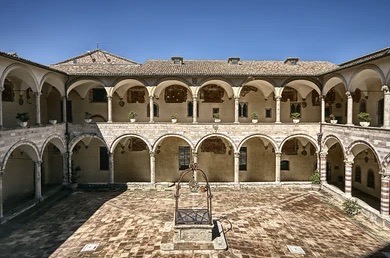

Right: photograph of the courtyard of the Salk Institute, where a fountain becomes a thin channel of water flowing towards the Pacific Ocean. Together, these images suggest how Salk sought to replicate the stillness he encountered in Assisi, demonstrating that carefully designed environments can nourish the mind and foster innovation — a kind of modern “monastery” for science.
Suggested Further Reading
Le Van Quyen, Michel. Brain and Silence: The Keys to Creativity and Serenity.
 neurotectura.com