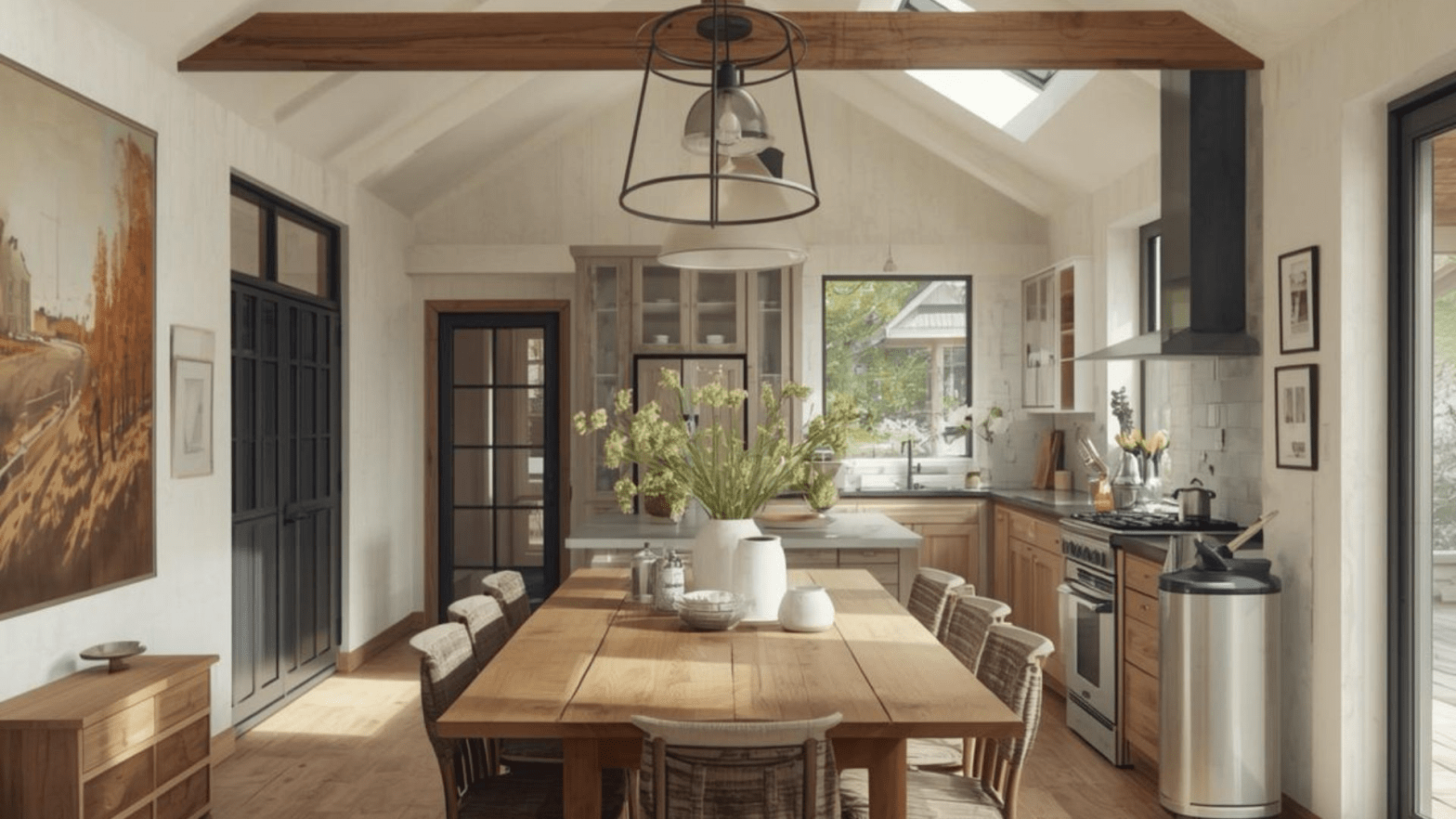
When we think about architecture, we usually imagine what we see: forms, materials, colours and proportions. For this reason, it may initially seem unusual to discuss taste in relation to architecture. After all, we do not taste walls or ceilings.
From an evolutionary perspective, the gustatory system has helped humans identify nutritious foods and avoid potentially harmful substances. Sweet flavours are often associated with sources of energy, while bitterness can act as a warning signal for toxic compounds.
In this way, taste does more than guide our food preferences; it also plays a role in the biological mechanisms that regulate nutrition and support our health, wellbeing and survival.
Yet flavour does not depend on the tongue alone. The brain integrates signals from sight, smell, sound and oral texture to construct the full experience of taste. For this reason, the surrounding environment — light, aromas, sounds and the atmosphere of a space — can influence how we perceive food.
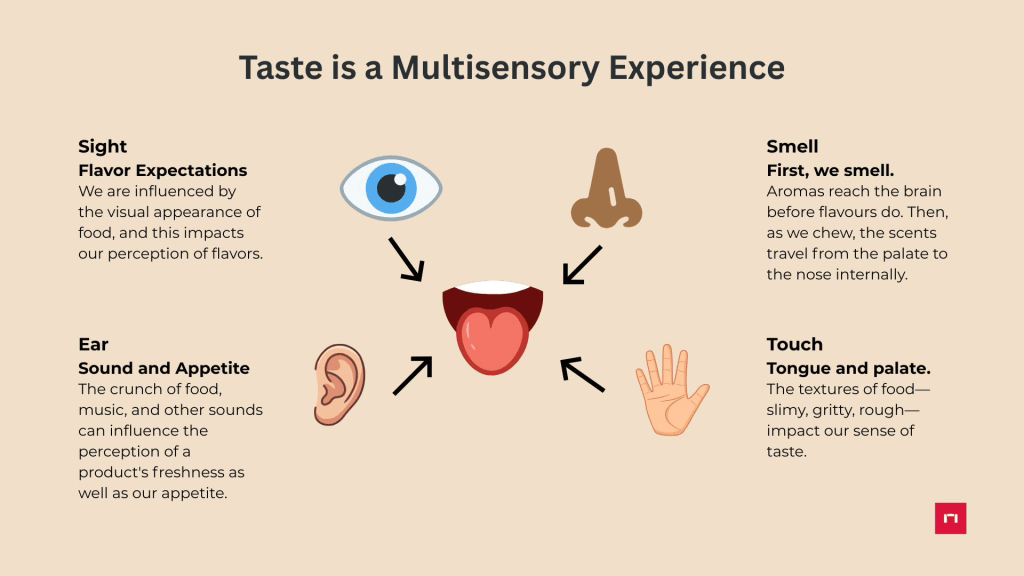
The brain integrates information from sight, smell, sound and oral texture to construct the full experience of taste. For this reason, the surrounding environment — light, aromas, sounds and the atmosphere of a space — can influence how we perceive food.
Taste Never Acts Alone
Taste buds detect basic flavours — sweet, salty, sour, bitter and umami — but the brain integrates this information with signals from smell, temperature, texture and even visual cues.
For this reason, factors that seem unrelated to food can alter how we perceive the same dish. Lighting, colours in the surrounding environment, background noise and ambient temperature all influence how the brain interprets flavour.
This phenomenon has been widely studied in the field of neurogastronomy, a discipline that explores how the brain constructs the experience of flavour. Research by experimental psychologist Charles Spence at the University of Oxford has shown that environmental elements such as colour, sound and lighting can significantly alter how food is perceived. In some experiments, changes in ambient lighting modified the perceived sweetness or intensity of a dish without altering the recipe itself.
In other words, flavour is not simply a property of food; it is an experience constructed by the brain in dialogue with the surrounding environment.
Studies show that environments with high natural aesthetic quality can enhance hedonic pleasure, leading food to be perceived as “tastier” or of higher quality.
Appetite

Around it people cooked, shared food and told stories. More than a simple tool for preparing meals, the hearth organised both space and social life within human communities, anticipating the role that kitchens and dining tables continue to play in domestic architecture today.
Fire: The First Centre of Social Life
If we look back at the earliest human communities, we find an important clue about the relationship between space and food. For thousands of years, fire was the centre of collective life.
Around it people cooked, shared meals, told stories and strengthened social bonds. Fire was not merely a tool for preparing food or a source of warmth; it was also the gathering point that organised social life.
From an architectural perspective, the hearth can be understood as the first spatial nucleus of the home. Everyday activities unfolded around it, and the act of cooking was deeply integrated into communal life.
Over time, however, domestic architecture began to change. In many European homes of the nineteenth century — particularly in upper-class residences — the kitchen gradually became separated from the main living areas. Smoke, cooking smells and the work of domestic servants were moved into more hidden parts of the house. Cooking ceased to be a visible and shared activity and instead became a function relegated to secondary spaces.
In contrast, in many working-class homes the kitchen remained part of the main living space. Houses were small, and the hearth or stove was often the only source of heat. As a result, cooking, eating and everyday social life took place in the same room. In practical terms — even if not consciously — these homes preserved a spatial organisation closer to the ancestral structure of the human dwelling.
Over time, however, the model of the separate kitchen also acquired an aspirational character. As the middle classes sought to imitate the domestic patterns of the elites, the isolated kitchen came to be interpreted as a sign of order and social status. Yet this separation also meant losing part of the social dimension that had historically accompanied the acts of cooking and sharing food.
Today, many contemporary homes appear to be rediscovering — in a reinterpretated form — this older spatial principle. Open or integrated kitchens once again place food preparation close to everyday domestic life. This is not merely an aesthetic trend; in many ways it reflects a renewed recognition that food, and the spaces where it is prepared, have always been at the heart of human social life.
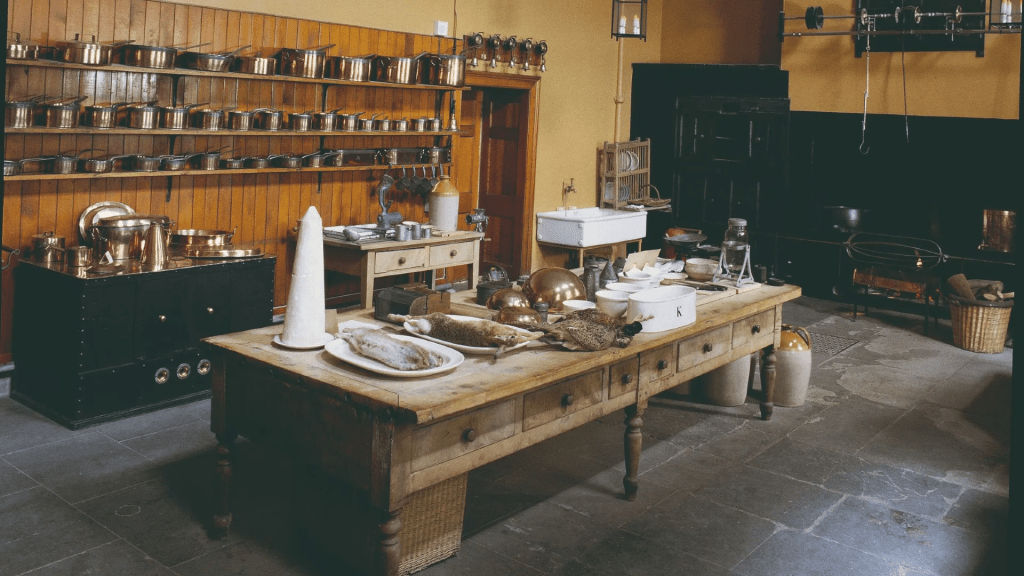
They were a characteristic feature of upper-class residences in the eighteenth and nineteenth centuries. In these homes, food preparation was moved to specialised spaces located away from the main social areas. Smoke, cooking smells and the work of domestic servants were kept out of sight, reflecting a spatial organisation shaped by social hierarchy and functional separation.cionales.
Architecture, Food and Emotional Experience
Architecture influences the way we experience the act of eating. The design of the kitchen, the layout of the dining area, the quality of natural light and the level of noise within a space all shape our sensory experience.
A pleasant, calm and well-lit environment can enhance the perception of flavours and encourage a more mindful relationship with food. By contrast, spaces saturated with noise, distractions or harsh lighting can fragment the experience and diminish sensory perception.
Environmental psychology has shown that the setting in which we eat also affects our eating behaviour. Studies on restaurant design have found that factors such as lighting, colour and sound can influence how quickly we eat, how much food we consume and even the level of satisfaction we feel during the meal.
For Frank Lloyd Wright, the kitchen should not be hidden. It was a workspace — a place where cooking once again became a visible part of everyday domestic life.
The Open Plan Kitchen and the Social Brain
In many contemporary homes, the open kitchen has become an increasingly common solution. Beyond being a stylistic trend, this spatial configuration may also have positive effects from the perspective of neuroscience applied to design.
By removing physical barriers between the kitchen and social areas, visual contact and interaction are encouraged between those cooking and those sharing the space. This type of interaction activates mirror neurons, a neural system associated with empathy and the understanding of others’ actions and emotions. Watching someone cook or participating in the preparation of food can reinforce a sense of social connection.
Fluid communication within these spaces may also stimulate the release of oxytocin, a hormone linked to social bonding and trust. This substance helps reduce levels of cortisol — the stress hormone — and promotes more relaxed emotional states.
From a spatial perspective, open kitchens also provide greater visual openness. The human brain tends to feel more comfortable in environments where the surrounding space can be clearly perceived. Spaces that are overly enclosed or cluttered can generate feelings of confinement, whereas open configurations support clearer perception and a greater sense of environmental control.
In addition, open kitchens allow the aromas of food to circulate freely through the space, activating brain areas related to pleasure and memory. The sense of smell, in fact, has direct connections to the limbic system, a region of the brain involved in emotion and memory.
En muchas viviendas contemporáneas la cocina abierta se ha convertido en una solución cada vez más frecuente. Más allá de una tendencia estética, esta configuración espacial puede tener efectos positivos desde la perspectiva de la neurociencia aplicada al diseño.
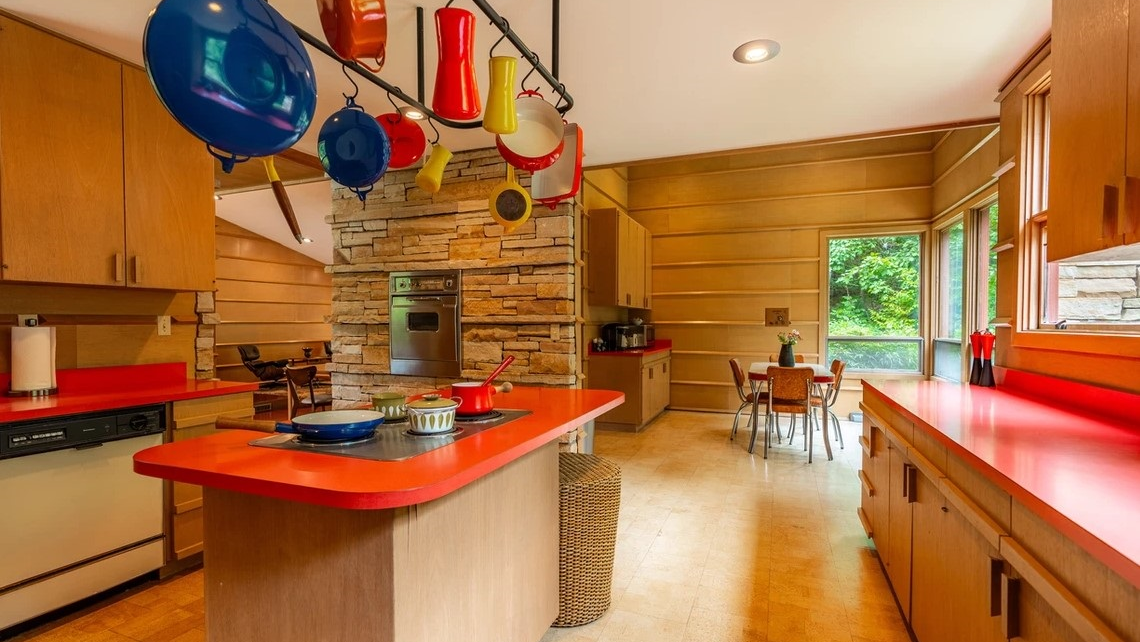
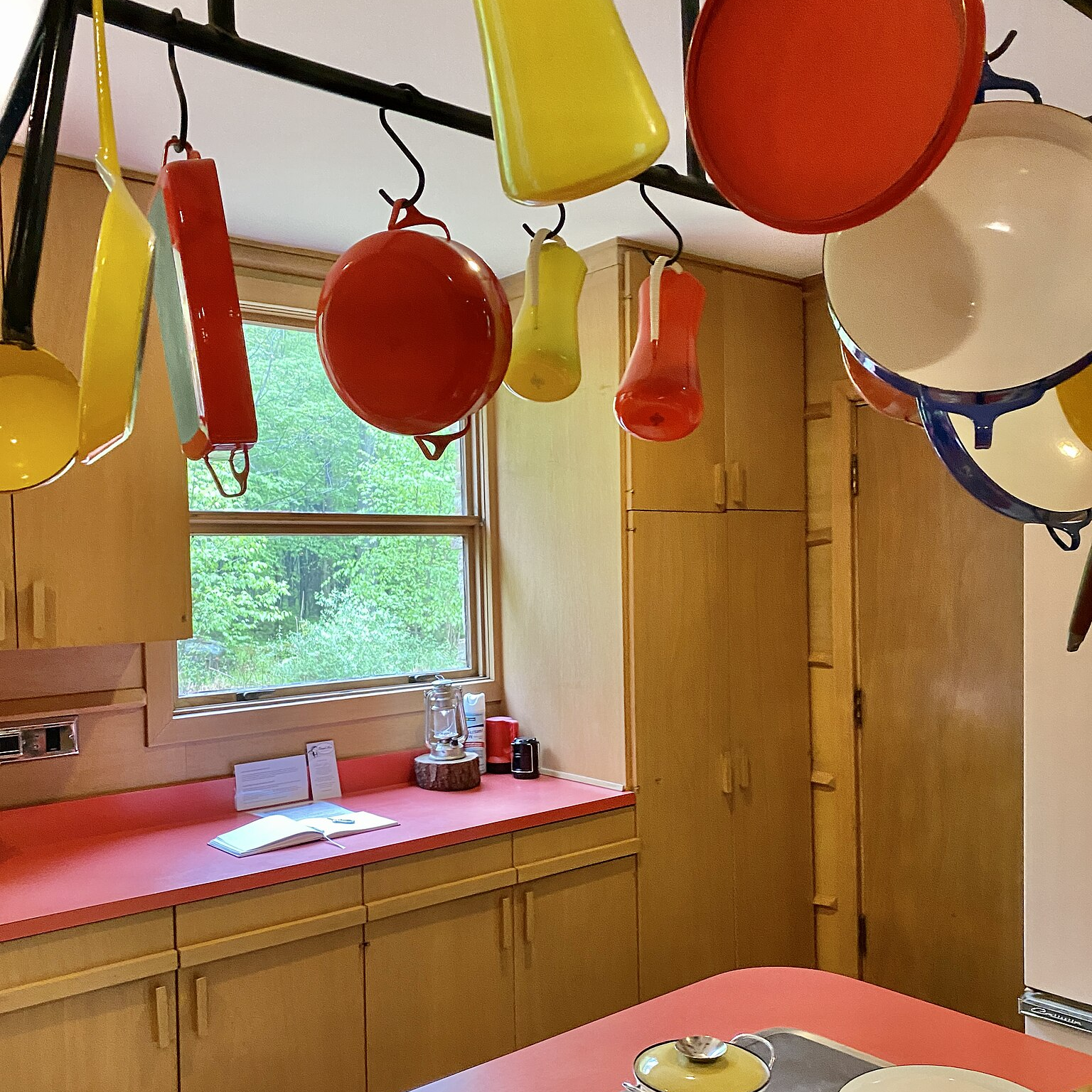
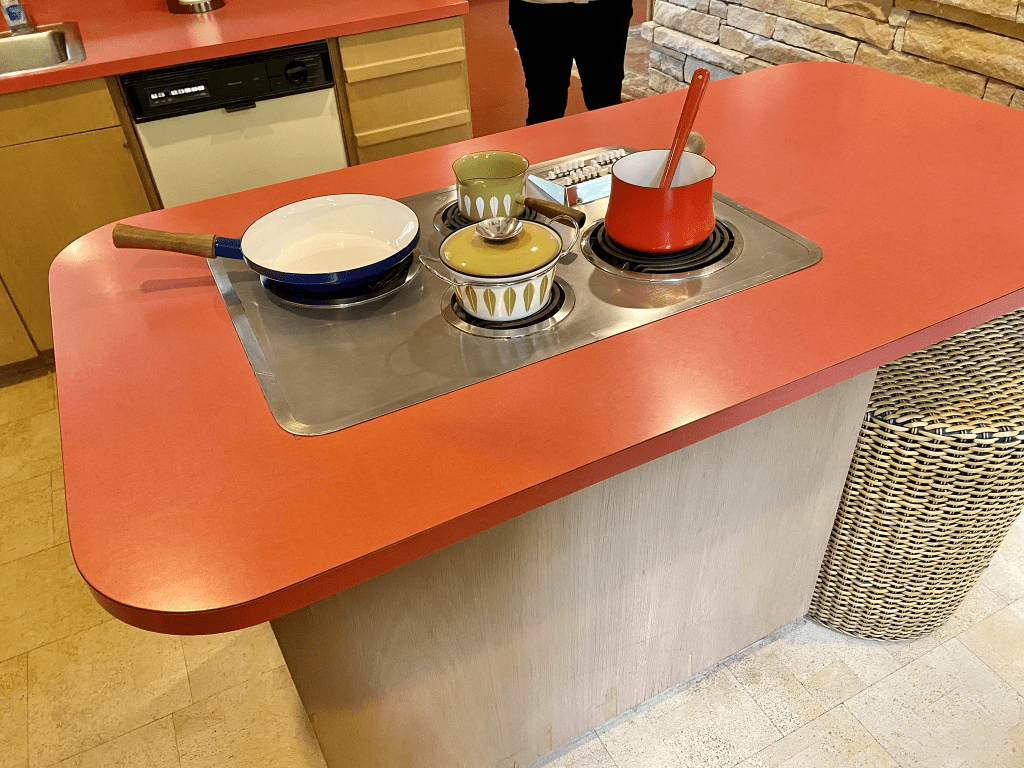
The design integrates the kitchen with the dining area, bringing food preparation into the social life of the home.
An Architectural Example: The Kitchen as the Heart of the Home
Many contemporary architects have recognised the social role of the kitchen within the home. In numerous houses designed by Frank Lloyd Wright, for example, the kitchen is conceived as an integral part of the domestic space rather than an isolated area.
In his Usonian house designs, Wright proposed open kitchens — which he referred to as workspaces — visually integrated with the living areas. The idea was that food preparation should form part of everyday family life, allowing for interaction, conversation and collective participation.
Although these designs emerged long before the term neuroarchitecture existed, they anticipated an important insight: spaces that facilitate social interaction tend to foster richer and more emotionally meaningful domestic experiences.
Eating Is Also a Ritual
Beyond its biological function, eating is a deeply cultural and emotional act. Many of our most vivid memories are linked to flavours associated with particular places: a childhood kitchen, a family table, the aroma of a dish slowly cooking while the house fills with conversation.
In this sense, the home is not merely a place where food is prepared. It is a setting where everyday rituals are created, strengthening social and emotional bonds.
Sharing a meal, cooking together or simply sitting down to breakfast in a calm space are experiences that contribute to psychological wellbeing and a sense of belonging.
Flavour Also Belongs to Space
Although architecture does not directly change the taste of food, it does transform the context in which that taste is experienced. And that context profoundly influences how the brain interprets and remembers the experience.
Perhaps this is why some of the most memorable flavours of our lives are not determined solely by a recipe or its ingredients. Often, what we truly remember is the place where we were: the light entering through the window, the voices around the table, or the feeling of being at home.
Taste, therefore, is not an isolated sense. It forms part of a broader spatial experience in which architecture, memory and emotion quietly intertwine.
Understanding this multisensory dimension of inhabiting space reminds us that even everyday acts such as eating are deeply connected to the way we design the environments we live in.
References
Spence, C. (2015). Multisensory flavor perception. Cell, 161(1), 24–35. https://doi.org/10.1016/j.cell.2015.03.007
Spence, C. (2017). Gastrophysics: The new science of eating. Viking.
Spence, C., Okajima, K., Cheok, A. D., Petit, O., & Michel, C. (2016). Eating with our eyes: From visual hunger to digital satiation. Brain and Cognition, 110, 53–63. https://doi.org/10.1016/j.bandc.2015.08.006
Piqueras-Fiszman, B., & Spence, C. (2015). Sensory expectations based on product-extrinsic food cues: An interdisciplinary review of the empirical evidence and theoretical accounts. Food Quality and Preference, 40, 165–179. https://doi.org/10.1016/j.foodqual.2014.09.013
Herz, R. S. (2016). The role of odor-evoked memory in psychological and physiological health. Brain Sciences, 6(3), 22. https://doi.org/10.3390/brainsci6030022
Herz, R. S. (2004). A naturalistic analysis of autobiographical memories triggered by olfactory visual and auditory stimuli. Chemical Senses, 29(3), 217–224. https://doi.org/10.1093/chemse/bjh025
Rozin, P. (2005). The meaning of food in our lives: A cross-cultural perspective on eating and well-being. Journal of Nutrition Education and Behavior, 37(S2), S107–S112. https://doi.org/10.1016/S1499-4046(06)60209-1
Stroebele, N., & De Castro, J. M. (2004). Effect of ambience on food intake and food choice. Nutrition, 20(9), 821–838. https://doi.org/10.1016/j.nut.2004.05.012
Dunbar, R. I. M. (2017). Breaking bread: The functions of social eating. Adaptive Human Behavior and Physiology, 3(3), 198–211. https://doi.org/10.1007/s40750-017-0061-4
Gallese, V., & Goldman, A. (1998). Mirror neurons and the simulation theory of mind-reading. Trends in Cognitive Sciences, 2(12), 493–501. https://doi.org/10.1016/S1364-6613(98)01262-5
 neurotectura.com