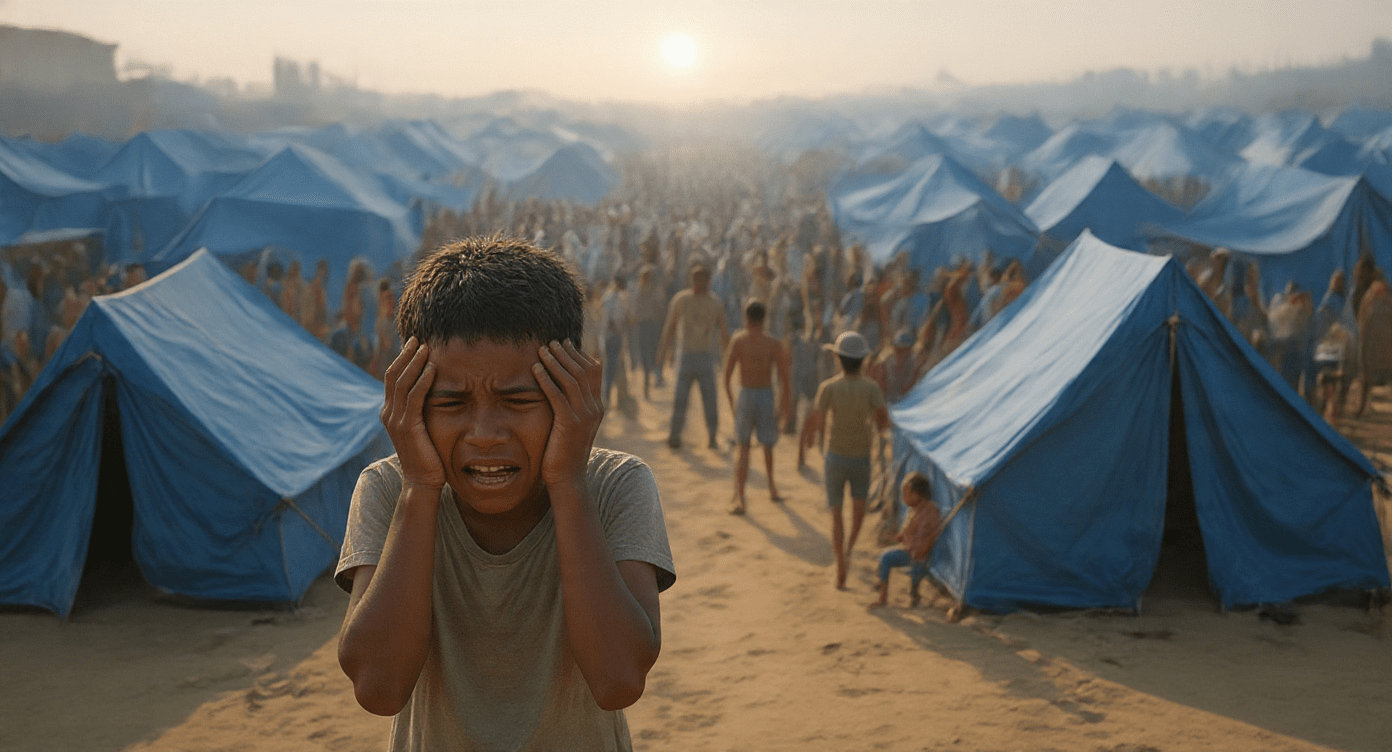
A few days ago, we woke to the heartbreaking news of powerful earthquakes that devastated several areas of Venezuela. As always, disasters like these remind us of how fragile our systems can be when confronted with the unpredictable forces of nature.
It is in times of crisis that the cracks in our society become most visible. It is not enough to focus solely on earthquake-resistant buildings. From a neuroarchitectural perspective, the design of post-disaster environments can be just as life-changing—and, in some cases, just as harmful—as the earthquake itself for thousands of people.
A recent UNICEF campaign highlights the experience of Yoar, a four-year-old autistic boy from Venezuela. According to his grandmother, Yoar is non-speaking, and the noise, uncertainty and overcrowding of emergency shelters disrupt his routine and intensify his distress.
Watch the original interview with Yoar’s mother and grandmother (Spanish, with no English subtitles).
Summary of the interview: Yoar’s mother and grandmother explain how autism shapes his response to the disaster. As a non-speaking autistic child, he struggles with the constant noise, overcrowding and disruption of routines in emergency shelters, highlighting the urgent need for more inclusive disaster planning.
Data from UNICEF: It is estimated that 680,000 children need assistance following the earthquakes in Venezuela. UNICEF aims to reach 234,000 children as an initial target.
What Is Autism, and Why Can Emergency Shelters Be So Dysregulating?
Autism, or Autism Spectrum Disorder (ASD), is a neurodevelopmental condition that affects how a person perceives the world, processes information and interacts with others. It is not an illness, but a natural variation in the way the nervous system develops and functions throughout a person’s life.
The term ‘spectrum’ reflects the wide diversity of autistic experiences. Every autistic person has a unique combination of strengths, challenges and support needs, which can vary considerably from one individual to another.
Core Characteristics
According to the Diagnostic and Statistical Manual of Mental Disorders (DSM-5-TR), a clinical diagnosis of autism is based primarily on two core domains:
- Social communication and interaction
Autistic people may experience differences in initiating or sustaining conversations, interpreting non-verbal communication such as facial expressions, gestures and eye contact, or understanding figurative language, humour and implied meanings. - Restricted, repetitive patterns of behaviour, interests or activities
These may include highly focused or intense interests, a strong preference for routines and predictability, and repetitive movements or behaviours, often referred to as stimming (self-stimulatory behaviours), which can help with emotional regulation and sensory processing.
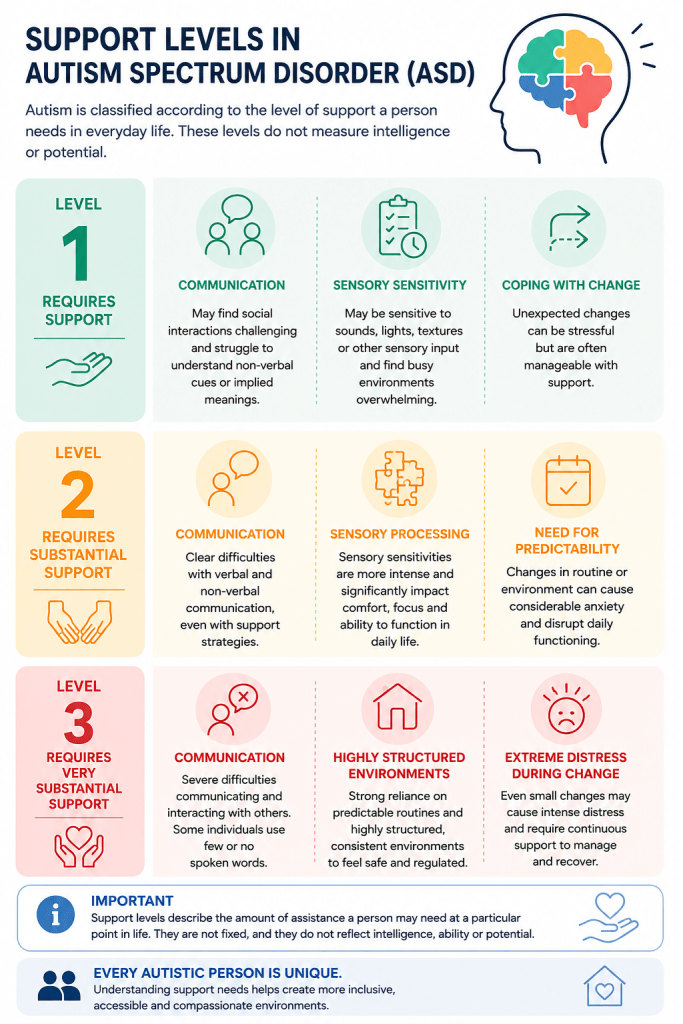
Neurodiversity and Crisis: Yoar’s Double Tragedy
Many children like Yoar rely on clear routines, environments adapted to their needs, and personalised medical and educational support in their daily lives. All of that disappeared within seconds when two earthquakes measuring 7.2 and 7.5 struck.
To understand why this is a double tragedy, we need to look beyond the physical destruction. Yoar did not just lose his home; he lost the environment that protected him from constant sensory overload.
Many neurodivergent people experience either hypersensitivity or hyposensitivity to sensory stimuli. As a result, emergency shelters can become overwhelming rather than protective.
Five Sensory Stressors in an Emergency Shelter
For an autistic person with sensory hypersensitivity, these are not minor inconveniences—they can be sources of genuine physical pain.
- Noise
Crying children, generators, loudspeakers, and hundreds of people sharing the same shelter. - Spatial uncertainty
No familiar bedroom. No predictable routes. No sense of control over the environment. - Overcrowding
Unwanted physical contact and constant invasion of personal space. - Lighting
Bright security lights operating around the clock, making darkness—and restful sleep—almost impossible. - Smells
Communal cooking, toilets, and close proximity to large numbers of people. For someone with olfactory hypersensitivity, these can lead to constant nausea and distress.
UNICEF’s campaign highlights an important reality: many emergency response organisations acknowledge that they are not adequately prepared to support neurodivergent people during disasters.
The reason is straightforward: most emergency shelters and disaster response systems are designed with neurotypical people in mind.
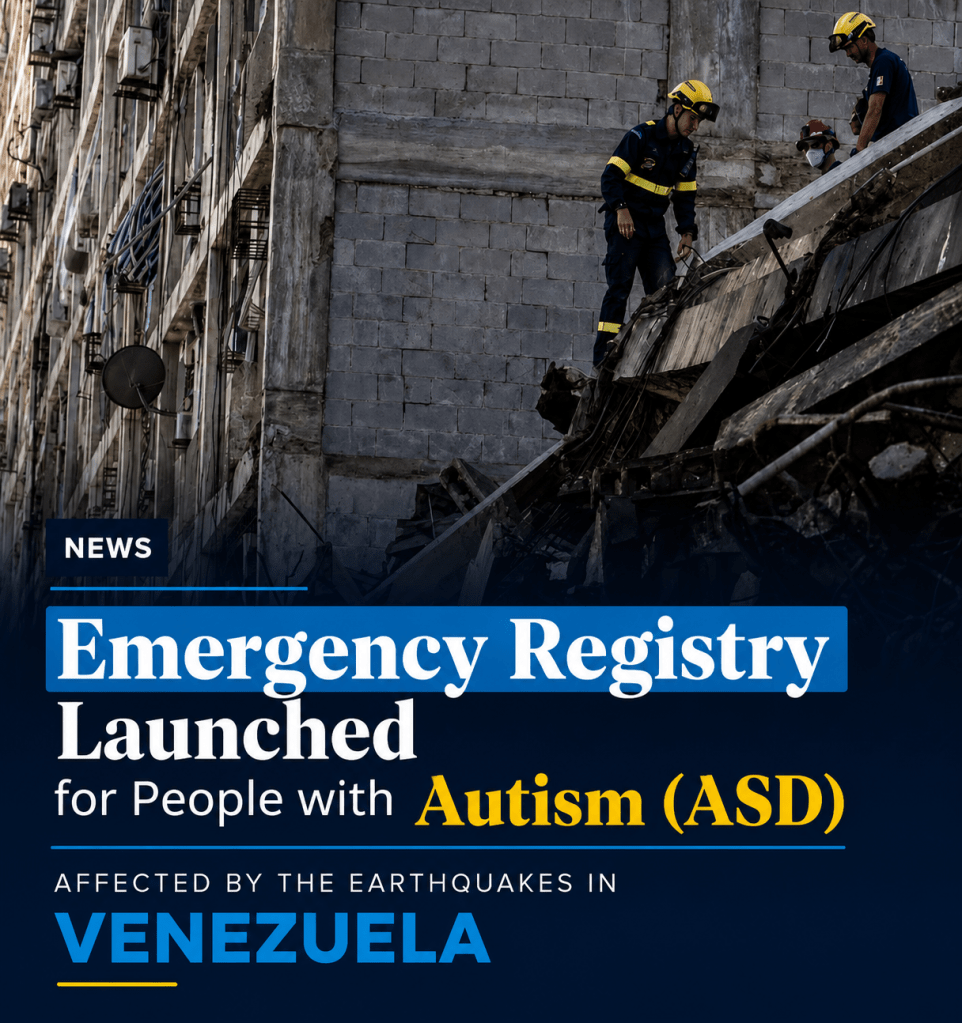
It announces the launch of an Emergency Census to identify autistic people and families affected by the disaster and assess their immediate support needs.
Emergency Neuroarchitecture: Four Simple Design Solutions for Inclusive Disaster Relief
A number of simple, affordable design interventions can significantly reduce distress and improve wellbeing in emergency shelters.
1. Cardboard Partitions for Personal Spaces
Challenge
In large communal shelters, constant 360-degree visual exposure makes it extremely difficult for an autistic brain to filter sensory information. It can feel like living in the middle of a crowded stadium.
Solution
Use corrugated cardboard panels (approximately 1.2 × 1.5 m) or opaque fabric screens suspended between ropes to create small sensory pods of around 1.5 m².
Impact
These simple partitions dramatically reduce visual stimulation, support sensory self-regulation, and provide families with a private space where a parent can comfort their child without feeling exposed or judged.
2. Emergency Sensory Kits
Challenge
The constant noise of generators, loudspeakers and crying children can be physically painful for people with auditory hypersensitivity. There is often no opportunity to escape the sensory overload.
Solution
Provide a basic sensory kit containing noise-cancelling headphones, a thick weighted blanket, and two fidget toys or stress balls.
Impact
These items help regulate the nervous system and may reduce the risk of severe anxiety, sensory overload and autistic meltdowns in highly stimulating environments.
3. Quiet Zones Within Emergency Shelters
Challenge
People cannot simply switch off their senses. Continuous noise and artificial lighting make restorative sleep difficult, contributing to stress and dysregulation across the shelter population.
Solution
Designate a dedicated quiet or decompression area with subdued lighting, minimal foot traffic and clear expectations for silence.
Impact
Everyone benefits—not only autistic people, but also older adults, people with migraines, breastfeeding mothers, individuals experiencing post-traumatic stress, and even emergency response staff. A quiet zone becomes the shelter’s essential space for recovery and emotional regulation.
4. Visual Schedules Using Pictograms
Challenge
Uncertainty increases stress and anxiety. The human brain relies on predictability, particularly during periods of crisis.
Solution
Display simple visual schedules using laminated boards or posters with pictograms showing meal times, rest periods, medical services and aid distribution.
Impact
Knowing what will happen next helps reduce anxiety. For non-speaking autistic children, pictograms can also provide an effective means of communication—for example, pointing to the symbol for toilet rather than becoming overwhelmed by frustration.
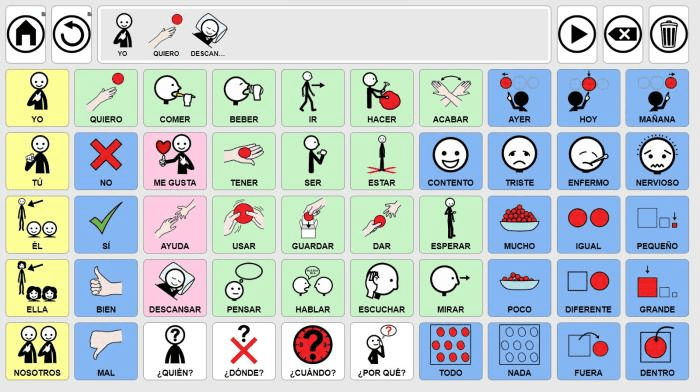
While ARASAAC is widely used across Spain and much of Latin America, other countries rely on different visual communication systems, such as Makaton in the UK. Regardless of the system used, familiar pictograms can reduce anxiety and support communication during emergencies.complejas.
Neuroarchitecture and Designing for Neurodiversity in Times of Crisis
Around 1% of the world’s population is autistic. Following the earthquakes in Venezuela, UNICEF estimates that 1.8 million people—including approximately 680,000 children—are in need of humanitarian assistance. If autism prevalence reflects that of the general population, around 6,800 autistic children like Yoar may now be facing a double emergency: the loss of both their home and the safe, predictable environment they depend on.
When we also consider autistic adults, people with ADHD (around 5%), dyslexia (around 10%), post-traumatic stress disorder (PTSD) and dementia, it is likely that between one in five and one in four people in any emergency shelter have sensory, cognitive or communication needs that differ from those of the so-called “average” user.
Yet most emergency response protocols continue to be designed around a standardised population that does not truly exist. Firefighters, healthcare professionals and volunteers perform extraordinary work under immense pressure, but many lack the training, guidance and resources needed to support neurodivergent people effectively.
Neuroarchitecture reminds us that spaces are never neutral. The way we organise an environment influences how people think, feel and behave. In everyday life, thoughtful design promotes wellbeing. During a disaster, it can reduce fear, restore a sense of control, preserve dignity and protect the mental health of those who are most vulnerable.
The recommendations presented in this article are neither expensive nor technologically complex. Many require nothing more than cardboard partitions, visual schedules, quiet areas or basic sensory kits. Yet these simple interventions can transform an emergency shelter from an overwhelming environment into one that supports regulation, communication and recovery.
Would your city be prepared to support people like Yoar during a disaster?
As climate change increases the frequency and severity of natural disasters across the world, this question is becoming more urgent than ever. Building resilient communities is not only about constructing stronger buildings—it is also about designing environments that support the full diversity of the human mind.
An earthquake may be unavoidable. Exclusion is not.
If we want truly resilient communities, inclusion cannot begin after disaster strikes. It must be embedded in emergency planning from the very first blueprint, the very first protocol and every design decision that follows.
🧠 Support NeuroTectura
Every article published on NeuroTectura is the result of hours of research, reading and writing. If you believe architecture should create healthier, more inclusive environments for everyone, consider buying me a coffee. Your support helps keep this independent project growing.
Recommended Reading
Guía práctica sobre accesibilidad de la UNICEF. https://accessibilitytoolkit.unicef.org/media/686/file/Accessibility%20Toolkit%20A%20Advocacy_ES%20Final.pdf

