
When Space Overwhelms Us: From Stimulus to Behaviour
A child walks back into the classroom after break. Just moments before, they were running, laughing and playing without any difficulty. But as they cross the threshold, something shifts. The noise feels louder, the voices of classmates become unsettling, and the light seems harsher than before. Small gestures begin to irritate them: a glance, a comment or a slight nudge can trigger a sharp reaction. They argue and become agitated.
And this situation is not limited to the classroom. We have all witnessed similar scenes in restaurants, shops or shopping centres where a child suddenly appears to lose control — shouting, throwing objects or trying to run away. From the outside, this behaviour is often labelled as poor manners or a lack of discipline.
But what if it is not that simple? What if it is a response to a combination of environmental factors that are overwhelming them?
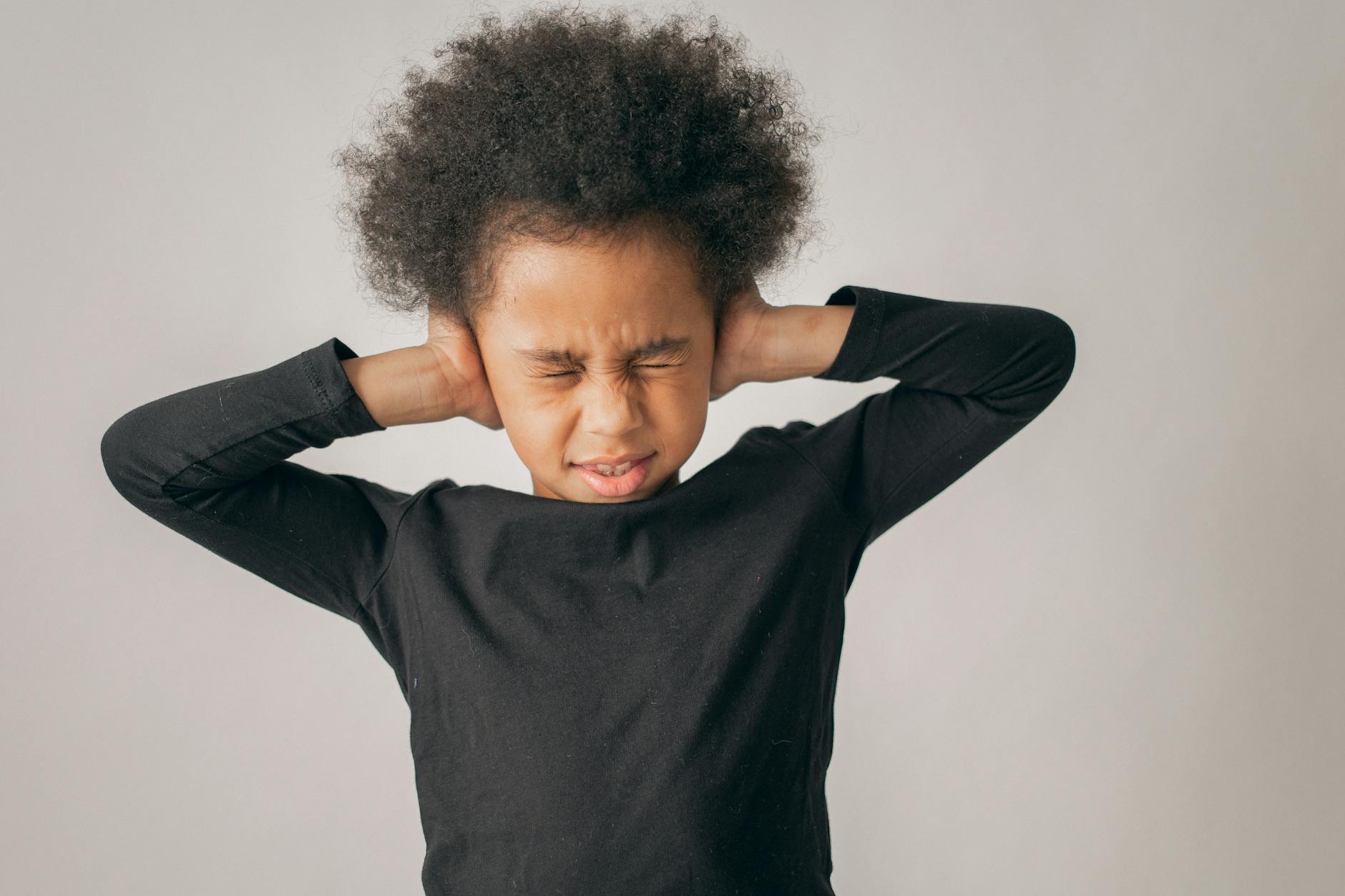

Sensory overload is no exception — it is a human response. However, while some people may tolerate it, others — particularly those who are neurodivergent — perceive it more intensely. What is merely uncomfortable for some can be profoundly overwhelming for others.
Beyond Perception: What the Science Says
This reaction is neither random nor isolated. A recent study published in 2023 in the International Journal of Environmental Research and Public Health examined the relationship between various physical environmental factors and aggressive behaviour.
It is a systematic review, meaning it synthesises findings from multiple previous studies, allowing for the identification of consistent patterns with greater scientific robustness.
Through this approach, the authors explored how variables such as noise, air pollution, urban density, colour, temperature, and the presence — or absence — of natural elements influence people’s physiological and emotional activation.
The findings are clear. Factors such as exposure to air pollutants (PM2.5) and high temperatures are associated with increased impulsivity and irritability. Excessive heat does not only cause physical discomfort; it also reduces the capacity for self-regulation and, with it, patience.
At the same time, the research highlights that a lack of contact with nature can intensify these effects. The absence of natural elements limits the brain’s ability to recover from stress, making it harder to “reset” and return to a state of calm.
Taken together, the results point to a key idea: when the environment generates sensory overload or sustained discomfort, the body enters a heightened state of activation. In that state, irritability is not an exception — it is a consequence.

From Stimulus to Behaviour: How the Body Responds
What may appear to be a sudden or disproportionate reaction often has a deeper origin. The human body is constantly responding to its environment, even when we are not fully aware of it.
Factors such as intense noise, harsh lighting, or a lack of thermal comfort activate the nervous system and trigger an alert response. In this process, physiological mechanisms come into play, including the release of cortisol—the so-called ‘stress hormone’—and an increase in heart rate.
When these stimuli persist over time, the body remains in a state of sustained activation that reduces the capacity for emotional regulation and increases reactivity. In other words, the threshold of tolerance decreases: what would normally be manageable becomes difficult to process.
In this context, the reaction of a child —or of any individual—
ceases to be simply a matter of behaviour and becomes a bodily response to an environment that overwhelms them.
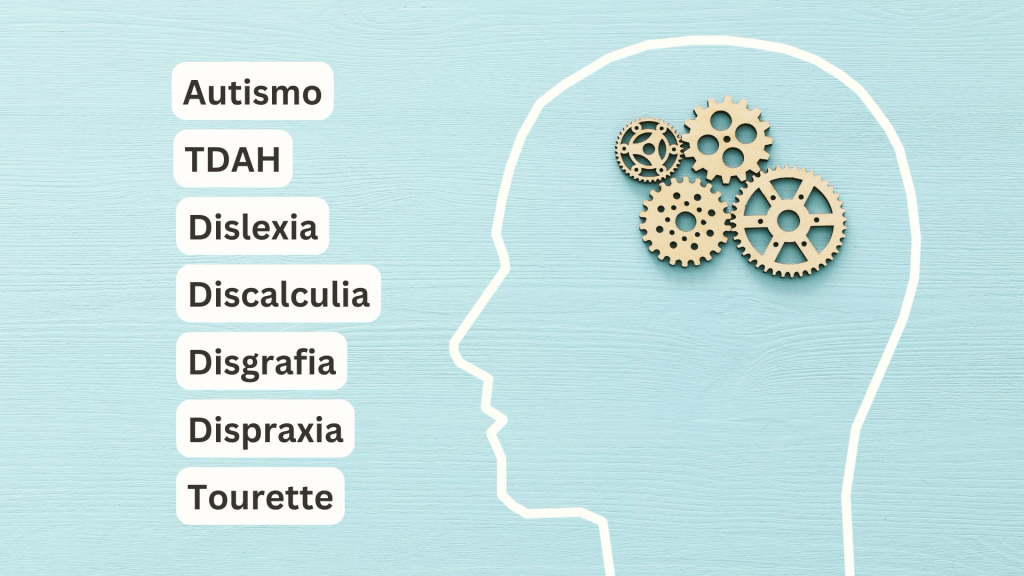
Within neurodiversity, differences in perception and processing mean that the same space can feel either regulating… or profoundly overwhelming.
What Design Is Not Yet Considering
For decades, many spaces have been conceived primarily in terms of efficiency: optimising use, maximising capacity, and responding to specific functions. Yet in this process, something fundamental is often overlooked: the way the environment impacts the nervous system.
Design does not simply organise space; it also shapes experience. The intensity of noise, the quality of light, the density of people, and the choice of materials are not neutral decisions. Each of these elements influences how the body perceives, processes, and responds to its surroundings.
When these factors are not considered in an integrated way, the effects are not always immediate — but they are cumulative. And it is within this accumulation that irritability, fatigue, and difficulty concentrating begin to emerge.
When Sensitivity Is Heightened: A Neurodiversity Perspective
Although the body’s responses to environmental stress are universal, not everyone perceives the environment in the same way. In neurodivergent children, these reactions may be triggered more quickly and with greater intensity due to heightened sensory sensitivity and a reduced capacity to filter stimuli.
Noise, light, constant movement, or physical proximity can become overwhelming. What goes unnoticed for some can become difficult to process for others.
In these situations, the nervous system does not simply respond — it becomes overloaded. And what may appear from the outside as a disproportionate reaction is, in fact, an attempt to regain balance.
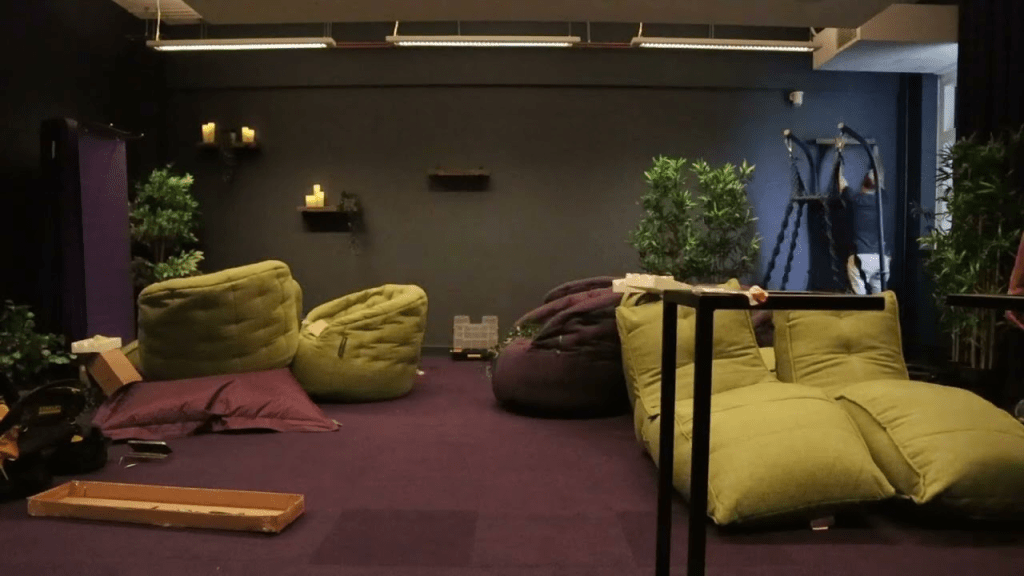
Designed to reduce stimuli and promote calm, this space supports sensory regulation and demonstrates how design can become an active tool for wellbeing.
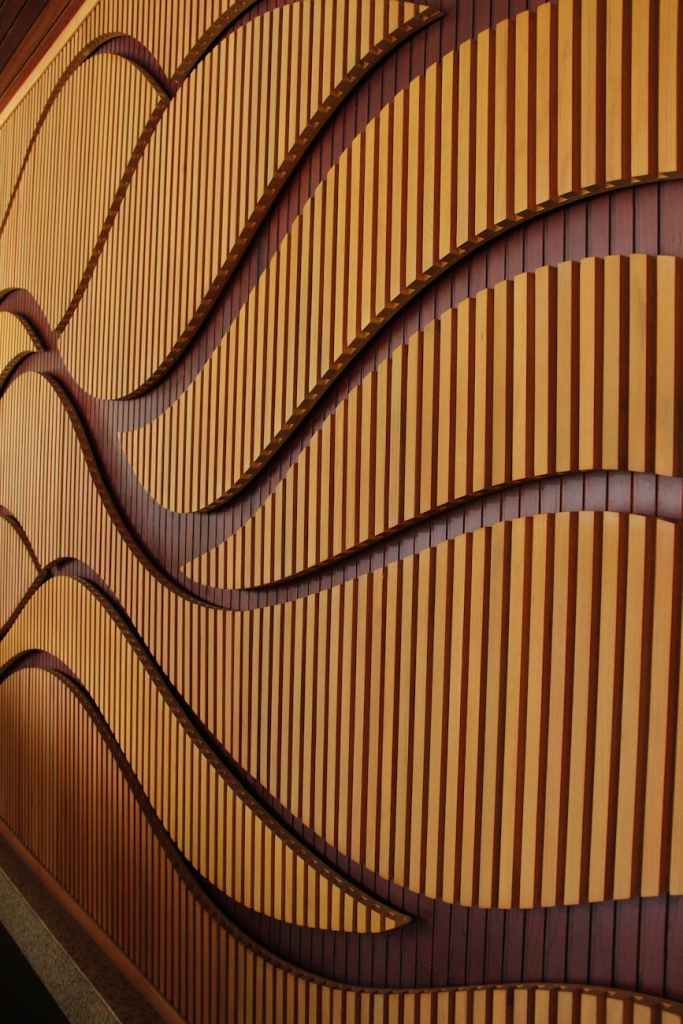
Towards More Conscious Design
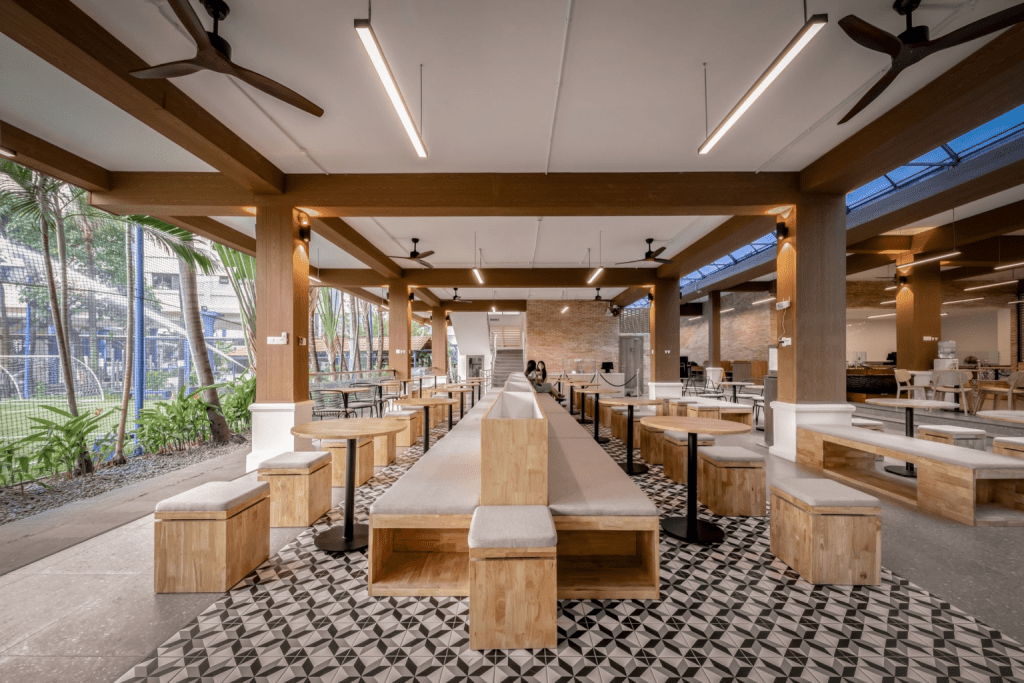
If the environment can overwhelm, it can also regulate. Space constantly interacts with those who inhabit it, influencing how the body perceives, processes, and responds to stimuli.
Some design decisions — seemingly simple — can make a significant difference:
- The use of materials that absorb sound and reduce reverberation
- Adjustable natural lighting, avoiding extreme contrasts
- The incorporation of natural elements that support cognitive recovery
- Transitional spaces or quiet corners for momentary retreat
- Visual clarity and spatial organisation that reduce perceptual load
This is not about designing perfect spaces but about creating environments that support the nervous system rather than continuously overloading it.
Conclusion — A Quiet Responsibility
For a long time, we have interpreted behaviours like those of the child through an individual lens: a lack of control, poor behaviour, difficulty adapting. Yet, when we look more closely, another, more complex possibility emerges: that the environment also plays a role in what is happening.
The spaces we design do not simply organise activities; they shape internal states. They can facilitate calm or intensify tension.
Recognising this implies taking on a different kind of responsibility. It is not only about designing spaces that function, but about considering how they feel, how they are perceived, and how they affect those who inhabit them.
Because, ultimately, architecture does not simply contain what we do.
It also influences how we do it — and who we are able to be within it.
If you find this work valuable, you can support Neurotectura here:
🔗 https://buymeacoffee.com/neurotectura
Recommended Readings
Baird A, Candy B, Flouri E, Tyler N, Hassiotis A. The Association between Physical Environment and Externalising Problems in Typically Developing and Neurodiverse Children and Young People: A Narrative Review. Int J Environ Res Public Health. 2023 Jan 31;20(3):2549. https://pubmed.ncbi.nlm.nih.gov/36767909/
Tyng, C. M., Amin, H. U., Saad, M. N. M., & Malik, A. S. (2017). The influences of emotion on learning and memory. Frontiers in Psychology, 8, 1454. https://doi.org/10.3389/fpsyg.2017.01454
Spreng, M. (2000). Possible health effects of noise induced cortisol increase. Noise and Health, 2(7), 59–64.
 neurotectura.com