Can Architecture Influence the Mind?
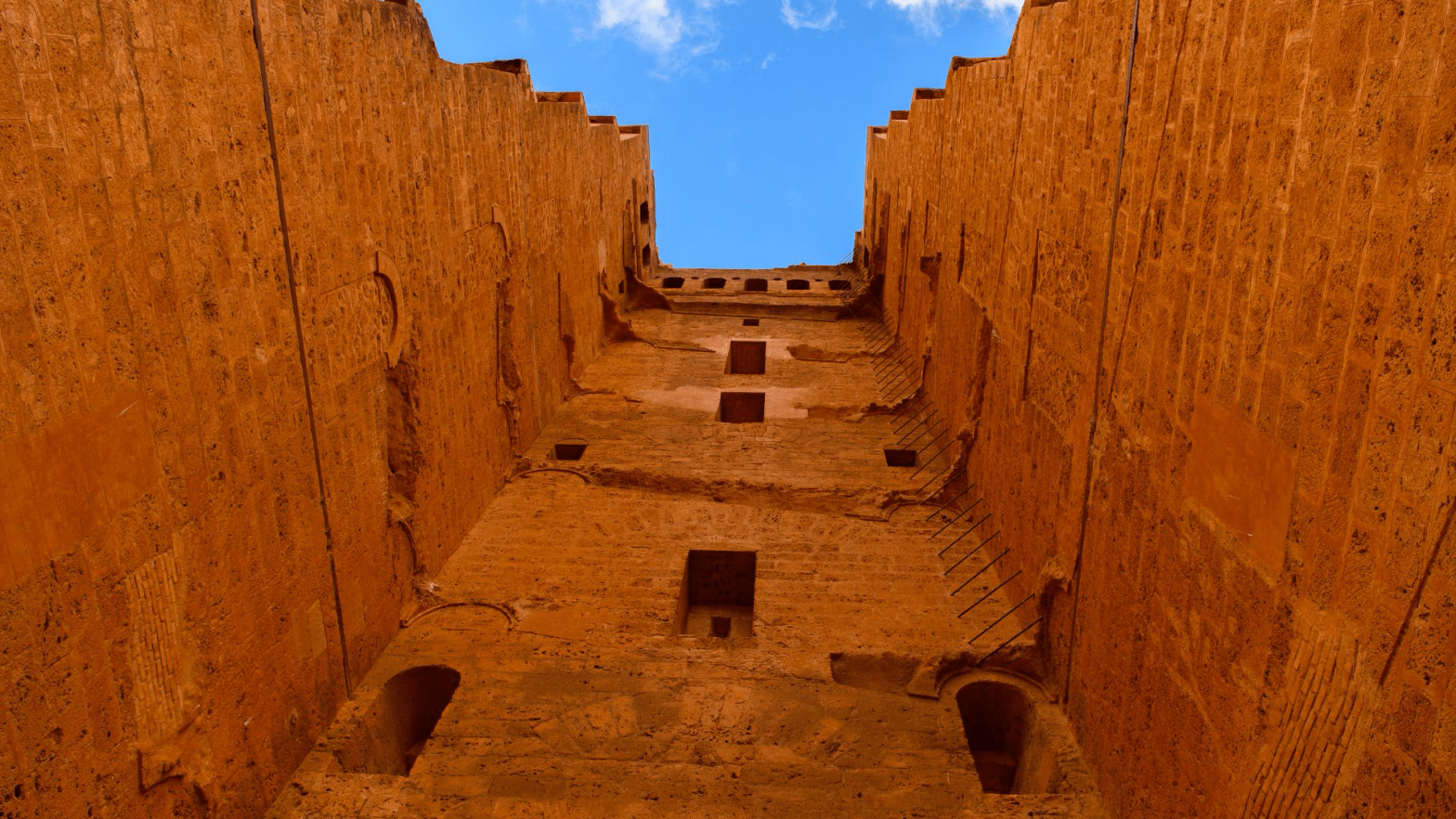
A narrow alley, a curved pathway, filtered light entering through a shaded corridor, or the silence beneath a vaulted ceiling can create a subtle sensation of calm and inward attention. Certain environments seem capable of slowing our thoughts, sharpening our senses, and reconnecting us with the present moment.
But what if architecture does more than simply feel contemplative? What if certain spaces can measurably influence the way the brain functions?
A growing body of research in neuroarchitecture suggests that the built environment may actively shape cognition, emotion, stress levels, and attention. A recent study conducted in the ancient city of Ghardaïa, Algeria, offers fascinating new evidence that architecture may influence contemplative states of mind through measurable neurological changes.

What Is a Contemplative State of Mind?
A contemplative state of mind is characterised by present-centred awareness, focused attention, and a sense of mental calm. During these moments, people tend to experience less mind-wandering and reduced cognitive “noise”, while becoming more aware of their surroundings, emotions, and bodily sensations.
Rather than reacting impulsively to stress or distraction, the mind enters a quieter and more observant mode.
These reflective states are often associated with mindfulness, meditation, sensory awareness, introspection, and emotional regulation.
The Psychological Benefits of Contemplative States
Reflective mental states can have profound effects on both mental and physiological wellbeing.
When we enter a state of calm reflection, the brain reduces activity in the Default Mode Network (DMN), a neural system associated with rumination, repetitive thoughts, and excessive self-focus. As this mental chatter decreases, symptoms linked to anxiety, stress, and depression may also diminish.
At the same time, the body shifts from a “fight-or-flight” response into a more restorative physiological state. Cortisol levels decrease, blood pressure drops, and the nervous system becomes more balanced. This feeling of calm encourages a less reactive and more attentive relationship with both emotions and the surrounding environment.
From a cognitive perspective, these moments of mental quietness allow the brain to recover from constant concentration, productivity, and analytical effort. This helps restore attention and reduce mental fatigue. By temporarily silencing everyday cognitive overload, the brain can form new connections between ideas, enhancing creativity, reflection, and problem-solving.


The Ghardaïa Study: Architecture and the Brain
A fascinating 2025 study published in Frontiers of Architectural Research explored whether architecture itself might help induce reflective mental states.
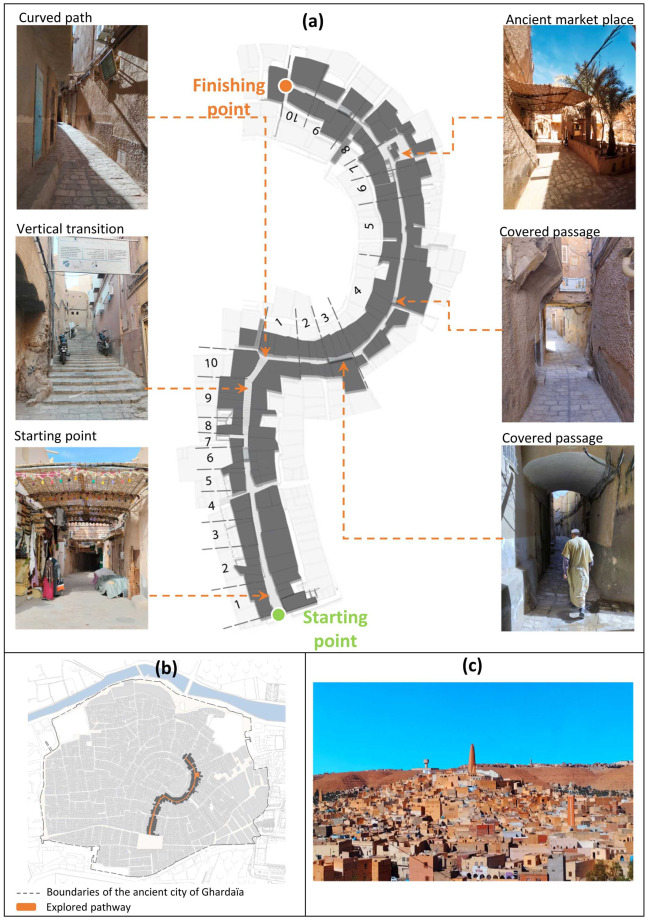
Using mobile EEG technology, researchers investigated how people neurologically responded while walking through the ancient city of Ghardaïa in Algeria. Unlike many previous neuroarchitecture studies conducted in laboratories or virtual reality environments, this research took place within a real architectural setting, allowing scientists to observe neurological responses during natural movement through space.
The Architecture of Ghardaïa and the M’zab Valley
For decades, architects from around the world have been fascinated by the silent, sculptural architecture of the M’zab Valley. Rising from the desert landscape, its cities appear almost carved from earth and light. Their winding pathways, compressed passages, geometric forms, and dramatic interplay of shadow create spaces that feel both monumental and deeply human.
Long before neuroarchitecture emerged as a discipline, these traditional settlements already seemed to embody something difficult to define: a profound sense of harmony, introspection, and spatial balance.
In the 1930s, Le Corbusier visited Ghardaïa and was profoundly influenced by its architecture. Many of his later design principles reflected this experience, including pure functional forms, minimal ornamentation, rough textures, geometric clarity, and human-scaled spaces. The austere surfaces of Ghardaïa helped inspire his concept of béton brut, while the sculptural forms of Mozabite mosques influenced projects such as the Chapel of Ronchamp.
Other architects, including Fernand Pouillon, Hassan Fathy, and Louis Kahn, also drew inspiration from the valley’s climatic strategies, monumental geometry, and striking relationship between light and shadow.
How the Experiment Was Conducted
The experiment involved twenty Algerian university students with no architectural training and no prior familiarity with the site.
Equipped with mobile EEG systems, physiological sensors, and body cameras, participants freely explored the city while researchers recorded their neurological responses in real time. After completing the route, participants also answered questionnaires about attention, spatial awareness, mental presence, and emotional experience.
What makes this study especially significant is its real-world methodology. Instead of relying on static images, laboratory simulations, or virtual reality, the researchers examined how the brain responds to architecture during natural bodily movement through an actual urban environment.
What Did the Researchers Discover?
Curved Pathways Reduced Mental Rumination
One of the study’s most striking discoveries was the effect of curved pathways on brain activity.
The researchers found that curved routes reduced activity in the brain’s Default Mode Network (DMN), the neural system associated with mind-wandering, rumination, and repetitive internal thought.
According to the authors, curved spatial configurations appear to increase sensorimotor engagement and present-moment awareness, drawing individuals more deeply into the immediate experience of the environment.
In simple terms, curved architecture seemed to redirect attention away from repetitive internal thoughts and toward active spatial perception.
Enclosed Spaces Encouraged Introspection
In contrast, enclosed or partially hidden spaces appeared to increase DMN activity.
These more occluded environments seemed to encourage introspection, inward attention, and reflective mental states. The findings suggest that architecture may subtly influence whether the mind becomes externally engaged with the environment or internally focused on self-reflection.
This has important implications for the design of:
- sacred spaces,
- therapeutic environments,
- museums,
- hospitals,
- and places intended for quiet reflection.
Architectural Elements Influenced Brain Activity
The researchers also observed that specific architectural elements affected neural dynamics, including:
- arches,
- covered passages,
- landmarks,
- spatial transitions,
- and variations in width and topography.
These features were not experienced merely as decorative or visual components. Instead, they appeared to shape emotional and cognitive processing in measurable ways.
The study reinforces the growing idea that architecture is not neurologically neutral.
Embodied Cognition and Architectural Experience
Another important conclusion of the study is the central role of embodied cognition in architectural experience.
The findings support the idea that humans experience architecture not only visually, but through movement, orientation, bodily perception, and sensory interaction with space. As participants physically navigated the city, their neurological activity continuously shifted in response to the surrounding spatial conditions.
This perspective challenges the idea of architecture as a purely visual discipline and instead positions spatial experience as something deeply connected to the body and the nervous system.


What This Means for the Future of Architecture
Overall, the study suggests that certain architectural environments may naturally support calmness, attention restoration, reflection, and psychological wellbeing.
The authors argue that these findings could have important implications for the future design of schools, hospitals, workplaces, therapeutic environments and urban spaces.
If architecture can influence stress levels, attention, emotional regulation, and contemplative awareness, then design becomes more than an aesthetic or functional exercise. It becomes a tool capable of shaping human wellbeing.
Perhaps this is why certain ancient spaces continue to move us so deeply.
Long before neuroscience existed, traditional architectures around the world may already have understood something fundamental about the human mind: space is not merely something we inhabit but something that quietly shapes perception, emotion, memory, and consciousness itself.
Further reading
Contemplative neuroaesthetics in architecture: A real-world mobile EEG study in the ancient city of Ghardaïa, Algeria. https://doi.org/10.1016/j.foar.2025.02.001
Contemplation – the power to transform self and society. https://www.bps.org.uk/psychologist/contemplation-power-transform-self-and-society
Defining Contemplative Science: The Metacognitive Self-Regulatory Capacity of the Mind, Context of Meditation Practice and Modes of Existential Awareness. https://pmc.ncbi.nlm.nih.gov/articles/PMC5112249/

