Why would a physicist take an interest in architecture?
At first glance, the laws that govern the universe and the design of the spaces we inhabit appear to intersect only at a technical level—through structural forces, plumbing systems, ventilation, or thermal control.
Yet, the connection runs far deeper. Both disciplines are concerned with systems, structures, and the patterns that organise reality.
The physicist Nikos A. Salingaros, influenced by complex systems theory and the work of architect Christopher Alexander, applies the rigour of physics to question the status quo of modern design. His approach does not dismiss architecture’s artistic dimension, but it introduces a provocative idea: our spatial preferences are not entirely arbitrary. They are, to a significant extent, rooted in how we perceive, interpret, and experience the world around us.
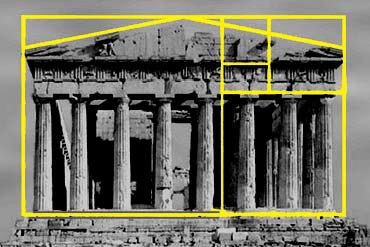
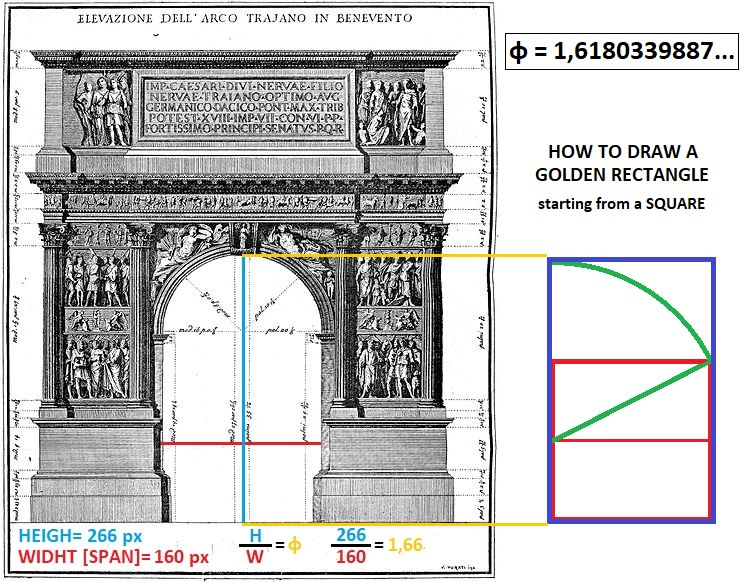
Within this context, Salingaros raises a fundamental question: the beauty and enduring appeal of these works do not lie solely in the application of abstract aesthetic laws but in their ability to resonate with patterns that the human brain recognises as order, legibility, and coherence.


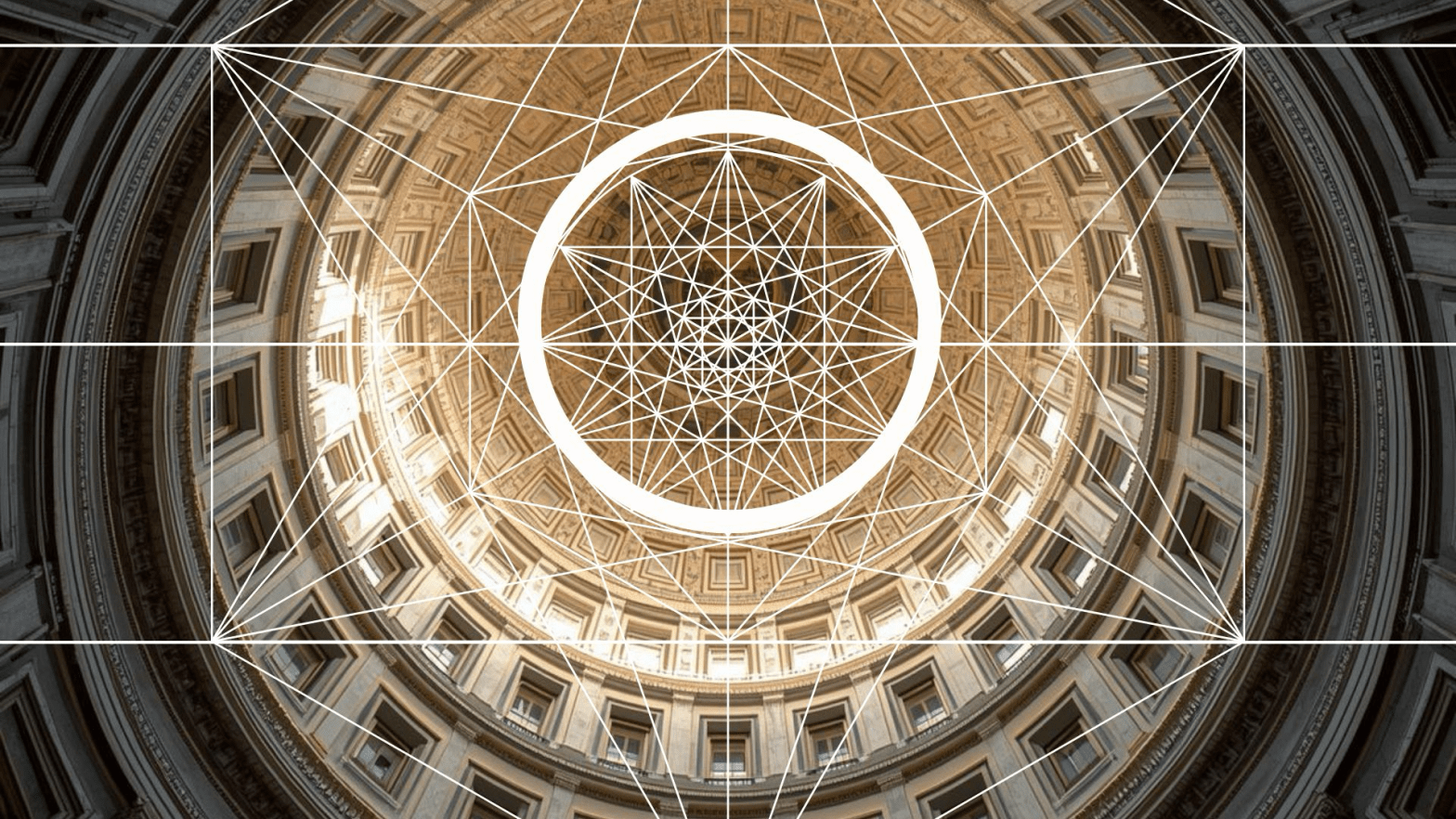
The dome offers a clear example of legible architectural geometry. Its regular, symmetrical form allows the brain to grasp it instantly and orient itself with ease. Its richness emerges from the repetition of elements across different scales—from the overall form to the finer details—creating a hierarchy the mind can navigate. As Salingaros suggests, it is this balance between order and complexity that gives rise to a coherent and meaningful spatial experience.
The science behind intuition
In his essay The Laws of Architecture from a Physicist’s Perspective (1995), Salingaros poses a seemingly simple question: why do some spaces feel right, while others do not?
His answer moves away from stylistic concerns and focuses instead on organisation. He approaches architecture as a complex system, drawing on physics, mathematics, and systems theory to identify patterns of coherence, hierarchy, and connectivity.
From this standpoint, harmony and beauty are no longer abstract ideas but structural configurations that the brain recognises because they reflect the order found in nature.
Order, in this context, is not an aesthetic end in itself but a means—an instrument that allows space to be understood, read, and ultimately inhabited.
Architecture that emerges vs architecture that is imposed
From this analysis, Salingaros proposes a fundamental distinction.
On the one hand, there is an architecture that emerges from processes similar to those of living systems: organised across multiple scales, with clear relationships between its parts, and with transitions and layers of information that support legibility. This is not “organic” in a superficial sense, but rather a structure with internal coherence.
On the other, there is an architecture shaped by abstraction, where order does not emerge but is imposed.
The difference is not merely formal, but perceptual. The former tends to feel intuitive, balanced, and easy to interpret. The latter may be visually striking, yet more difficult to read.
We do not interpret space with the mind alone; we regulate it with the body. When that structure fails, the discomfort is not always conscious—but it is real.


In contrast, planned environments such as Basildon in England—designated a new town in 1949—prioritise uniformity and efficiency but often at the expense of perceptual complexity. According to Salingaros, this lack of hierarchy and variation limits emotional and cognitive engagement with the environment, reducing its capacity to foster attraction, a sense of belonging, and wellbeing.
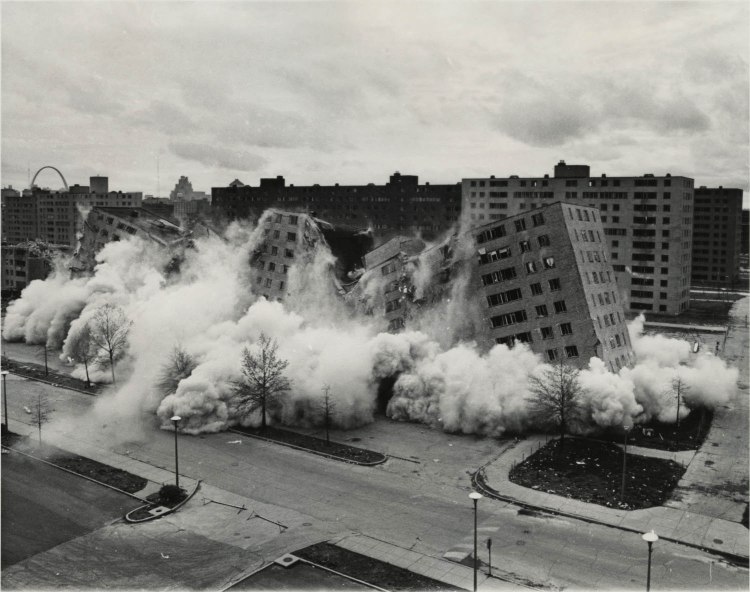
For Salingaros, the issue does not lie in modernity itself, but in the loss of organised complexity, hierarchy, and connection to patterns that the human brain recognises as meaningful.
The rupture of modernism
It is at this point that Salingaros’ critique of modernism becomes clearer. Throughout the twentieth century, much of architecture moved towards extreme simplification, prioritising purity of form while reducing detail, transitions, and hierarchy. The issue, according to Salingaros, is not simplicity in itself, but the loss of organised complexity.
By stripping away layers of spatial information, many of these environments diminish the user’s ability to orient themselves, interpret, and inhabit space with ease. The result can be a difficult-to-name sensation: disorientation, emptiness, or unease.
This is less a stylistic critique than a critique of a design logic that has privileged abstraction over human experience.
A forgotten intuition
For centuries, architecture has understood the built environment as an extension of human biology. Proportion, geometry, and spatial organisation are not neutral decisions; they reflect an order present both in nature and in our perception. This understanding has guided many civilisations in creating environments that are not only functional but also capable of conveying harmony and wellbeing.
The ancient Greeks explored the golden ratio and its connection to beauty, a pursuit reflected in the architecture of their temples—designed to harmonise light, shadow, and space and to inspire those who inhabited them.
In many cases, modernity has replaced this intuitive understanding of emotional and spatial connection with more rational and functional approaches, prioritising efficiency and profitability. The result is often innovative environments that, despite their technical sophistication, lack human resonance.
It is therefore essential to reopen the conversation on how to recover this subtle yet powerful connection between the built environment and human biology. Doing so will not only enrich architectural experience but also foster healthier, more balanced spaces—where architecture once again becomes an extension of our biological essence.
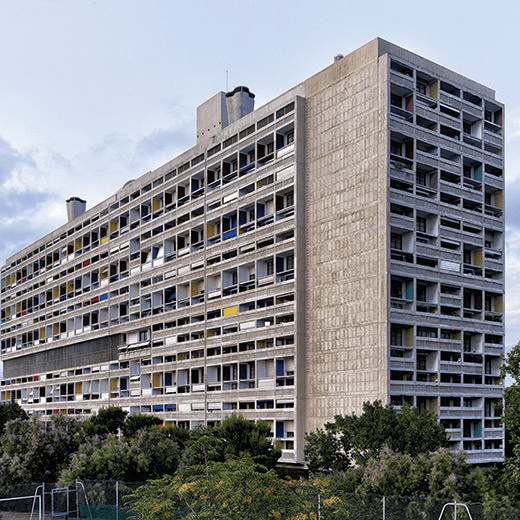
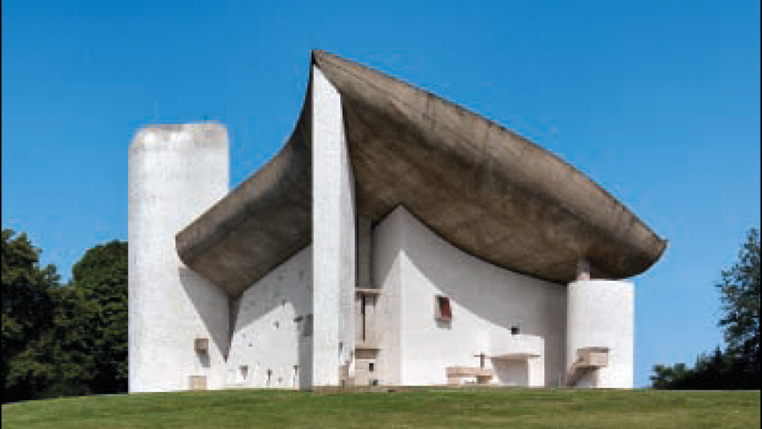
The Chapel of Notre-Dame du Haut in Ronchamp, France. Designed by Le Corbusier between 1950 and 1955.
Rather than a linear shift, Le Corbusier’s work during these years reveals a productive tension. While he was developing projects based on proportional systems and collective housing—such as the Unité d’Habitation in Marseille (1947–1952)—he was simultaneously exploring a more expressive and sensory architecture in works like Ronchamp (1950–1955).
Neurotectura: towards an informed architecture
From a neuroarchitectural perspective, this reflection points towards a necessary shift—one that integrates principles from design and psychology to create spaces that are not only aesthetically pleasing but also support the mental and emotional well-being of those who inhabit them. This field invites us to reconsider how environments shape our moods and behaviours, suggesting that the way we design physical spaces can have a profound impact on psychological health.
Design should not be merely a formal or economic exercise but an evidence-informed process. Integrating neuroscience, environmental psychology, and insights into human perception does not constrain creativity; it guides it. It allows us to understand how the environment influences attention, stress, memory, and emotional regulation.
Solutions based on extreme simplification may be valid in transient contexts—shelters, emergencies, and rapid-response architecture—where time and cost are critical. But when these logics become the norm for permanent, symbolic, and everyday spaces, they can lead to environments that, over time, generate disconnection and unease.
And if we accept that architecture shapes how we perceive and feel, the question expands: how does this experience vary across brains that interpret the world differently?
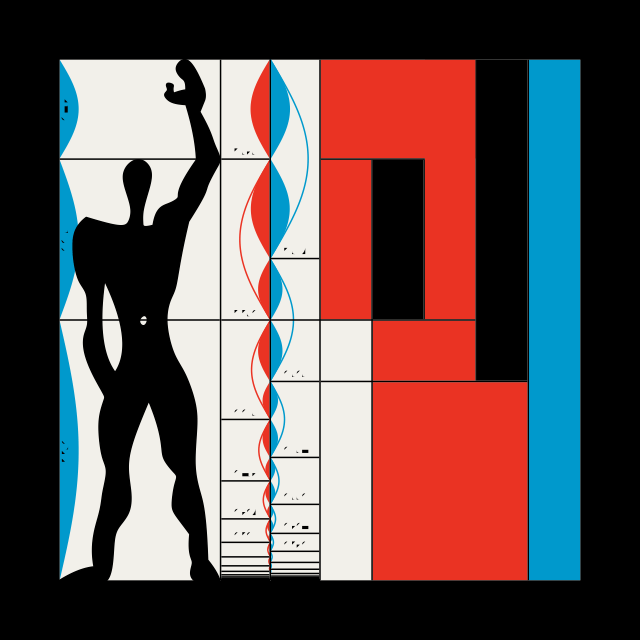
Le Corbusier described the house as a machine for living. Yet human beings do not inhabit efficient systems alone—we inhabit structures rich in meaning, order, and complexity.
Designing to understand
Perhaps the real challenge is not choosing between tradition and modernity, but between an architecture imposed through abstraction and one shaped by an understanding of the human being.
Architecture is not only a reflection of our culture and aspirations but also of how we perceive and interpret space. Designing requires going beyond material specifications or stylistic trends to consider how environments influence our physical, emotional, and cognitive wellbeing.
At the intersection of science and sensitivity, architecture ceases to be an object and becomes an experience. Decisions about proportion, light, or context do not merely configure spaces—they shape the way we inhabit them.
Design, then, is more than the act of constructing forms; it is the act of shaping experiences that influence how we think, feel, and live in the world.
References
Salingaros, N. A. (1995). The laws of architecture from a physicist’s perspective. Physics Essays, 8(4), 638–643.
Salingaros, N. A. (2006). A theory of architecture. Umbau-Verlag.
Salingaros, N. A. (2012). Unified architectural theory: Form, language, complexity. Umbau-Verlag.
Alexander, C. (2002–2005). The nature of order: An essay on the art of building and the nature of the universe (Vols. 1–4). Centre for Environmental Structure.
 neurotectura.com