A conversation with Colombian psychologist and neuropsychologist María del Pilar Pinzón Rueda
As architects and designers, we tend to approach a project through function, aesthetics, cost and building regulations. But there’s a question we rarely ask in enough depth: how does the person inhabiting this space actually experience it?
The brain is not a passive spectator of space; it actively constructs our experience of it. Our senses constantly tell us where we are, where we’re going and how we’re moving through the world. From this information, the brain builds a sense of place, including its boundaries, scale, shape and spatial relationships.
Both sensory overload and sensory scarcity can create difficulty. For some people, that’s a passing annoyance. For others, including many neurodivergent people, it can become a barrier that limits participation, autonomy and the basic experience of being in a place.
That’s why designing with an awareness of how people perceive and process their environment shouldn’t be treated as an academic luxury or an optional specialism. It is a matter of inclusion.
Neuroarchitecture and inclusion
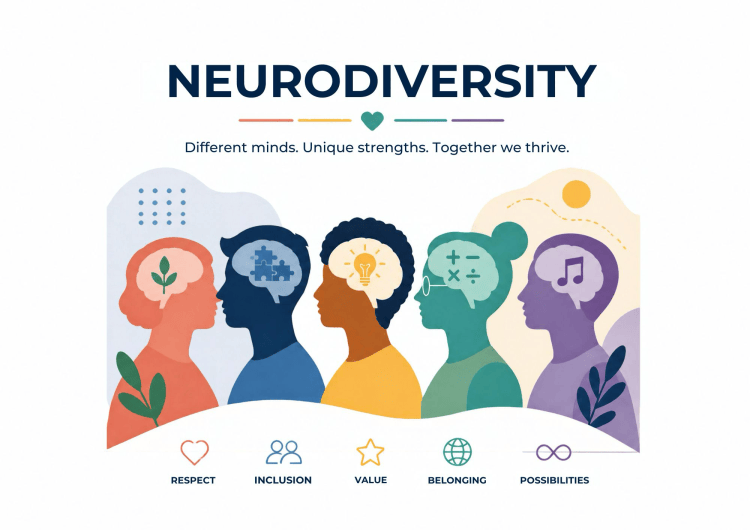
Neuroarchitecture studies the relationship between the built environment and the way people experience it. It looks at how light, sound, colour, spatial layout, circulation and the degree of control people have over their surroundings can shape experience, behaviour and wellbeing.
Here’s a distinction worth sitting with: a building can be physically accessible and still create barriers for the people using it.
Not every limitation is physical. Cognitive disabilities, sensory differences and variations in how people process information rarely enter the conversation when we talk about accessibility.
A building can have ramps and lifts and still be hard to navigate and understand. Corridors can stretch on without indicating where they lead. Signage can be so sparse that it fails to orientate or so dense that it confuses. For people who process spatial information differently, this isn’t merely an inconvenience. It can demand sustained effort just to find one’s way, contribute to anxiety or fatigue, or lead someone to avoid the space altogether.
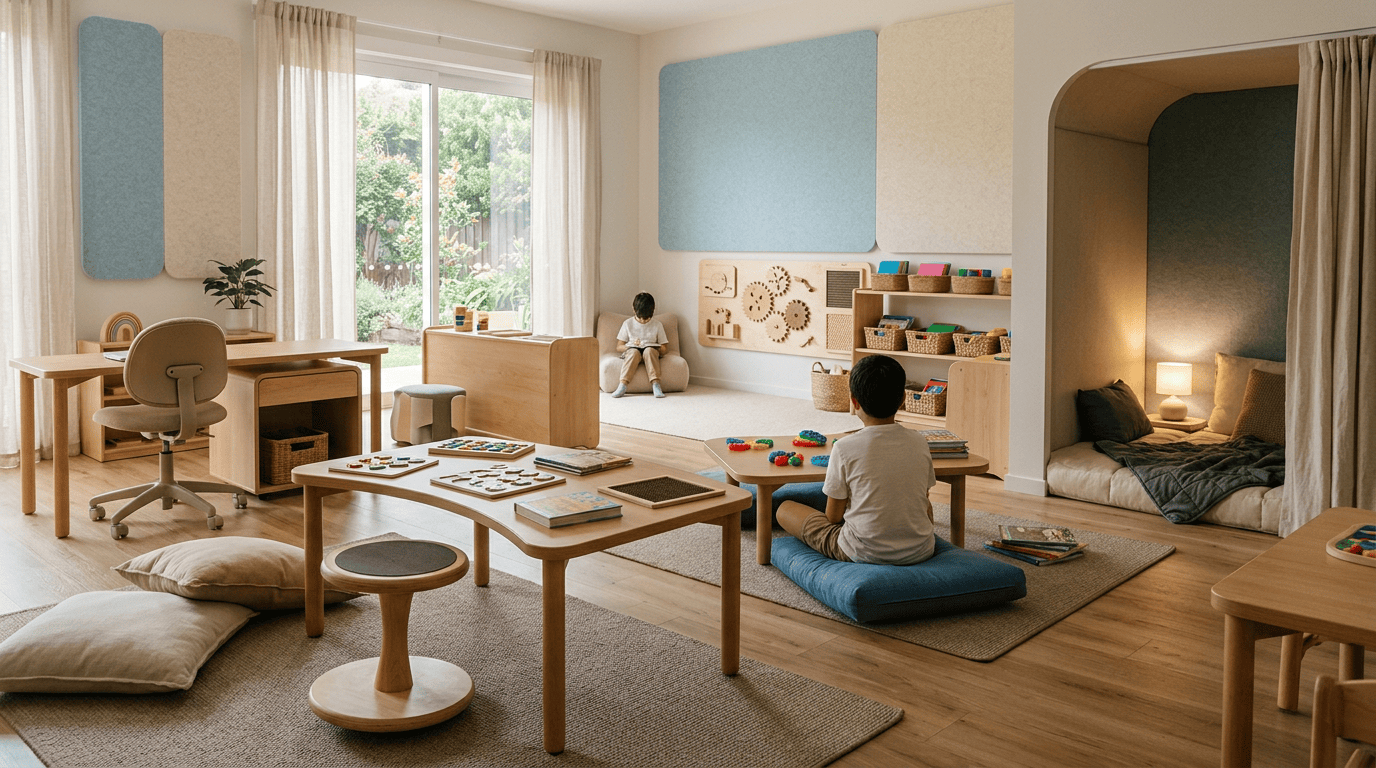
A building can also produce sensory overload when light, noise and visual stimuli accumulate without anyone anticipating their combined effect. It can offer little choice or control: no quiet corner to pause in, no alternative route, no way to reduce stimulation.
And underneath it all, it can still assume that everyone perceives and processes their environment in the same way. They don’t.
Designing for human diversity isn’t about bolting on a few features for certain users. It means questioning, from the outset, the idea that a “universal user” exists at all.
Why Colombia, and why it matters beyond it
As Neurotectura enters a new stage, I’ve begun exploring these questions within Latin America, starting in Colombia. This means connecting with architects, educators, psychologists and other professionals working where accessibility, inclusion, education and the built environment meet.
For readers in the UK, the US and elsewhere, this is a chance to see how the same questions are being approached in a different cultural, educational and legal context. The challenges are strikingly familiar, and so, in many cases, are the answers.
My first conversation was with someone who has spent nearly two decades working on accessibility and inclusion in the built environment, particularly in educational settings.
Meet María del Pilar Pinzón Rueda
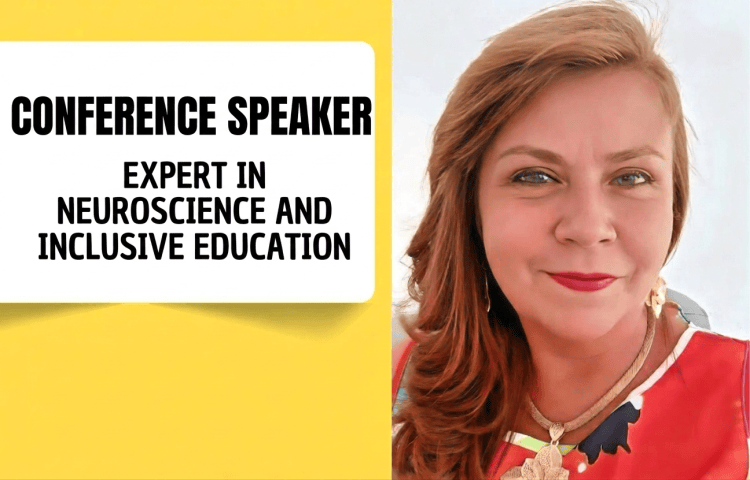
María del Pilar is a psychologist trained at Universidad Pontificia Bolivariana in Medellín. She holds a postgraduate specialisation in Special Educational Needs from Universidad Autónoma de Bucaramanga (UNAB) and a master’s degree in Neuropsychology from Universidad Internacional de La Rioja in Spain.
She directs Fundación Unicornio, which this year marks 19 uninterrupted years of work in accessibility and inclusion. For the past 15 years, she has trained architects in accessibility, universal design and neuroarchitecture. She is also the author of Neuroarchitecture and Inclusive Educational Settings, published in 2022 in Limaq, the architecture journal of Universidad de Lima.
Her work rests on a premise that goes to the heart of neuroarchitecture: people don’t experience space in the same way, and designing for inclusion means recognising that diversity from the very start of the design process.
Here’s what she told me. (Her answers have been translated from Spanish.)
How does the built environment shape learning?
“Learning doesn’t happen only in the brain; it’s profoundly shaped by the environment,” María del Pilar explains.
Good lighting, acoustics and ventilation, along with room to move and different ways of interacting, can support attention and participation. When an environment places excessive sensory demands on someone or presents physical and cognitive barriers, some of that person’s resources go towards coping with those demands rather than learning.
The question isn’t only whether a student can get into a classroom. It’s what conditions they meet once inside.
Why has the classroom changed so little in 100 years?
Her answer points to the close link between architecture and pedagogy. Educational buildings, she notes, still often reproduce traditional teaching models:
“We design spaces around the transmission of information: a teacher at the front, students facing forward.”
We talk about collaboration, movement, autonomy and different ways of learning, yet many schools remain organised around a far more rigid model. Transforming education also means asking whether the spaces where it happens still reflect the ideas that first shaped them.
What does accessibility compliance actually mean?
Accessibility is about more than getting through the door. It means being able to enter, move through, find one’s way, communicate, participate and use a space with autonomy and safety, whatever a person’s circumstances.
Meeting a code requirement doesn’t automatically create an inclusive experience. As María del Pilar puts it:
“We have to go beyond minimum compliance. A space can meet a standard and still not be truly inclusive.”
UK readers may recognise the same thinking behind PAS 6463:2022, BSI’s guidance on designing for neurodiversity, which likewise pushes beyond physical access. Accessibility shouldn’t be a checklist ticked off at the end of a project but a principle that shapes decisions from the beginning.
Why does it fall short in practice?
María del Pilar points to a significant gap between legal obligations and professional training. In her experience, more than 90% of architects lack basic knowledge of accessibility, and few architecture schools cover it in enough depth.
This isn’t for lack of legislation. In Colombia, Law 361 of 1997, the country’s landmark disability-inclusion law, includes provisions requiring that professional training in architecture, engineering and design address disability and the removal of architectural barriers.
The real question is whether architects are prepared to translate those requirements into everyday design decisions. The challenge is less about the existence of standards than about how they become part of professional knowledge and practice, a challenge that will sound familiar far beyond Colombia.
What are the consequences?
They aren’t only regulatory. In schools, barriers can limit students’ autonomy, participation and sense of belonging. For institutions, they can also mean costly retrofits that earlier design decisions could have avoided.
“Accessibility shouldn’t be an adaptation bolted on after design; it should be built in from the start,” she says.
It’s also worth stressing that accessibility doesn’t only benefit disabled people. It improves the experience for parents, teachers, staff and everyone else who uses the space. Designing for diversity doesn’t mean designing for a minority. It means recognising that diversity is simply part of being human.
Are there educational models already pointing this way?
María del Pilar points to Montessori as an interesting reference, particularly its idea of the “prepared environment”: a space deliberately designed to support children’s independence and learning.
Rather than searching for a “perfect school”, she highlights approaches that build diversity into the environment from the outset: flexible spaces, multiple ways to participate, and attention to users’ sensory and functional needs.
The goal isn’t a space that works identically for everyone. It’s one that offers different ways to participate, learn, move and engage with the world.
How should architecture schools respond?
For María del Pilar, accessibility and inclusion need to move from the margins to the centre of professional training.
“Accessibility and inclusion should stop being peripheral content and become core, cross-cutting competencies in architectural education.”
She sees neuroarchitecture as central to that shift: “It’s the present and future of architecture.”
The challenge is concrete: training architects who understand that people don’t experience space in the same way and that this diversity must shape design decisions.
Designing for real people
Despite shifts in pedagogy, many schools are still organised around a paradigm more than a century old: front-facing classrooms, fragmented curricula, single-answer assessments. These sit increasingly at odds with children growing up in digital, interactive environments, with diverse ways of learning and engaging.
My conversation with María del Pilar began with accessibility and universal design, but it opened onto something broader: the diversity of the people who inhabit our spaces.
Some of those differences are visible; others aren’t. Some relate to the body; others to age, mobility, communication, sensory processing, or the ways each of us perceives our surroundings.
This is where neuroarchitecture has something particular to offer. It doesn’t replace accessibility or universal design; it expands how we understand people’s experience of space.
Because there is no universal user. We design for different people, and that diversity should be present from a project’s very first decisions.
Designing for human diversity shouldn’t be a specialism that a handful of architects pursue. It should be part of every architect’s training and everyday practice.

