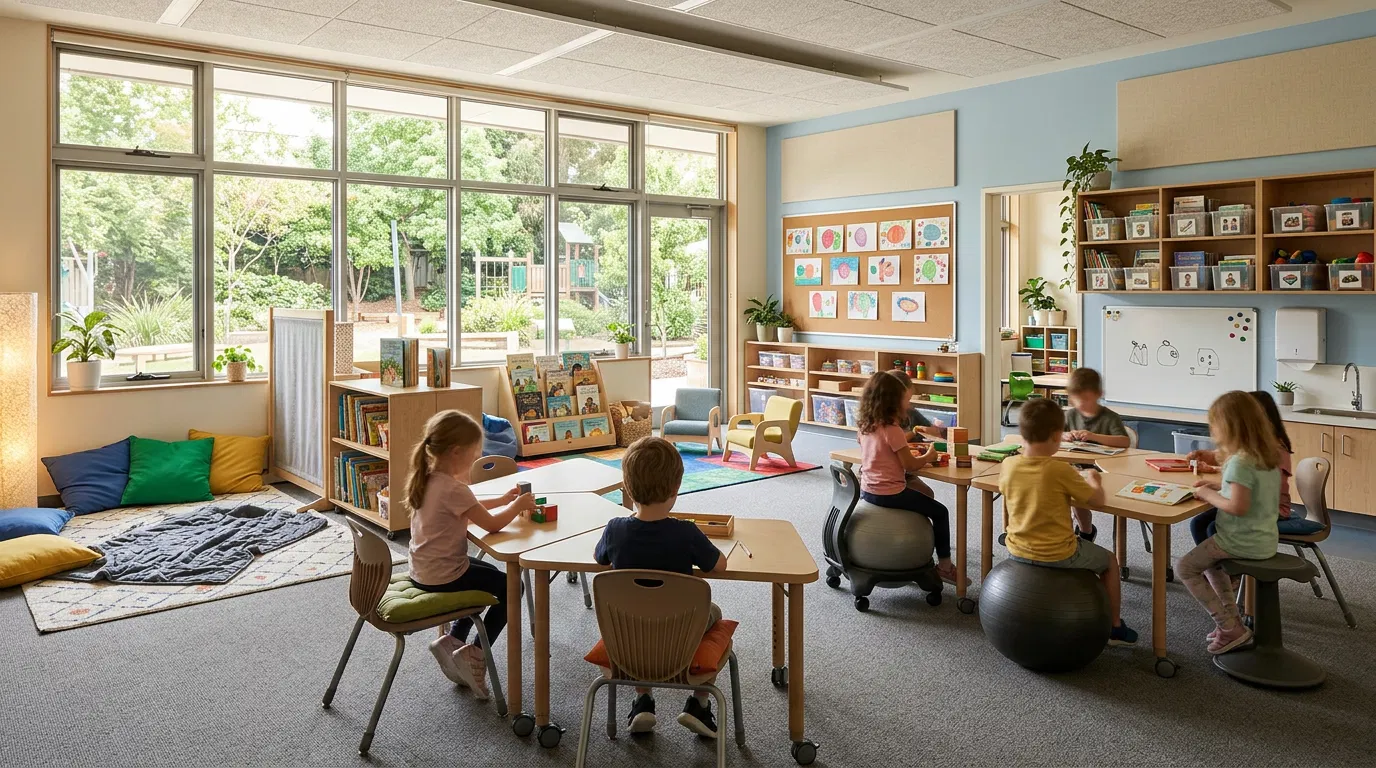
When a pupil cannot sit still, interrupts, or refuses to take part, we usually look at the child, the teacher, or the family. We rarely look at the room. Yet the physical classroom plays an important role in how pupils behave and learn. What if some of the behaviour we try to correct in children is, at least partly, a response to environments we have designed without sufficiently considering their needs? This article explores that question, and how classroom design, grounded in research, can make it easier for every pupil to take part.
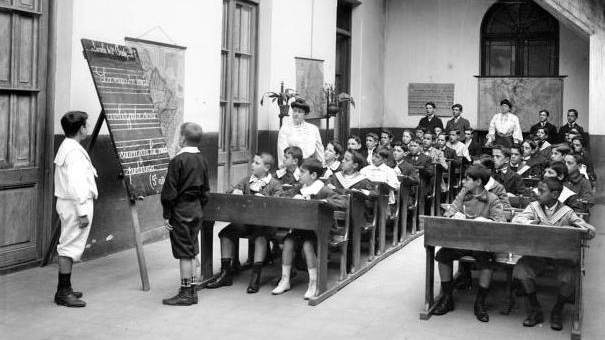
An influential reading of history links the spread of mass schooling in the nineteenth century to industrialisation, which valued discipline, punctuality and routine. It is only part of the story, as national school systems also grew out of religious, civic and political aims. But the legacy of rows of desks facing the front is still visible in many classrooms today.
What is disruptive behaviour?
Disruptive behaviour covers a wide range: hyperactivity, impulsivity, inattention and defiance. It disrupts the learning of the pupil concerned and of their classmates, and it also takes a toll on teachers’ wellbeing and performance.
For psychologist Russell A. Barkley, one of the leading researchers on ADHD, much of this behaviour reflects underlying difficulties with self-regulation: impulse control, attention and managing emotions. That is why correcting behaviour is not enough. We also need to look at the environment that triggers it.
But not all disruptive behaviour has the same cause. It helps to separate four situations that can look alike from the outside:
- Behaviour that interferes with the class, whatever its cause: talking over the teacher, leaving the seat, refusing a task.
- Difficulties with self-regulation: a child who wants to settle but cannot yet manage their attention, impulses or emotions.
- Responses to an unsuitable environment: a reaction to noise, glare, crowding or clutter.
- Individual needs that call for other kinds of support, such as learning, emotional or family difficulties.
A child who keeps getting up from their seat may be seeking movement to stay regulated. A child who refuses to take part may be anxious, overloaded, or unsure what is being asked. Design can help with some of these situations but not all of them: it is one part of the answer, alongside teaching, relationships and specialist support.
According to data from the US Centers for Disease Control and Prevention (CDC), collected between 2016 and 2019, a significant proportion of children aged 3 to 17 have been diagnosed with, or identified by a parent as having, a mental, emotional, developmental or behavioural condition at some point:
- ADHD: 9.8% (around 6 million children)
- Anxiety: 9.4% (around 5.8 million)
- Behaviour problems: 8.9% (around 5.5 million)
- Depression: 4.4% (around 2.7 million)
These figures refer to children who had ever received a diagnosis or been identified by a parent, not necessarily to those still affected at the time of the survey. Many children have more than one of these conditions, so the figures overlap and should not be added together. These conditions can have lasting effects on academic achievement, school attendance, social life, self-esteem and physical and mental health. Architects and designers need to understand them when designing schools.
Disruptive behaviour and neurodivergence
Not all disruptive behaviour is linked to neurodivergence, but many autistic pupils and pupils with ADHD process sensory input differently. A noisy, brightly lit or cluttered classroom can push them into sensory overload, and what looks like “bad behaviour” is often a reaction to that overload rather than a choice. I explore this further in When the Classroom Competes With the Lesson and The Same Classroom, Different Outcomes.
Sensory needs also vary from child to child. Some pupils seek extra stimulation: they fidget, touch everything or need to move to stay alert. Others need less: they cover their ears, avoid busy areas or withdraw. A space that feels lively and pleasant to one child can be exhausting for another. There is no ideal classroom that suits every brain in the same way. The aim is not simply to make classrooms calmer but to offer different options for interaction, concentration, movement and retreat.
When the environment becomes part of the problem
How does a room affect behaviour? Between the stimulus and the child’s response there are a few simple mechanisms:
- Listening takes effort. In a noisy, echoing room, pupils have to work harder just to hear and understand speech. That effort uses up attention that would otherwise go on learning, and leaves less in reserve for self-control.
- Everything competes for attention. Every display, colour and movement in view competes for the same limited attention. Young children, and many neurodivergent pupils, find it harder to filter out what is irrelevant.
- Movement helps regulation. Some children need to move to stay alert or to calm down. In a room with no space or permission to move, that need easily turns into “disruption”.
- Overload needs a way out. Without a quieter place to retreat to, a child in sensory overload has few options other than shutting down or acting out.
When a child spends hour after hour in a room that demands more sensory processing than they can comfortably manage, the accumulated demands can contribute to stress. Attention may narrow, patience may wear thin and self-regulation may become more difficult. A child who grows restless, withdraws or lashes out may not be deliberately challenging authority. Their nervous system may simply be responding to the demands of the environment. These mechanisms do not explain all behaviour, but they show why the room matters.
Teachers feel this too. In a noisy, cluttered room with poor acoustics, little circulation space and no flexibility, it is harder to make yourself heard, hold the class’s attention, manage group dynamics and notice what individual pupils need. A classroom that supports pupils also has to support the people teaching them.
This changes what we should expect from a well-designed classroom. The goal is not quieter, more compliant children. A good classroom does not necessarily produce less movement, less conversation or less individual expression. It makes it possible for different children to take part without constantly having to suppress their needs. There is a difference between designing for behavioural control and designing for human needs:
- A child who needs movement should have opportunities to move.
- A child who is sensitive to noise should have somewhere quieter to work.
- A child who finds group work overwhelming should have other ways to take part.
- A child who needs visual structure should be able to understand how the space is organised.
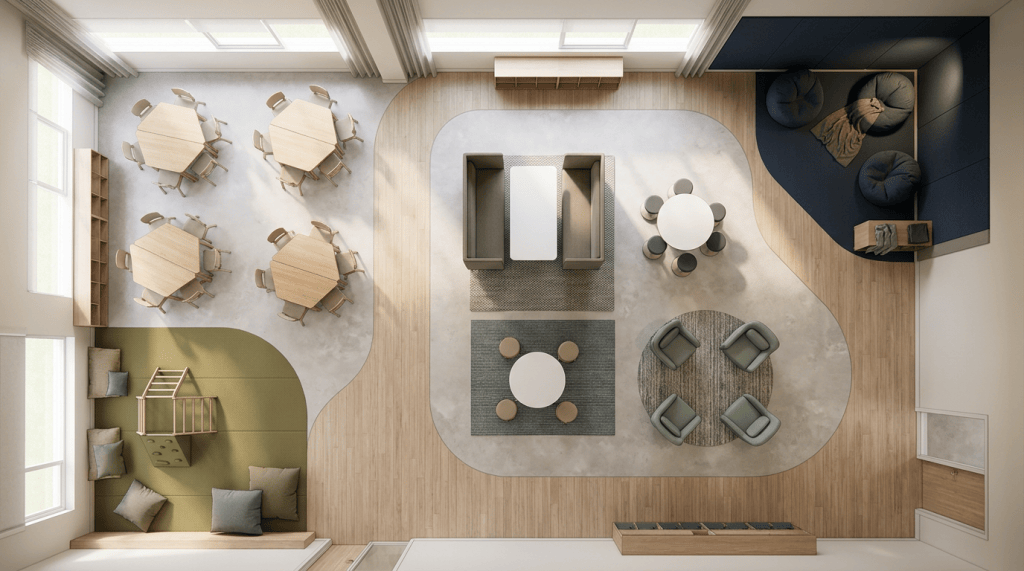
This layout offers different zones for group work, quiet focus, conversation, movement and retreat, connected by a clear circulation route. Image generated with AI.
Seven design principles to support self-regulation and reduce disruptive behaviour
The HEAD project at the University of Salford assessed 153 classrooms in 27 UK primary schools and tracked the progress of 3,766 pupils. Seven classroom features explained 16% of the variation in their academic progress over a year: light, temperature, air quality, ownership, flexibility, complexity and colour. HEAD measured learning progress, not behaviour, so it does not prove that design reduces disruption. But it does show that the physical classroom has a measurable effect on pupils, and according to lead researcher Professor Peter Barrett, it points to “many simple, quick and cost-effective ways for teachers to change their classrooms”. Ownership is a good example: pupils learn better in spaces they feel are theirs. This is not only about letting them help with the decoration. It is about pupils recognising the classroom as their own and building a positive relationship with it, for example by giving their views on the layout or seeing their own work on the walls.
The seven principles below are not the same as HEAD’s seven parameters. They are an architectural translation of evidence from several sources.
- Flexibility and choice. Movable tables and chairs and modular furniture let teachers reorganise the room for individual, group or whole-class work. Flexibility also matters for pupils themselves: being able to choose where and how to work, at a table, standing, on the floor or in a quieter corner, gives them a sense of control that supports self-regulation. A predictable layout, where pupils know where things are and what happens where, adds a sense of safety. Flexibility and ownership are both among the factors the HEAD study links to better progress.
- Noise control. Noise is one of the main sources of distraction and stress, especially for pupils with attention difficulties. Bridget Shield and Julie Dockrell’s 2003 review brings together the evidence on how external and classroom noise affect children’s speech perception and performance. Acoustic ceiling and wall treatments, appropriate floor finishes, furniture with noise-reducing feet and separate zones for noisy and quiet activities can all help reduce unwanted sound. In the UK, Building Bulletin 93 (BB93) sets limits on background noise and reverberation in schools. More in How Does Noise Elevate Your Cortisol?
- Good lighting. Well-controlled daylight is generally desirable, provided that glare and excessive contrast are avoided. Where natural light is insufficient, artificial lighting should provide comfortable, even illumination without distracting flicker. A study by Kenneth Tanner (2009) of 71 US schools found that natural light, views and good circulation were associated with better results in reading, language, mathematics and science. More in Why Does Lighting Design Need a Neuroscience Perspective?
- Colour and visual stimulation. More is not always better. In a Carnegie Mellon University experiment (Fisher, Godwin and Seltman, 2014), kindergarten children taught in a laboratory classroom were more distracted, spent more time off task and learnt less when the walls were heavily decorated than when the decorations were removed. The study involved five- and six-year-olds, so it should not be generalised to every age. The HEAD study also identifies visual complexity and colour as relevant, although it does not prescribe a particular palette. The aim is not to remove visual interest, but to make sure that displays and decorative elements serve a purpose rather than compete with learning. A balanced visual environment should offer stimulation without unnecessary distraction.
- Calm-down zones. A quiet corner in the classroom lets pupils take a break and regulate themselves when they feel overwhelmed, with soft materials and calming activities. Architect Magda Mostafa’s ASPECTSS Design Index, a research-based framework for autism, calls them “escape spaces”.
- Spatial organisation. An orderly classroom reduces anxiety. Clearly defined zones, visible storage and colour-coded areas help pupils know what to expect and where to find what they need. ASPECTSS describes this through two principles: compartmentalisation (dividing space by function) and spatial sequencing (arranging areas to follow the routine of the day).
- Room to move. Movement helps pupils channel energy and regain focus, especially those with hyperactivity. Tanner’s study included movement and circulation among the design factors linked to better results.
In short: much disruptive behaviour in schools is, at least in part, a response to the environment. Noise, glare, visual clutter and a lack of room to move or calm down can all make it worse. Research suggests that classroom design can influence attention, learning and pupils’ experience of the environment. Thoughtful design can also help reduce some of the sensory and organisational demands that make self-regulation difficult.
Classrooms that work: Reggio Emilia and Montessori
None of this is entirely new. Some educational approaches have long recognised that the learning environment shapes children’s independence, participation and behaviour, and they design their classrooms accordingly.
Reggio Emilia schools use open spaces, flexible furniture and natural materials designed to encourage exploration and independent learning. Their founder, Loris Malaguzzi, described the environment as the “third teacher”, alongside teachers and families. More at Reggio Children.
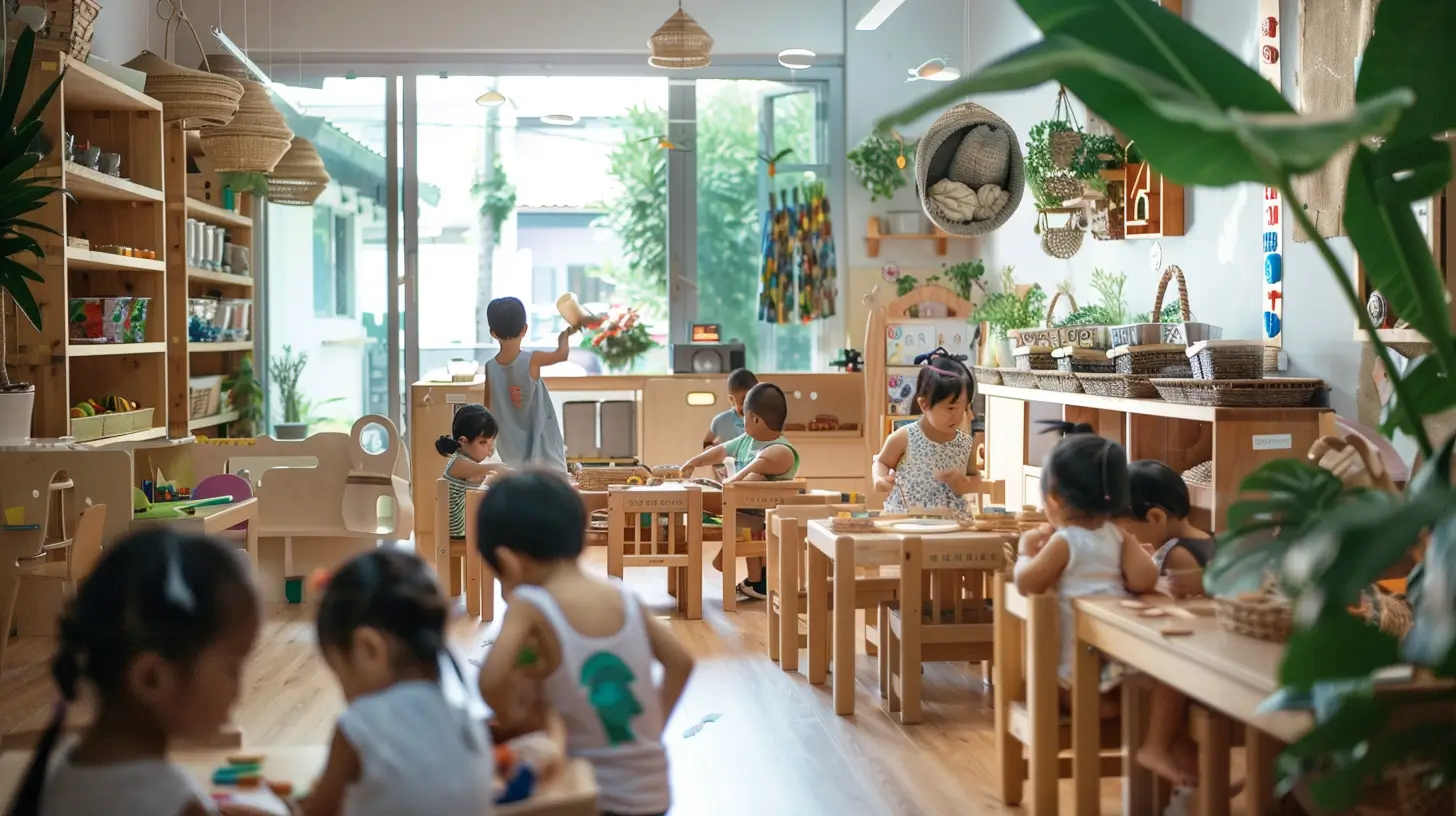
Reggio Emilia is a city in northern Italy where, after the Second World War, an educational approach emerged that emphasises children’s rights, community participation and experiential learning. Its founder, Loris Malaguzzi, stressed the importance of a rich, supportive environment that nurtures creativity, curiosity and critical thinking.
Montessori classrooms are designed to foster independence and self-discipline: materials are within children’s reach and work areas are clearly defined. In Montessori: The Science Behind the Genius (2005), psychologist Angeline Lillard reviews the research supporting many of these principles, including an orderly environment and freedom of movement.
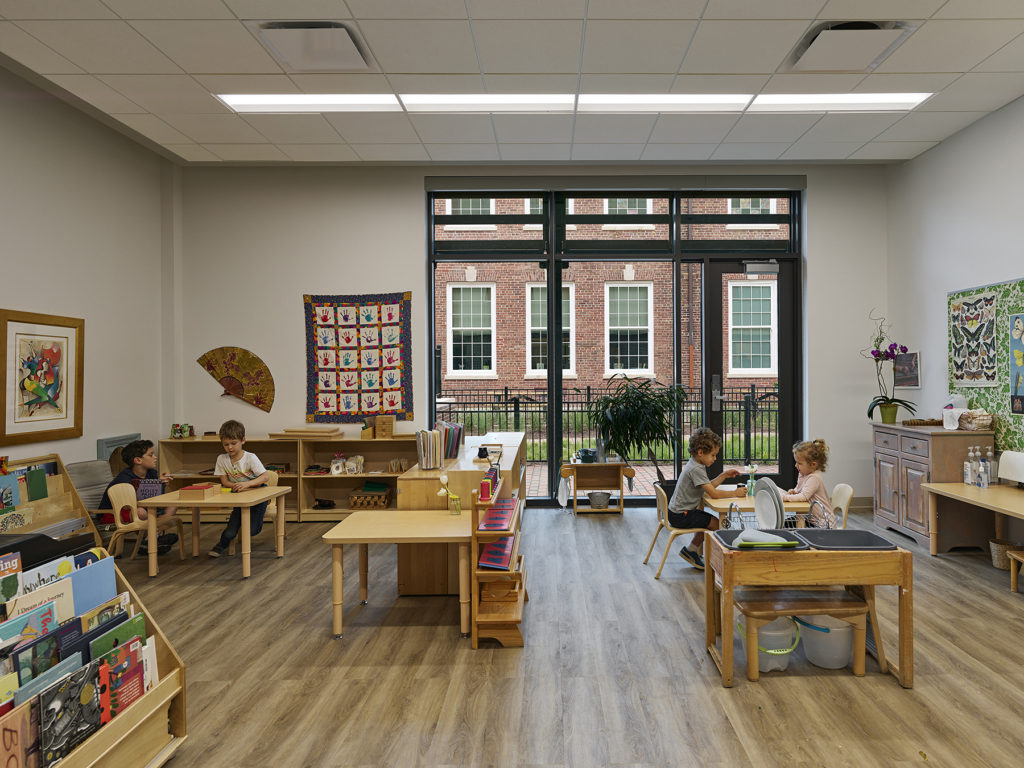
Inspired by the Montessori method, this early years design aims to improve how children interact with their environment and with each other.
Frequently asked questions
Can classroom design really reduce disruptive behaviour?
It cannot replace good teaching or support, but it can remove many of the triggers. Noise, glare, clutter and crowding increase stress and make self-regulation harder, especially for neurodivergent pupils.
Where should a school start?
Start with sound. Poor acoustics affect concentration and communication in every lesson, and they can often be improved with acoustic treatments, appropriate floor finishes and clear zoning.
Do decorated classrooms help or hinder learning?
Research suggests that too many displays can distract young children and reduce learning. Keep walls purposeful, leave some calm areas, and display pupils’ own work.
Conclusion
Perhaps the question is not simply how to make children behave better in the classroom, but how to design classrooms where different children can feel comfortable, take part and learn without constantly having to suppress their needs.
We usually judge classrooms by how many pupils they hold, whether they meet technical standards and how well they support teaching. We should also judge them by how they affect the people who spend their days in them, pupils and teachers alike. Architecture is never neurologically neutral. Design will not solve every difficulty, but it can stop the room itself from being part of the problem.
Lee este artículo en español: Cómo el diseño puede reducir la conducta disruptiva en el aula
References
- Barkley, R. A. (2015). Attention-Deficit Hyperactivity Disorder: A Handbook for Diagnosis and Treatment (4th ed.). Guilford Press.
- Barrett, P., Davies, F., Zhang, Y. and Barrett, L. (2015). The impact of classroom design on pupils’ learning: Final results of a holistic, multi-level analysis. Building and Environment, 89, 118–133. https://doi.org/10.1016/j.buildenv.2015.02.013
- Bitsko, R. H. et al. (2022). Mental Health Surveillance Among Children — United States, 2013–2019. MMWR Supplements, 71(2), 1–42. Centers for Disease Control and Prevention.
- Centers for Disease Control and Prevention. Data and Statistics on Children’s Mental Health.
- Department for Education (2015). Building Bulletin 93: Acoustic design of schools – performance standards.
- Fisher, A. V., Godwin, K. E. and Seltman, H. (2014). Visual environment, attention allocation, and learning in young children: when too much of a good thing may be bad. Psychological Science, 25(7), 1362–1370.
- Lillard, A. S. (2005). Montessori: The Science Behind the Genius. Oxford University Press.
- Mostafa, M. (2014). Architecture for Autism: Autism ASPECTSS™ in School Design. Archnet-IJAR.
- Shield, B. M. and Dockrell, J. E. (2003). The effects of noise on children at school: a review. Building Acoustics, 10(2), 97–116.
- Tanner, C. K. (2009). Effects of school design on student outcomes. Journal of Educational Administration, 47(3), 381–399.
- University of Salford (2015). Well-designed classrooms can boost learning progress in primary school pupils by up to 16% in a single year, research reveals. News release, 24 February 2015.


One thought on “How Design Can Reduce Disruptive Behaviour in the Classroom”