
What happens when buildings are designed not just for shelter, but to support how we think, feel, and interact? This question guided the creation of one of the most innovative neuroscience centres in the world: the Sainsbury Wellcome Centre in London. Where Vision Meets Neuroscience Between 2009 and 2016, British architect Ian Ritchie was commissionedContinueContinue reading “Designing with the Brain in Mind: Lessons from the Sainsbury Wellcome Centre”
Category Archives: english
Inclusive Design: Meeting Diverse Needs in Architecture
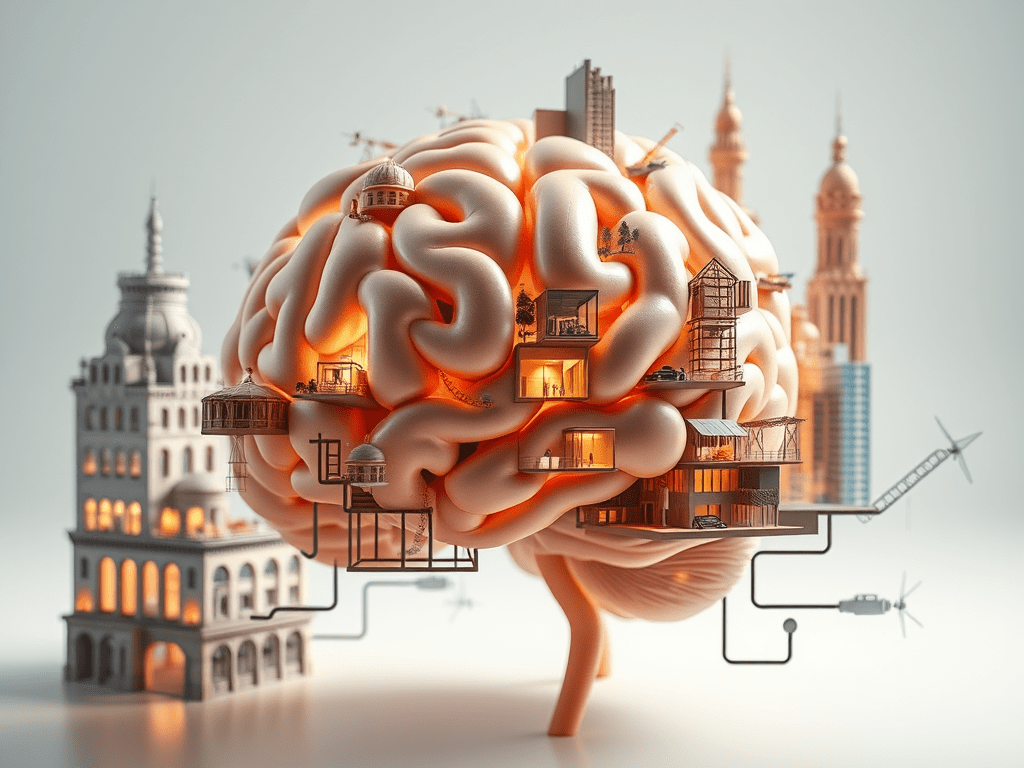
An introduction to neuroarchitecture, exploring how design affects the brain, sensory perception, and mental health. With insights into neurodiversity, accessibility, and inclusive spaces like the Sainsbury Wellcome Centre.
AI in Architecture: Redefining Design and Collaboration

Imagine a design studio where the architect doesn’t sketch alone—but co-creates with a system that suggests, simulates, and learns. That future is no longer distant. It’s already underway. A New Era in the Making From generative floor plans to climate-responsive façades, artificial intelligence (AI) is beginning to reshape how we design, build, and think. ButContinueContinue reading “AI in Architecture: Redefining Design and Collaboration”
Why Your Business Should Embrace Neurodiversity
Imagine walking into a shop where the lights are too bright, the music is loud, and the layout feels like a maze. For many neurodivergent customers, this is not a rare inconvenience—it’s an everyday reality. Or picture this:A family gathers in a restaurant to celebrate a special occasion. Among them is a baby who, overwhelmedContinueContinue reading “Why Your Business Should Embrace Neurodiversity”
Designing for Survival: Architecture in the Age of Climate Crisis
In recent years, the world has witnessed a surge in climate-induced catastrophes: unprecedented wildfires scorching vast landscapes, devastating floods submerging cities, and relentless heatwaves threatening human health and infrastructure. These events underscore the pressing need for architecture to transcend traditional aesthetics and functionality. Our built environments must evolve into resilient sanctuaries, capable of withstanding andContinueContinue reading “Designing for Survival: Architecture in the Age of Climate Crisis”
Integrating Neuroarchitecture, Psychology, and Biophilic Design
How three disciplines converge to reshape how we live, feel, and design. A Curious Beginning Why do some spaces calm us while others make us feel uneasy? Why does a walk through a forest restore our energy, while a noisy corridor drains it? For decades, designers and researchers have asked these questions from different angles.ContinueContinue reading “Integrating Neuroarchitecture, Psychology, and Biophilic Design”
The Forgotten Sense: Smell in Neuroarchitecture
We often think of architecture as visual—lines, light, form, and space. But what about smell? A faint trace of lavender, damp concrete, old wood, or hospital disinfectant. Scents we barely notice, yet they linger—anchored deep in memory and emotion. Have you ever stepped into a space and instantly felt calm, alert—or uneasy—without knowing why? ThatContinueContinue reading “The Forgotten Sense: Smell in Neuroarchitecture”
The Power of Architecture in Film: Emotions and Spaces

Have you ever felt uneasy walking down a long corridor or turning into a quiet alleyway? Have you ever felt uplifted when opening a window to a view of the sea or the mountains? Have you ever felt small standing before a towering skyscraper? In cinema, the choice of styles, design, and architecture is neverContinueContinue reading “The Power of Architecture in Film: Emotions and Spaces”
Designing Calm: How Neuroarchitecture Can Transform Your Home
Imagine coming home after an overwhelming day. The lighting is harsh, clutter is everywhere, loud music seeps in from next door, and the noise and fumes from the street press against your windows. When your home feels chaotic, your body stays on alert. Harsh lighting strains your eyes, clutter makes it difficult to focus, andContinueContinue reading “Designing Calm: How Neuroarchitecture Can Transform Your Home”
Streets for People: The Case for Walkable Cities

“Walking is man’s best medicine.” Hippocrates As a tourist on the island of Mykonos, I hold a vivid memory of its narrow alleyways, whitewashed buildings, and cascading bougainvillea. The absence of cars turns every stroll into a true delight, fostering an intimate connection with the architecture and local life. A rich sensory experience that leavesContinueContinue reading “Streets for People: The Case for Walkable Cities”
 neurotectura.com